Working a Ridge Saddle for Rutting Bucks
Finding a mature, rutting buck in Maryland's diverse terrain can often feel like searching for a needle in a haystack. Many hunters spend countless hours wandering, hoping to stumble upon a deer, but the key to consistent success, especially during the breeding season, lies in understanding deer movement patterns. This guide will walk you through how to effectively identify, scout, and hunt ridge saddles, turning these natural funnels into prime locations for encountering a rut-crazed whitetail.
Understanding Ridge Saddles as Deer Movement Corridors
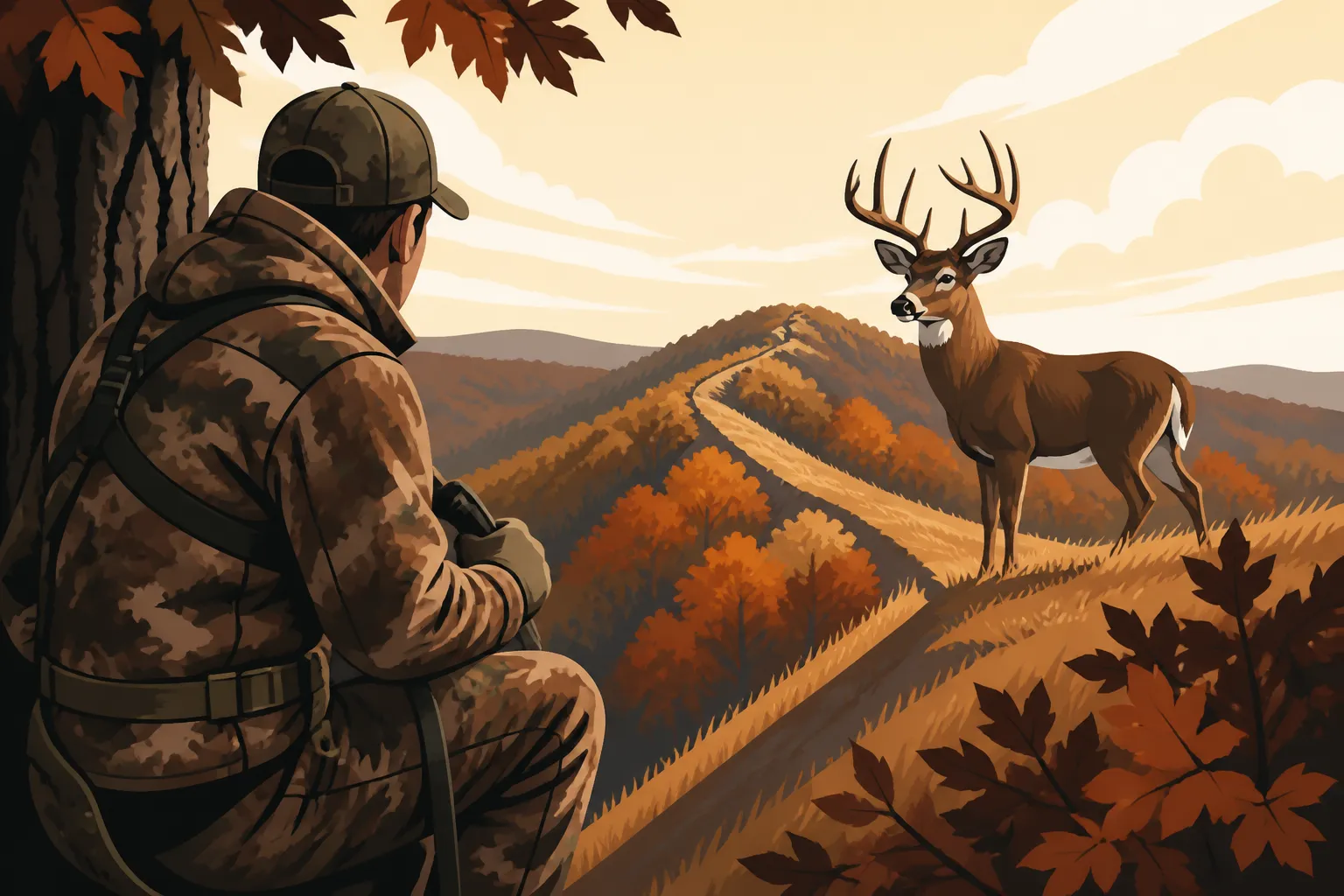
Ridge saddles are those subtle dips or low spots along a ridge line, almost like a "V" or a "U" shape in the topography. They might not look like much on a map or even from the ground at first glance, but to a deer, they represent the path of least resistance when traveling between two points on either side of the ridge. During the rut, these natural funnels become absolute magnets for bucks on the move.
What Makes a Saddle a Hotspot for Deer Travel
Deer, particularly mature bucks, are inherently efficient creatures. They're always looking for the easiest and safest way to get from bedding areas to feeding zones, or from one ridge system to another. A ridge saddle provides exactly that: a natural low point that allows them to traverse elevation changes with minimal effort. Think of it as a deer's highway over a mountain pass.
Beyond just ease of travel, saddles often concentrate deer movement because they frequently connect different types of habitat. You might have a thick bedding area on one side, a food source in a valley below, and another bedding area on the adjacent ridge. A buck cruising for does will naturally funnel through these saddles to check scent, cover ground, and intersect deer moving across the landscape. The wind currents in these dips can also be tricky, often swirling or pooling, which deer use to their advantage to scent-check a wider area without exposing themselves to danger. This combination of easy travel and strategic scenting makes them irresistible during the rut.
How Rutting Bucks Utilize Saddles to Their Advantage
During the peak of the rut, bucks are often on their feet, covering significant ground in search of receptive does. They're not just moving randomly; they're actively working the landscape, scent-checking, and following established travel corridors. Ridge saddles become critical pinch points where a buck is highly likely to pass through. A mature buck might use a saddle as a strategic checkpoint, pausing to scent-check the wind for does on either side, leaving rubs and scrapes as calling cards, or even engaging in brief skirmishes with other bucks.
When a buck travels through a saddle, he's often focused on what's ahead and what scents he's picking up. This tunnel vision, combined with the constricted nature of the terrain, can offer hunters excellent shot opportunities. It's not just about catching a buck passing through; it’s about understanding that the saddle itself is part of his rutting strategy – a place to find does, mark territory, and consolidate his efforts in a relatively confined space. Whether he's looking for a hot doe or simply scent-checking his domain, a saddle is a natural waypoint in his journey.
Scouting Ridge Saddles Effectively for Maryland Whitetails
You can’t just walk into the woods and expect to find the perfect saddle on opening day. Successful saddle hunting starts long before the season with thorough scouting. This involves both digital reconnaissance and boots-on-the-ground investigation to pinpoint the most productive locations.
Pre-Season Scouting with Topographic Maps and Aerial Imagery
The absolute best place to start looking for ridge saddles is from the comfort of your home, using tools like topographic maps and aerial imagery. Digital mapping applications, such as GoHunt, are invaluable for this. You can easily zoom in on your hunting area, identify prominent ridge lines, and then look for those distinct "pinched" or "hour-glass" shapes where the contour lines come closer together and then spread out again, indicating a dip.
When you're studying these maps, look for saddles that connect two significant points of interest. This could be two large blocks of timber, a timber block to a bedding area, or a bedding area to a known food plot or agricultural field. Pay close attention to subtle elevation changes; even a few feet of drop can create a noticeable funnel for deer. Tools like GoHunt also allow you to see property lines, which is crucial if you're hunting near private land boundaries, and can show you different types of cover that might influence deer movement. By identifying several potential saddles from your computer, you can prioritize your physical scouting efforts. Remember, the more distinct and pronounced the saddle, the more likely deer are to funnel through it.
On-the-Ground Sign Reading in Saddle Country
Once you've identified potential saddles on your maps, it's time to hit the woods. This is where you confirm your digital scouting and discover the real story. When you approach a saddle, look for classic deer sign, which will be amplified during the pre-rut and rut.
- Scrapes and Rubs: Active scrapes, especially large "community" scrapes, are undeniable proof that bucks are using the area. Look for them along the edges of the saddle or within the funnel itself. Rubs, particularly fresh ones on trees 3-6 inches in diameter, indicate a buck has passed through and marked his territory. The more rubs and scrapes, the more traffic the saddle is seeing.
- Tracks and Trails: Look for well-worn deer trails leading into and out of the saddle. During the rut, these trails might be churned up with fresh tracks, indicating recent activity. Pay attention to the size of the tracks; larger tracks can indicate mature bucks.
- Bedding Areas: While deer might not bed in the saddle itself, look for bedding areas on the slopes or ridge tops immediately adjacent to the saddle. If a saddle connects two distinct bedding locations, it's a prime travel corridor for bucks checking for does.
- Old Sign: Don't dismiss old sign entirely. Old rubs and trails show that deer consistently use this travel pattern year after year. Combined with fresh sign, it tells a powerful story.
When doing this ground work, be mindful of your own scent. Even during scouting, you want to minimize your impact. Carry your binoculars and observe from a distance before wading into the thick of it. This focused scouting will help you confirm that the saddle isn't just a topographical feature but a well-used deer highway.
Optimal Stand Placement in a Ridge Saddle
Once you've located a promising saddle and confirmed active deer sign, the next critical step is positioning your stand. This isn't just about finding a tree; it's about strategic placement that considers wind, thermals, and your entry and exit routes.
Considering Wind and Thermals for Undetected Movement
The wind is your biggest friend and foe when hunting. In a ridge saddle, wind patterns can be particularly tricky because the terrain can cause swirling or unpredictable air currents. Generally, wind tends to flow up valleys in the morning as the ground warms and down valleys in the evening as it cools. However, in a saddle, this can be influenced by the ridge itself. You need to understand how the wind will carry your scent and how deer will approach the saddle.
Your primary goal is to set up so that your scent isn't blowing into the expected travel path of a rutting buck. This often means setting up on the downwind side of the saddle or in a position where the prevailing wind carries your scent away from the primary deer trails. If you're Hunting a Hillside Bench Above a Mountain Stream, similar principles apply. Thermals are also crucial: mornings typically see thermals rising, and evenings see them falling. A well-placed stand might be just below the crest of the saddle in the morning to catch rising thermals or higher up in the afternoon to catch falling thermals. Always have a contingency plan and be ready to move your stand or hunt a different saddle if the wind shifts unexpectedly. Using tools like a milkweed pod or a puff bottle to check the air currents frequently can be a game-changer.
Stealthy Entry and Exit Routes to Minimize Disturbance
One of the biggest mistakes hunters make, especially on prime spots like ridge saddles, is spooking deer during their approach or departure. A rutting buck, while sometimes less cautious, is still an incredibly intelligent animal. If he senses danger from your entry or exit, he'll likely avoid that saddle for a while.
Plan your routes carefully. Try to use natural terrain features like ditches, creek beds, or dense cover to conceal your movement. Ideally, your approach should be perpendicular to the deer's expected travel, and your path should not cross any active deer trails. Get to your stand well before daylight and leave only after dark to avoid bumping deer. Consider parking your vehicle a significant distance away to reduce noise and scent near the hunting area. For public land hunting, this often means walking further than most people are willing, a strategy detailed in Finding Maryland Ground Others Walk Past. The less deer know you're there, the higher your chances of success.
Specific Setups for Bowhunters Versus Firearms Hunters
While the core principles of stand placement remain, there are nuances for bowhunters versus firearms hunters.
Bowhunting Setups:
Bowhunters need deer to be much closer, typically within 20-30 yards. This means setting up directly on or very close to a well-used trail within the saddle. You'll need good shooting lanes, so often a bit of trimming might be necessary (check regulations if on public land). Elevated stands, whether hang-on or climbing, are often preferred for their sight lines and to get your scent above a deer's nose. Consider a setup that allows for shots on either side of the saddle, as bucks can come from any direction when cruising. For bowhunters, integrating calls can be very effective, especially grunt calls discussed in Grunt Calls in Maryland Hardwoods, to stop a buck or draw him closer.
Firearms Hunting Setups:
Firearms hunters (rifle, shotgun, muzzleloader) can typically take shots at longer distances, offering a bit more flexibility. You might position your stand further back from the immediate funnel, overlooking a wider area within the saddle and its approaches. This could be a sturdy tree with a ladder stand or a comfortable ground blind. The wider effective range allows you to capitalize on bucks pausing or moving through the saddle without requiring them to be at point-blank range. This can be particularly useful during Maryland's Split Firearms Deer Season. Visibility and stability for a steady shot are paramount. Regardless of weapon, remember to assess the shooting lanes and potential shot angles thoroughly before the hunt.
Hunting Strategies for Rutting Bucks in Saddles
You've done your homework, found the perfect saddle, and set your stand. Now comes the exciting part: the hunt itself. But just being in the right spot isn't enough; you need effective strategies to capitalize on the rutting activity.
Timing Your Hunts for Peak Rut Activity
The timing of your hunt in a ridge saddle is absolutely critical. While bucks use saddles throughout the year, their activity explodes during the rut. In Maryland, this generally means focusing your efforts from late October through mid-November, with peak rut usually falling in early to mid-November. During this period, bucks are less cautious and more prone to daylight movement as they actively seek does. This is the prime window for Hunting the Rut in Early to Mid November.
Consider hunting these saddles during the late mornings and early afternoons. Many hunters assume dawn and dusk are the only times to be in the woods, but rutting bucks will often cruise saddles midday when many people have left the woods, hoping to catch a hot doe that other bucks might have missed or to check new areas. All-day sits can be incredibly productive during the peak rut, as you never know when a big buck will decide to traverse the terrain.
Utilizing Calling and Decoying Techniques
Calling and decoying can significantly increase your odds in a saddle, especially during the rut when bucks are feeling aggressive and competitive.
- Calling: Soft grunts can often stop a cruising buck or pique his curiosity, making him veer off his path to investigate. If you spot a buck moving out of range, a well-timed grunt can turn him around. Rattling antlers, as discussed in Rattling Antlers on an Eastern Shore Farm, can simulate a buck fight and draw a dominant buck in, especially if he thinks he can steal a doe or challenge a rival. Fawn bleats or doe bleats can also work to attract a buck looking for a receptive doe. Always be prepared for a quick shot after calling, as bucks can close distances rapidly.
- Decoying: While more common in open fields, a small doe or even a buck decoy can sometimes be effective in a more open saddle. A buck decoy can challenge a dominant buck, while a doe decoy might attract a cruising buck. Position it realistically, making sure it's visible but not overly exposed, and always be aware of your wind direction relative to the decoy. If you're using a buck decoy, consider adding some scent to make it even more convincing.
Adapting to Changing Deer Movement and Conditions
Deer movement is rarely static, and hunting success often hinges on your ability to adapt. If deer aren't moving through the saddle as expected, don't get discouraged, but do start thinking about why. Has the wind shifted significantly? Is there new hunting pressure in the area? Did a new food source open up elsewhere?
Sometimes, a subtle change in your setup can make a big difference. This might mean adjusting your stand height, moving it to another tree within the same saddle, or even shifting to a different saddle altogether if you have multiple options. Paying attention to new sign — fresh tracks, scrapes, or rubs appearing overnight — can tell you if deer patterns are changing. Remember the importance of Wind and Thermals in Western Maryland Terrain and how they can affect where deer choose to travel. If the weather changes drastically, like a sudden cold front, deer movement can increase, making those saddles even hotter. Always have a plan B, and don't be afraid to try something different if your initial strategy isn't producing results.
Common Mistakes to Avoid When Hunting Saddles
Even seasoned hunters can make mistakes, and when you’re targeting a high-potential spot like a ridge saddle, these errors can be particularly costly. Being aware of these pitfalls can help you increase your success rate.
Ignoring Wind Direction and Thermal Shifts
This is perhaps the most critical mistake. Many hunters get so focused on terrain features and deer sign that they forget the invisible enemy: their own scent. As we've discussed, wind in saddles can be unpredictable, often swirling due to topography. Setting up with a poor wind direction is a surefire way to educate and spook deer, especially mature bucks, who are hyper-aware of foreign scents. If you are struggling to understand air currents, consider using a digital tool or app to track wind direction and predict thermal shifts for your specific location, just like you might use GoHunt for topographical analysis.
Never assume the wind will stay consistent. Always have a backup plan for shifting winds, or be prepared to relocate your stand or even hunt a different area entirely if the conditions aren't favorable for your chosen saddle. Ignoring this fundamental principle will lead to deer blowing out of the area and a frustrating, scent-filled hunt.
Over-Hunting or Pressuring Your Best Spots
It's tempting to hunt your absolute best saddle repeatedly, especially if you've seen good sign or had a close encounter. However, over-hunting a prime location is one of the quickest ways to ruin it. Deer, particularly older bucks, are highly sensitive to pressure. If they detect human presence too often in a specific travel corridor, they will simply adjust their patterns and find new routes. This can be a major challenge when Hunting Pressure on Maryland Public Land.
Limit your hunts in your primary saddles. Focus on hunting them only when conditions are absolutely perfect – favorable wind, peak rut activity, and minimal human disturbance. Consider having a few "secondary" saddles or other spots to hunt on less ideal days, saving your top-tier locations for when your chances of success are highest. Spacing out your hunts in a particular saddle allows deer to settle back into their natural patterns, making them more comfortable and predictable when you do return.
Neglecting Entry and Exit Strategies
As mentioned earlier, how you get to and from your stand is almost as important as the stand placement itself. A poorly executed entry or exit can send every deer in the vicinity fleeing, effectively ruining your hunt before it even begins, or worse, for future hunts. Rushing in at dawn, making excessive noise, or walking directly across a fresh deer trail will broadcast your presence loud and clear.
Always move slowly, quietly, and use the cover of darkness and terrain to your advantage. Avoid bumping deer at all costs. If you bump deer on your way in, consider not hunting that spot that day and moving to a different location. The goal is to be a silent, invisible predator. This takes discipline, often meaning longer walks in the dark, but the reward is encountering undisturbed deer that are acting naturally.
Effective Stand Placement in Ridge Saddles
| Factor | Considerations for Stand Placement | Key for Success |
|---|---|---|
| Wind | Position yourself downwind of expected deer travel. Avoid areas where wind swirls predictably. | Always check wind direction before entering, and have multiple stand options for different wind directions. Use scent control. |
| Thermals | Set up higher in the morning (rising thermals) and lower in the evening (falling thermals) to keep scent above/below deer. | Understand the daily thermal cycle specific to your saddle's topography. Adjust height and position accordingly. |
| Visibility | Ensure clear shooting lanes within your weapon's effective range. Utilize cover to break up your outline. | Trim shooting lanes before the season (check public land rules). Choose trees that offer natural camouflage. |
| Approach | Plan a route that avoids known bedding areas and main deer trails. Use natural cover and topography for concealment. | Minimize noise and scent on entry/exit. Get in early, leave late. Avoid bumping deer; if you do, consider hunting elsewhere that day. |
| Escape Routes | Be aware of where deer will likely flee if spooked. Avoid placing your stand directly in their primary escape path. | Understanding deer behavior under pressure helps anticipate their reactions and can inform stand placement to avoid immediate blow-outs of the area. |
| Sun Position | Consider where the sun will be during prime hunting hours to avoid being silhouetted or having sun in your eyes. | Place your stand so the sun is at your back during the most active deer movement times, especially for morning/evening hunts. |
Conclusion
Hunting ridge saddles during the Maryland rut offers some of the most exciting and productive opportunities for deer hunters. By understanding how deer utilize these natural funnels, diligently scouting both digitally with tools like GoHunt and on the ground for fresh sign, and then executing a disciplined hunting strategy that prioritizes wind, stealth, and timing, you can dramatically increase your chances of encountering that mature buck. While the frustrations of deer hunting are real, applying these proven methods to ridge saddles will help you transform those high-potential topographical features into successful hunting experiences in the Maryland woods.
Disclaimer
Please consult the Maryland Department of Natural Resources (DNR) regulations for the most current and specific hunting laws, season dates, bag limits, and licensing requirements before engaging in any hunting activities. Safety should always be your top priority in the field.