Maryland’s Legal Weapons by County
It can feel like you need a law degree to understand all the nuances of Maryland hunting regulations, especially when it comes to legal weapons. Hunters often find themselves scratching their heads, trying to figure out if their trusty rifle is legal in one county but not the next, or if the new straight-wall cartridge they bought can actually be used in their hunting zone. This guide aims to clear up that confusion, breaking down Maryland's weapon regulations county-by-county and by game species, so you can head into the woods or marsh with confidence and stay on the right side of the law.
The Landscape of Maryland's Weapon Regulations
Maryland's hunting regulations regarding legal weapons are, without a doubt, a complex tapestry woven from a mix of statewide laws, regional distinctions, and specific county ordinances. This complexity is often born from the state's incredibly diverse geography, ranging from the sprawling mountains of Western Maryland to the densely populated suburbs surrounding Baltimore and Washington D.C., and the vast agricultural fields and tidal marshes of the Eastern Shore. Each area presents unique challenges and concerns, leading to a patchwork of rules that can be frustrating for even seasoned hunters.
Why Regulations Vary So Much Across the State
The primary driver behind Maryland's varied weapon regulations is a blend of public safety concerns, population density, historical precedent, and wildlife management goals. In the more rural, sparsely populated areas of Western Maryland, where large tracts of forest provide ample backstops, the use of high-powered rifles for deer hunting has long been a tradition and is generally accepted. Here, the risk to human habitation is lower, and the expansive terrain accommodates longer-range shots.
Conversely, in the heavily suburbanized counties, projectile travel distances become a critical concern. Imagine a high-velocity rifle round traveling for miles; this poses an unacceptable risk in areas dotted with homes, schools, and businesses. Therefore, these areas typically restrict hunters to weapons with a more limited range, like shotguns firing slugs, muzzleloaders, or archery equipment. These restrictions are designed to keep the public safe while still allowing for necessary deer management in areas where deer populations might otherwise explode and cause significant damage to property and ecosystems. Local sentiment and specific incidents can also play a role, sometimes leading to even tighter regulations in certain municipalities or densely populated areas within broader counties.
General Statewide Rules Versus Local Ordinances
While the Maryland Department of Natural Resources (DNR) sets the overarching statewide hunting regulations, individual counties and even smaller jurisdictions often have the authority to impose stricter rules regarding weapon types, especially for firearm use. This means that a weapon perfectly legal under state DNR regulations might still be prohibited by a specific county ordinance. It's a critical distinction that hunters must be aware of.
For instance, the DNR might allow certain firearms for deer hunting statewide in designated zones, but a county within that zone could have a local law banning the discharge of any centerfire rifle, or even any firearm, in specific areas. These local ordinances are usually enacted by county councils or commissioners in response to public safety concerns, perceived noise pollution, or to better manage hunting pressure in proximity to residential areas. This is why simply knowing the statewide rule isn't enough; you absolutely need to verify the regulations for the specific county and even the specific location where you plan to hunt. Ignoring these local laws can lead to significant penalties, including fines, confiscation of equipment, and loss of hunting privileges. Always check with the county sheriff's office or local police department if you have any doubts about local firearm restrictions.
Firearms for Deer Hunting: Rifles and Shotguns
For many Maryland deer hunters, firearms are the primary tool, but navigating the rules surrounding their use can be incredibly complex. The state is divided into two distinct regions, A and B, which dictate much of the firearm eligibility. However, even within these regions, there are specific nuances, especially concerning shotguns and the increasingly popular straight-wall cartridges.
Legal Rifles and Calibers in Region A Versus Region B
Maryland's approach to rifle hunting is predominantly structured around its two deer management regions: Region A and Region B. This geographical division is the most critical factor in determining where you can legally hunt deer with a centerfire rifle.
Region A encompasses the mountainous, more rural western counties of Garrett and Allegany, along with portions of Washington County. In this region, hunters generally enjoy the most expansive firearm privileges. Here, you are typically permitted to use centerfire rifles of various calibers for deer hunting. Common calibers like .243, .270, .30-06, and .308 are widely accepted. The rationale for this is the larger, less populated land tracts, particularly within the vast state forests like Savage River State Forest or Green Ridge State Forest, where longer shooting distances are more common and safety concerns related to projectile travel are mitigated by the terrain. Hunters in Region A value the accuracy and range that rifles provide, especially when still-hunting large timber blocks or glassing clear-cuts. When you're Still-Hunting Western Maryland Mountain Timber, the precision of a rifle can be a distinct advantage.
Region B, on the other hand, covers the vast majority of the state, including the Eastern Shore, Southern Maryland, Central Maryland, and the remaining parts of Washington County. This region is characterized by higher population densities, more fragmented landscapes, and extensive agricultural areas interspersed with smaller woodlots. For decades, traditional centerfire rifles have been prohibited for deer hunting in Region B. The primary legal firearms for deer here have historically been shotguns (with slugs), muzzleloaders, and archery equipment. This restriction is a direct response to public safety concerns regarding the potential range of rifle bullets in more populated areas. The idea is to limit the effective range of projectiles to reduce the risk of accidental injury or property damage. If you're Hunting a Maryland Farm Lease Your First Season in Region B, you'll almost certainly be limited to shotgun, muzzleloader, or archery.
Shotgun and Buckshot Rules
Shotguns play a pivotal role in Maryland deer hunting, particularly in Region B. However, not all shotgun ammunition is created equal or legal for deer.
For deer hunting, only slugs are legal in shotguns. This means you cannot use buckshot, birdshot, or any other type of shotgun shell when actively hunting deer. Slugs are single, heavy projectiles designed for large game, offering greater accuracy and knockdown power than buckshot, and crucially, a more limited range compared to rifle bullets. They are also subject to minimum gauge requirements; typically, 20-gauge or larger shotguns are required for deer. Always double-check the current year's hunting guide for precise minimums. Shotguns firing slugs are considered one of the safest firearm options for deer in more populated areas, striking a balance between effectiveness and public safety.
While buckshot is generally illegal for deer, it is permitted for other game species, specifically for predator and nuisance animals like coyotes, and often for foxes during their open seasons. It's crucial to understand this distinction. Carrying buckshot while deer hunting, even if you intend to use it for a coyote that might appear, is often frowned upon or even illegal depending on the exact circumstances and interpretation, as it implies intent. The general rule of thumb is to only carry the legal ammunition for the species you are currently pursuing.
Straight-Wall Cartridges: A Modern Solution
In recent years, Maryland has introduced a significant change that has expanded firearm opportunities for deer hunters in Region B: the legalization of straight-wall cartridge firearms. This was a welcome development for many hunters who desired a rifle-like experience in areas where traditional bottlenecked rifle cartridges were prohibited.
Straight-wall cartridges are exactly what they sound like: cartridges where the case walls are straight, not tapered or necked down like traditional rifle cartridges (e.g., .30-06). This design inherently limits the ballistic coefficient and maximum effective range of the bullet compared to bottlenecked rifle cartridges, making them safer for use in areas with higher population densities. Popular straight-wall calibers now legal for deer hunting in Maryland's Region B include .350 Legend, .450 Bushmaster, .44 Magnum, .45 Colt, and .45-70 Government, among others. These cartridges are typically used in lever-action rifles, single-shot rifles, or pistol-caliber carbines. They offer significantly improved accuracy and range over shotguns firing slugs, often extending effective distances out to 150-200 yards, while still adhering to the safety principles of Region B.
This innovation allows hunters in Region B to enjoy a more precise and extended-range firearm option, bridging the gap between shotguns and traditional rifles. However, hunters should always verify the specific legal calibers and ensure their firearm meets any additional requirements regarding magazine capacity or overall length, as these details can sometimes be subject to further regulation. The rules for Maryland Straight-Wall Rifle County Rules are a relatively new addition, and staying current is vital.
Archery Equipment: Bows and Crossbows
Archery hunting offers some of the longest seasons in Maryland, providing ample opportunity for deer and bear hunters across the entire state. It's also often the most flexible option when it comes to weapon choice in highly populated or restricted areas. However, even with bows and crossbows, specific regulations exist to ensure ethical hunting and public safety.
Compound, Recurve, and Longbow Rules
Traditional archery equipment, including compound bows, recurve bows, and longbows, enjoys a broad allowance across all of Maryland, regardless of whether you're in Region A or Region B. This makes archery a fantastic choice for those who hunt in areas where firearms are severely restricted, such as many suburban zones. For example, if you're Bowhunting Maryland Suburbs Where Rifles Are Banned, a compound bow is often your only practical option.
The key regulations for these bows typically revolve around minimum draw weight and maximum let-off (for compound bows) to ensure sufficient kinetic energy for a clean kill. While specific numbers can change, generally, a minimum draw weight of 30-40 pounds is required, though many hunters opt for much heavier draws for ethical reasons. There are also specific rules about lighted nocks or sights; while many are permitted, some electronic devices that project a beam onto the animal may be prohibited. Always consult the current Maryland hunting guide for the precise legal definitions and requirements for your chosen bow type. The beauty of bowhunting lies in its intimate nature, demanding close proximity and precision, which makes it particularly suitable for smaller parcels and areas with high human traffic.
Crossbow Eligibility and Seasons
Crossbows have become increasingly popular, offering a blend of bowhunting challenge and rifle-like aiming capabilities. In Maryland, crossbows are generally considered legal for all archery seasons. This wasn't always the case, as some states initially restricted crossbow use to specific groups (e.g., disabled hunters) or only during firearm seasons. Maryland, however, has embraced them as a standard archery implement, making them accessible to a wider range of hunters.
While crossbows can be used during the general archery season, there might be specific regulations regarding their use, such as minimum draw weight or maximum width. For instance, some regulations might dictate that the crossbow must have a safety mechanism and cannot be discharged with an arrow until it is pointed at the target. It's also critical to remember that while legal for archery seasons, they are archery equipment, and thus the same projectile rules (broadheads, etc.) apply as for traditional bows. If you're considering a crossbow, understanding Maryland Crossbow Rules and Who Can Use One is paramount before you head afield.
Broadhead and Arrow Specifications
Regardless of whether you're shooting a compound bow, recurve, longbow, or crossbow, the regulations concerning arrows and broadheads are consistent and critically important for ethical hunting.
For deer and bear, only broadheads are legal. Field points, judo points, or blunt tips are strictly prohibited for big game hunting, as they are not designed to cause a quick, humane kill. Broadheads must meet specific criteria, typically requiring a minimum cutting diameter and often stipulating that they must be "fixed blade" or "mechanical/expandable" broadheads that meet certain deployed cutting width minimums. The intent is to ensure that the arrow creates a sufficient wound channel to cause rapid blood loss and a swift, ethical harvest. Using an illegal broadhead, even accidentally, can result in severe penalties.
Arrows themselves also have minimum length and weight requirements. These specifications are in place to ensure that the arrow carries enough kinetic energy to penetrate adequately and to prevent the use of excessively short or light arrows that might compromise a clean kill. Most commercially available hunting arrows and broadheads will meet these requirements, but it's always wise to check the specifics in the current Maryland hunting guide. Before you head out, make sure your setup is not only tuned for accuracy but also fully compliant with these essential regulations.
Muzzleloader Regulations and Seasons
Muzzleloader hunting holds a special place in Maryland's hunting heritage, offering distinct seasons and a unique challenge that bridges the gap between archery and modern firearms. While generally allowed statewide, understanding the specifics of legal muzzleloader types, powders, and projectiles is crucial.
In-Line Versus Traditional Muzzleloaders
Maryland's regulations are generally accommodating to both traditional and modern muzzleloader designs.
Traditional muzzleloaders, often flintlock or caplock rifles and shotguns, harken back to the historical methods of hunting. These firearms are loaded from the muzzle with black powder (or a safe black powder substitute) and a projectile. Many hunters appreciate the authenticity and craftsmanship of these firearms, often using them during dedicated primitive weapon seasons. Maryland typically allows these traditional designs without issue, provided they meet general safety standards and are used with appropriate ammunition.
In-line muzzleloaders are a more modern evolution, featuring a more modern ignition system (often using 209 primers) and a more rifle-like appearance. They tend to be more accurate, reliable in adverse weather, and easier to load and clean than their traditional counterparts. Maryland has also embraced in-line muzzleloaders, allowing their use during designated muzzleloader seasons. While they offer many advantages, hunters should remember that they are still muzzleloaders and must be loaded from the muzzle with loose powder and projectile, not cartridge-based ammunition. The key distinction lies in the loading process and the specific powder and projectile types allowed, which differ from modern cartridge firearms.
Powder and Projectile Restrictions
The specific types of powder and projectiles you can use in a muzzleloader are strictly regulated in Maryland to ensure safety and maintain the unique character of muzzleloader hunting.
For powder, only black powder or approved black powder substitutes (like Pyrodex or Triple Seven) are permitted. Modern smokeless powder, which is used in cartridge firearms, is absolutely forbidden in muzzleloaders. Using smokeless powder in a muzzleloader designed for black powder can be extremely dangerous, leading to catastrophic failure of the firearm and severe injury. It's vital to ensure you are using the correct powder type.
Regarding projectiles, hunters must use single projectile bullets or sabots. Buckshot or birdshot is not permitted for deer hunting with a muzzleloader. Projectiles must also be loaded from the muzzle. This typically includes traditional lead balls, conical bullets, or modern saboted bullets where a plastic sabot holds a smaller diameter bullet within the bore. The intent of these rules is to ensure humane kills and maintain the spirit of muzzleloader hunting by preventing hunters from essentially turning their muzzleloader into a modern rifle with pre-loaded cartridges. Just like modern firearms, there are minimum caliber requirements, usually .40 caliber or larger for rifles and 20-gauge or larger for smoothbore muzzleloading shotguns. These specific details are critical to understanding Muzzleloader Deer Hunting in Maryland effectively.
Muzzleloader Season Specifics
Maryland offers dedicated muzzleloader seasons for deer, providing unique opportunities for hunters. These seasons are strategically placed, often between the archery and general firearm seasons or as a late-season opportunity, to help manage deer populations and extend hunting opportunities.
The main muzzleloader season typically occurs in October, offering hunters a chance to pursue deer before the full swing of the firearms season. There's also usually a late muzzleloader season in December, often overlapping with or immediately following the close of the general firearms season. The specific dates and durations of these seasons can vary slightly year to year, so always check the current Maryland hunting guide.
During these muzzleloader seasons, hunters are restricted to using only legal muzzleloader equipment. This means no modern centerfire rifles, shotguns (unless they are muzzleloading shotguns), or archery equipment can be used during these specific timeframes, even if those weapons are otherwise legal in the county. The muzzleloader seasons are often considered a less pressured time to hunt, as they fall outside the peak intensity of the firearms season, and the more challenging nature of muzzleloading attracts a dedicated cohort of hunters. Understanding the full scope of Hunting Maryland's Late Muzzleloader Season can expand your opportunities significantly.
Airguns: A Newer Option for Deer
Airguns, long popular for small game and target shooting, have recently gained traction as a legal weapon for deer hunting in Maryland. This relatively new addition offers another versatile option for hunters, especially those seeking a quieter or different challenge. However, like all specialized weapons, airguns come with their own set of specific regulations that must be followed precisely.
Approved Calibers and Energy Requirements
When it comes to airguns for deer hunting in Maryland, it's not simply about having any airgun; specific power and caliber requirements are in place to ensure ethical and humane kills.
Currently, for deer hunting, Maryland mandates that air rifles must be at least .40 caliber and produce a minimum of 400 foot-pounds of energy (FPE) at the muzzle. These are crucial metrics designed to ensure the projectile has sufficient mass and velocity to penetrate deeply enough and transfer adequate energy for a clean kill on a deer-sized animal. Many airguns suitable for small game or plinking simply won't meet these requirements. Hunters considering an air rifle for deer will typically need a dedicated "big bore" air rifle, often powered by compressed air (PCP or Pre-Charged Pneumatic) to achieve the necessary power levels.
The 400 FPE requirement is especially important. Hunters should check their air rifle's specifications or perform testing to ensure their chosen setup (rifle and pellet/slug combination) consistently meets or exceeds this threshold. Falling short means your weapon is not legal for deer, and attempting to hunt with it could lead to violations. The growth of these specific regulations is helping define Airgun Deer Hunting Rules and Calibers for hunters.
When and Where Airguns Can Be Used
The exciting news for airgun enthusiasts is that, if their equipment meets the minimum caliber and energy requirements, legal air rifles can be used to hunt deer during any open firearms deer season. This effectively makes them an additional option alongside shotguns, muzzleloaders, and straight-wall cartridge firearms during the appropriate seasons.
This means if the firearms season is open in your specific county and area, and other firearms (like shotguns or straight-walls) are legal, then a compliant air rifle would also be legal for deer. However, it's critical to remember that airguns are not permitted during archery-only seasons, nor do they have a specific dedicated airgun season that operates independently of the general firearms seasons. They function as an alternative weapon choice within existing firearm seasons.
The "where" is also tied directly to the county-specific regulations for firearms. If a county only allows archery, then an airgun would not be legal there for deer. If a county allows shotguns and straight-wall cartridges, then a compliant airgun would likely be permitted. Always confirm the specific county restrictions first, as local ordinances governing the discharge of firearms (which can sometimes extend to airguns depending on local interpretation) could still apply. This makes airguns a versatile, yet context-dependent, choice for Maryland deer hunters.
Weapon Restrictions for Other Game Species
While much of the focus is often on deer hunting, Maryland offers a diverse array of hunting opportunities for other game species, each with its own set of weapon regulations. Understanding these distinctions is key to a successful and legal hunt, whether you're chasing squirrels or decoying ducks.
Small Game Weaponry
Small game hunting in Maryland – which includes species like squirrels, rabbits, pheasants, and grouse – typically allows for a broader range of weapon choices than deer hunting, though still with specific limitations.
Shotguns are by far the most common and versatile choice for most small game. Any gauge shotgun (within safe operation limits) is generally legal, provided you are using birdshot (also known as scattershot). Buckshot or slugs are almost universally prohibited for small game due to their excessive power for these smaller animals. Shot size is also a consideration; smaller shot sizes like #6, #7.5, or #8 are common for upland birds and squirrels, while slightly larger shot like #4 or #5 might be used for rabbits in thicker cover.
Rimfire rifles (e.g., .22 Long Rifle, .22 Magnum, .17 HMR) are excellent choices for squirrels and rabbits, especially when precision is desired. These calibers are legal for small game statewide, even in counties where centerfire rifles are prohibited for deer. Their limited range and quieter report make them suitable for smaller woodlots. However, always exercise extreme caution and ensure you have a safe backdrop.
Air rifles are also legal for small game, typically with fewer restrictions on caliber and energy than for deer. A .177, .20, or .22 caliber air rifle can be very effective for squirrels and rabbits, particularly in areas where noise might be a concern.
Archery equipment can also be used for small game, often with blunt points or judo points designed to stun or tangle rather than penetrate deeply. Some hunters even use slingshots. For example, if you're looking to target Squirrel Hunting Maryland Hardwood Ridges, a .22 rifle or a small-caliber airgun would be an excellent, precise choice.
Waterfowl and Upland Bird Shotgun Rules
Waterfowl (ducks, geese) and upland birds (doves, quail, pheasants) have very specific shotgun and ammunition rules designed to protect both the birds and the environment.
The most critical regulation for waterfowl in Maryland, mirroring federal law, is the requirement to use nontoxic shot. Lead shot is strictly prohibited for hunting ducks, geese, coots, and other migratory birds. Approved nontoxic materials include steel, bismuth, tungsten-iron, and other specialized alloys. This regulation is in place to prevent lead poisoning in waterfowl, which can ingest spent lead shot from wetlands. Furthermore, shotguns for migratory birds are limited to a maximum capacity of three shells (one in the chamber, two in the magazine), unless specifically exempted (e.g., during some Conservation Order seasons for snow geese). This often requires a plug in the magazine. For a successful Layout Hunting Canada Geese on the Upper Shore trip, ensuring your shotgun is plugged and loaded with nontoxic shot is non-negotiable.
For upland birds like pheasants, quail, and doves, lead shot is generally still permitted, though some public hunting areas may have specific rules about lead-free zones, so always check local regulations. Shotguns are the standard weapon. As with migratory birds, the three-shell capacity rule usually applies to doves, which are also migratory. The specific shot size used will depend on the bird, with smaller shot like #7.5 or #8 being common for doves and quail, and slightly larger #4 or #5 for pheasants.
Predator Hunting Considerations
Hunting predators and nuisance species like coyotes, foxes, and groundhogs also falls under specific weapon guidelines, often providing a bit more flexibility than big game.
For coyotes, Maryland generally allows the use of rifles (centerfire and rimfire), shotguns (with buckshot or slugs), and archery equipment. This broad allowance reflects the DNR's interest in managing coyote populations, which are relatively new to the state and can impact deer and small game. When Coyote Calling in Maryland Farm Country, a centerfire rifle like a .223 or .22-250 is a popular choice for its range and accuracy, but a shotgun with buckshot can be effective at closer ranges. The key is to ensure that if you're hunting in a Region B county, your centerfire rifle use for coyotes does not violate any local ordinances prohibiting rifle discharge, even if the state permits it for predators.
Foxes and groundhogs are typically hunted with similar equipment to small game: rimfire rifles, small-caliber centerfire rifles (like a .223 for foxes), and shotguns with birdshot or buckshot (for foxes). Again, local ordinances are paramount. Groundhogs are often taken with rimfire rifles or even powerful air rifles due to their smaller size and the desire for precision. It's always a good practice to ensure you have a safe backstop and are aware of your surroundings, especially when hunting close to populated areas.
Understanding County-Specific Regulations
This is where things can get truly convoluted for hunters in Maryland. While the DNR sets statewide frameworks, the ability for counties to add their own restrictions means that what's legal just across the county line might be a severe violation in your current location. Ignoring these localized rules is a common, and often costly, mistake.
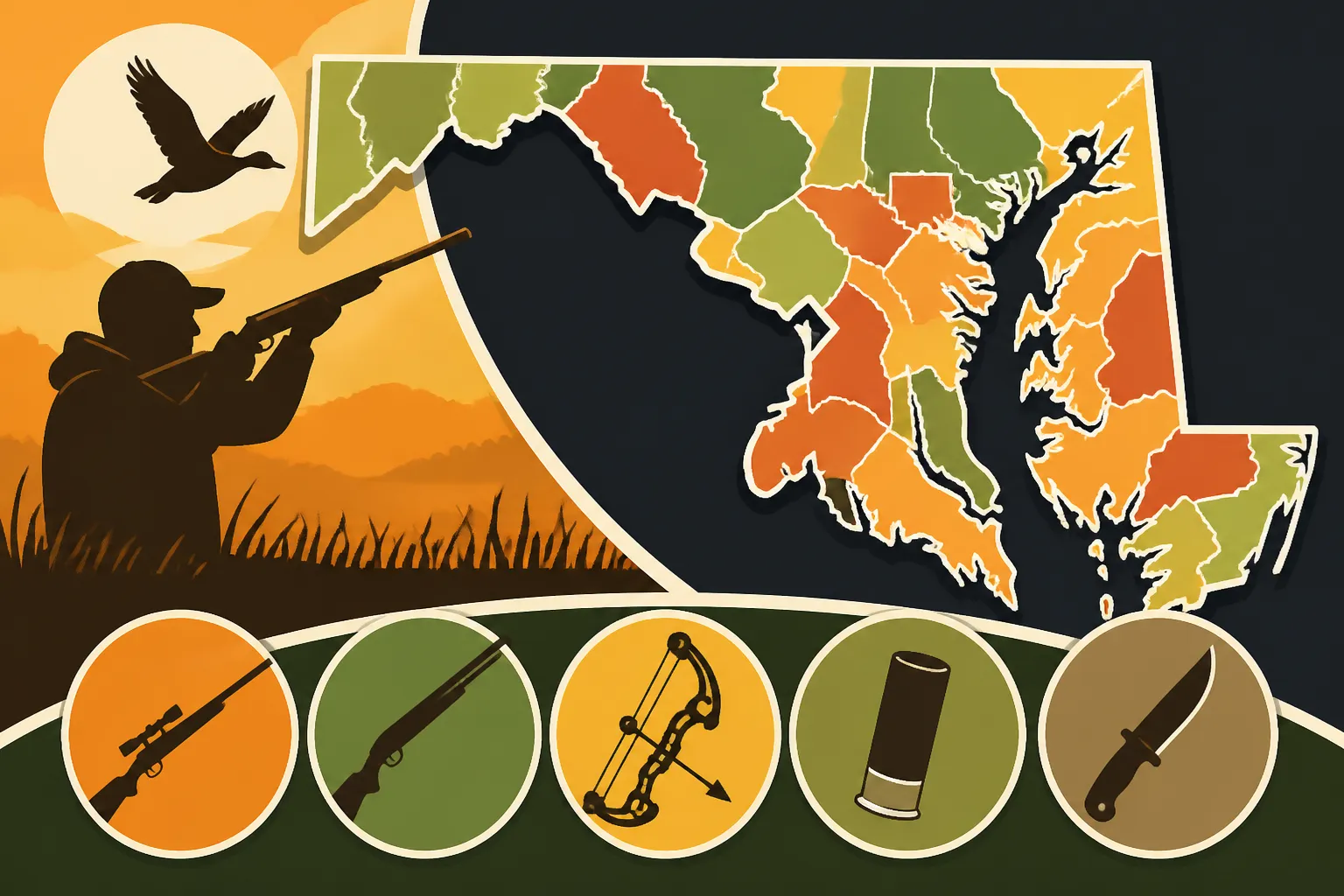
Mapping Out Region A and Region B Counties
To simplify the firearm regulations, Maryland has divided its counties into two distinct hunting regions: Region A and Region B. This is the foundational knowledge every deer hunter in Maryland needs.
Region A Counties: These are the westernmost counties, typically characterized by mountainous terrain and larger, less fragmented landholdings.
- Garrett County
- Allegany County
- Portions of Washington County (specifically west of I-81 and north of I-70, but always consult a current map for precise boundaries, as these can be tricky).
In Region A, centerfire rifles (bottlenecked cartridges) are generally permitted for deer hunting, in addition to shotguns, muzzleloaders, archery, and airguns. This is "traditional rifle country."
Region B Counties: This encompasses the vast majority of the state, stretching from the central Piedmont region to Southern Maryland and across the entire Eastern Shore. These areas are generally more densely populated, with a mix of agriculture, suburban development, and smaller woodland parcels.
- Anne Arundel County
- Baltimore County
- Calvert County
- Caroline County
- Carroll County
- Cecil County
- Charles County
- Dorchester County
- Frederick County
- Harford County
- Howard County
- Kent County
- Montgomery County
- Prince George's County
- Queen Anne's County
- St. Mary's County
- Somerset County
- Talbot County
- Wicomico County
- Worcester County
- Remaining portions of Washington County
In Region B, traditional centerfire rifles are generally prohibited for deer hunting. The primary firearm options are shotguns (slugs only), muzzleloaders, straight-wall cartridge firearms, and legal airguns. Archery is also always an option. Understanding Hunting Maryland's Two Deer Management Regions is the first step to staying compliant.
Here's a simplified table to help visualize the main firearm distinctions by region for deer hunting:
| Region | Counties (Primary) | Traditional Centerfire Rifle | Shotgun (Slugs) | Muzzleloader | Straight-Wall Rifle | Airgun (.40cal/400FPE) | Archery (Bows/Crossbows) |
|---|---|---|---|---|---|---|---|
| Region A | Garrett, Allegany, parts of Washington | Yes | Yes | Yes | Yes | Yes | Yes |
| Region B | All other counties, including most of Washington Co. | No | Yes | Yes | Yes | Yes | Yes |
Note: This table provides a general overview. Always confirm specific county ordinances and seasonal rules.
Specific County Exceptions and Local Ordinances
Even with the Region A/B breakdown, some counties impose additional restrictions that are even tighter than the general Region B rules. This is particularly true in the highly urbanized and suburbanized areas.
For example, Montgomery County and Prince George's County are notorious for their restrictive firearm laws. In many areas of these counties, the discharge of any firearm, including shotguns and muzzleloaders, is completely prohibited by local ordinance, leaving archery equipment as the only legal hunting method for deer. These restrictions are often very granular, sometimes allowing firearms only in specific, designated management areas or on large parcels of private land with very specific conditions. These are prime examples of local ordinances overriding broader state regulations for the sake of public safety in densely populated areas.
It's not just the D.C. suburbs, either. Other counties might have specific "safety zones" around dwellings or roads that are larger than the statewide minimums. Some counties might have specific noise ordinances that impact hunting hours or types of weapons. The crucial takeaway here is that you cannot assume. Before hunting in any county, especially one you're unfamiliar with, you must consult the Maryland DNR hunting guide, check the county's local government website for ordinances, and even contact the county sheriff's office. Utilizing digital mapping tools like GoHunt, which often have layers for public lands and sometimes even private property lines, can be immensely helpful in visualizing your hunting area and ensuring compliance with local land use rules. This kind of detailed scouting is essential, much like understanding Scouting Maryland Public Land With Aerial Photos.
Navigating Suburban Deer Management Hunts
Suburban deer management hunts are a unique and increasingly common scenario in Maryland, designed to control deer populations in areas where traditional hunting methods are often impractical or unsafe. These hunts frequently operate under special permits and highly specific weapon restrictions.
These hunts, often administered by local park systems or through special DNR initiatives, almost exclusively rely on archery equipment (compound bows, recurves, longbows, and crossbows). The emphasis is on silent, close-range methods that pose minimal risk to surrounding residents and infrastructure. In some rare cases, highly controlled shotgun or muzzleloader hunts might occur in very specific, isolated areas, but these are exceptions and are typically managed by professional sharpshooters or very strictly vetted participants.
If you participate in a suburban deer management hunt, you'll likely be provided with a detailed rulebook that outlines exactly what weapons are permitted, specific safety zones, shooting lanes, and even tree stand requirements. These rules are usually much more stringent than general statewide regulations. For instance, broadhead types might be more narrowly defined, or there might be stricter rules about retrieving downed deer near residential properties. These hunts are a testament to how flexible and adaptable Maryland's hunting regulations can be to address specific conservation challenges in unique environments, providing critical opportunities like Hunting Deer Behind a Maryland Housing Development. Always adhere strictly to the rules of these special hunts, as violations can jeopardize the entire program.
Safety and Legal Compliance for Maryland Hunters
Beyond knowing which weapon to use, understanding the broader context of safety and legal compliance is paramount for every hunter in Maryland. This not only ensures your personal safety and the safety of others but also protects the future of hunting opportunities in the state.
Blaze Orange Requirements
Maryland has clear regulations regarding the wearing of blaze orange (or fluorescent pink) during certain hunting seasons to enhance hunter visibility and prevent accidents. This is a critical safety measure, especially during crowded firearms seasons.
Generally, during the firearms deer season (including the muzzleloader seasons that overlap or precede firearms), hunters are required to wear at least 250 square inches of solid fluorescent orange or pink on the outer clothing above the waist, visible from all sides. This includes both public and private lands. The intent is to make hunters highly visible to one another, drastically reducing the risk of being mistaken for game. This requirement applies to deer hunters, but often extends to anyone accompanying a deer hunter.
There are, however, exceptions. During the archery-only seasons, blaze orange is typically not required. This is because bowhunting relies on stealth and camouflage, and the shorter effective range of archery equipment minimizes the risk of distant target identification errors. Similarly, during waterfowl hunting from a blind or stationary position, blaze orange is usually not required. However, when walking to and from a blind, or when jump-shooting, it might be advisable or even required depending on local rules or if sharing the area with deer hunters. Always check the current hunting guide for the most up-to-date and specific How Much Blaze Orange Maryland Requires for the season and species you're pursuing.
Setback Rules and Safety Zones
Maryland, like many states, has strict setback rules and safety zone regulations designed to protect individuals and property near hunting areas. These rules dictate minimum distances hunters must maintain from occupied dwellings, roads, and other specific locations.
The general statewide rule mandates that a hunter cannot discharge a firearm within 150 yards of an occupied dwelling, unless they have the express permission of the dwelling's owner or occupant. This 150-yard radius is often referred to as a "safety zone." This rule is critical for preventing stray bullets or arrows from inadvertently striking homes or people. For hunting on private land, even if you have permission to hunt the property, you still need separate permission from any adjacent dwelling owners if you plan to shoot within their 150-yard safety zone.
Additionally, there are rules regarding shooting across or along public roads, power lines, and other infrastructure. Discharging a firearm from, across, or along a public road is universally prohibited. These setback rules apply to all legal weapons, including bows and muzzleloaders, though the specific distances may vary for archery in some local ordinances. It's imperative to respect these zones, as violations can lead to serious legal consequences, including fines and potential loss of hunting privileges. Digital tools like GoHunt are invaluable for identifying property lines and potential safety zones, helping hunters responsibly plan their stands and shot opportunities.
Importance of Hunter Education
For anyone new to hunting in Maryland, or even returning after a long hiatus, completing a Maryland Hunter Education Course is not just recommended, it's generally a legal requirement. This course covers essential topics that are crucial for safe, ethical, and legal hunting.
The course typically covers firearm safety, archery safety, hunter ethics, wildlife identification, basic survival skills, first aid, and, crucially, an overview of Maryland's hunting laws and regulations. It teaches new hunters how to handle their weapons safely, understand game behavior, respect property rights, and identify game species. Even for experienced hunters, taking a refresher course or reviewing the current year's hunting guide is a good practice, as regulations can and do change. The information learned about safety, ethics, and regulations is foundational for responsible hunting.
Maryland offers various options for hunter education, including in-person classes and online components with a required field day. Knowing Who Needs Maryland Hunter Education is the first step to legally pursuing game in the state. Completing this course ensures that hunters are equipped with the knowledge and skills necessary to make informed decisions in the field, helping to maintain a positive public image of hunters and ensuring the future of hunting for generations to come. Responsible hunting starts with thorough education and a commitment to abiding by all rules, no matter how complex they may seem.
Disclaimer
Please note that hunting regulations are subject to change. While this guide aims to provide accurate and comprehensive information, it is not a substitute for the official Maryland Hunting & Trapping Guide published by the Maryland Department of Natural Resources (DNR). Always consult the most current official DNR guide and verify any local county ordinances before engaging in any hunting activity.