Maryland’s Deer Herd by Region
It can feel like you’re trying to solve a puzzle with half the pieces missing when you're planning a deer hunt in Maryland, especially with all the talk about different regions and rules. You might be left wondering if the tactics that work for your buddy in the mountains will even apply to your hunt on the Eastern Shore, or how those suburban deer act compared to their rural cousins. This guide aims to clear up that confusion, offering a deep dive into Maryland's diverse deer herds and how their populations, behaviors, and the hunting opportunities they present vary significantly across the state's distinct geographical regions.
Understanding Maryland's Deer Management Regions
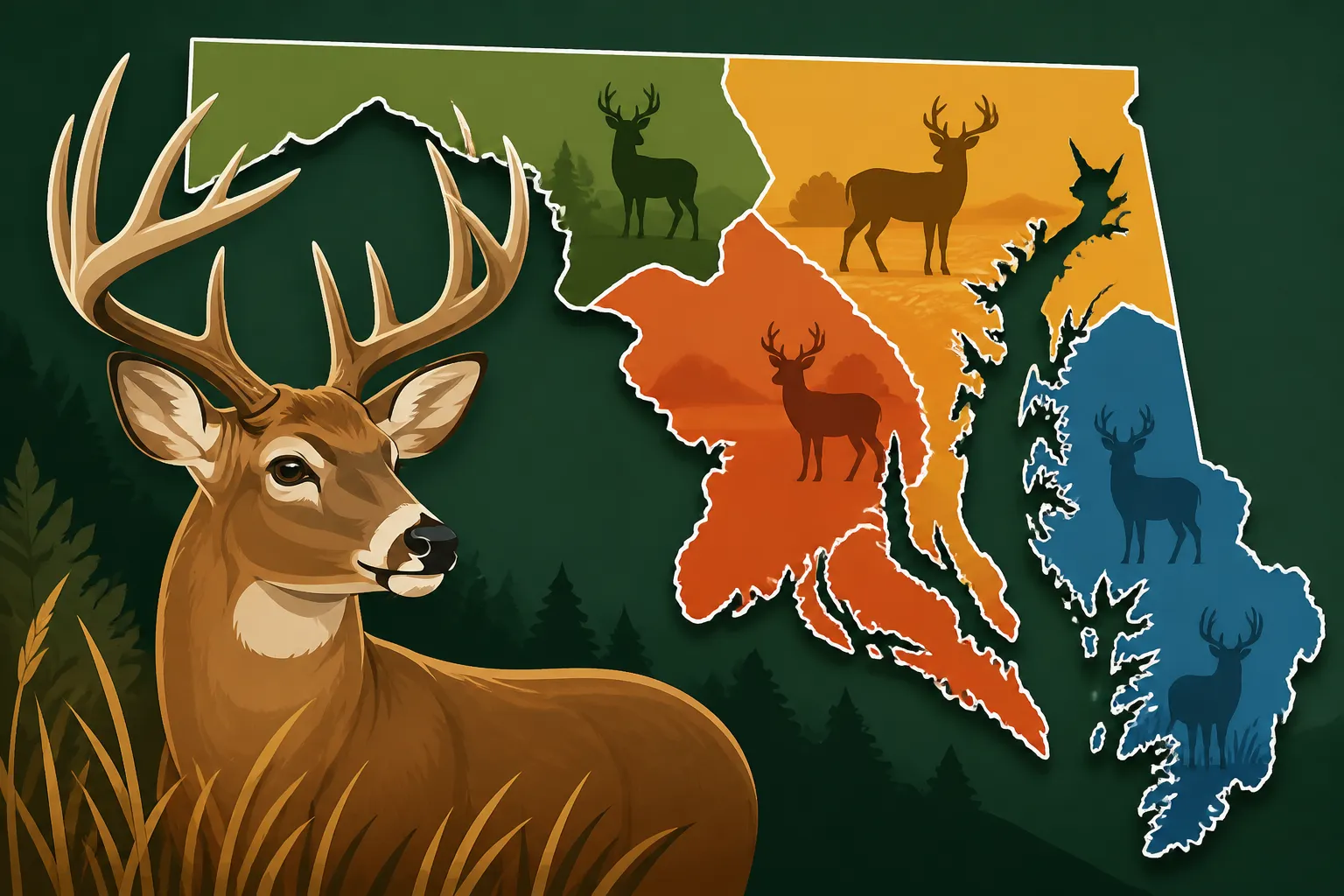
Maryland, despite its relatively small size, boasts an incredible diversity of landscapes, and with that comes varying deer habitats and management strategies. The Maryland Department of Natural Resources (DNR) has thoughtfully divided the state into two primary deer management regions, simply known as Region A and Region B. These classifications aren't just bureaucratic labels; they dictate everything from antler point restrictions to bag limits, and they're crucial for any hunter hoping to fill a tag. Ignoring these regional distinctions is like bringing a duck call to a turkey hunt – you're just not prepared for what's actually there.
Region A: The Mountainous Western Counties
Region A encompasses Maryland's westernmost counties: Allegany, Garrett, and a portion of Washington County. This is Maryland's slice of Appalachia, characterized by rugged mountains, vast tracts of public forest land, steep hollows, and dense timber. Think of Savage River State Forest or Green Ridge State Forest, and you've got a good mental picture of Region A. The deer here, primarily white-tailed deer, are accustomed to a wilder, more challenging environment.
These deer populations are generally less dense than in other parts of the state, and the hunting pressure can be significant on public lands, especially during firearms season. However, the sheer expanse of territory often means deer have more room to roam and mature, leading to some impressive bucks for those willing to put in the effort. The challenges of hunting this region are real – steep climbs, thick cover, and often more solitary deer, but the rewards can be truly memorable. For many, Hunting Maryland's Western Mountain Forests is the ultimate test of their woodsman skills.
Region B: The Piedmont, Coastal Plain, and Eastern Shore
Region B covers the rest of Maryland, a sprawling area that includes the rolling hills of the Piedmont, the suburban sprawl around Baltimore and Washington D.C., the farmlands and marshlands of the Coastal Plain, and the entirety of the Eastern Shore. This region is a mosaic of agricultural fields, mature hardwoods, dense swamps, and increasingly, suburban developments. It’s where the vast majority of Maryland’s human population resides, and consequently, where deer populations are often highest and most visible.
The deer in Region B face different pressures and have adapted to a more human-dominated landscape. They often feed on agricultural crops, browse suburban landscaping, and utilize smaller woodlots and creek bottoms for cover. The sheer abundance of deer in many parts of Region B means management strategies often focus on population control, allowing for more liberal bag limits compared to Region A. If you're looking for sheer numbers and more consistent opportunities to fill antlerless tags, Region B is often the place to be.
Distinct Characteristics of Maryland's Regional Deer Herds
It's easy to just think of "deer" as one homogeneous group, but anyone who's spent time pursuing them across Maryland knows that's far from the truth. The environmental factors, food sources, and human interactions in each region have carved out distinct characteristics in their deer populations, influencing their size, behavior, and even their antler development. Understanding these nuances is a huge part of becoming a more successful hunter, no matter where you chase deer in the Old Line State.
Western Maryland's Timber Deer
Deer in Western Maryland are truly creatures of the big woods. They live in a world dominated by oak, maple, and hickory forests, often navigating steep, rocky terrain. Their diets primarily consist of acorns, various forbs, and browse from the forest understory. You won't find many lush soybean fields up here for them to gorge on, so their body size can sometimes be a bit smaller than their agricultural-fed cousins, but their hardiness is unmatched.
These timber deer are notoriously wary. They're often accustomed to human presence in the form of hikers and campers, but they react quickly and decisively to hunting pressure. Their survival depends on their ability to melt into the vast, dense cover of the mountains. Spotting a mature buck in these conditions often requires exceptional scouting, patience, and a deep understanding of how deer use topography to their advantage. Learning to Still-Hunting Western Maryland Mountain Timber is a skill developed over many seasons.
Eastern Shore's Farm and Marsh Deer
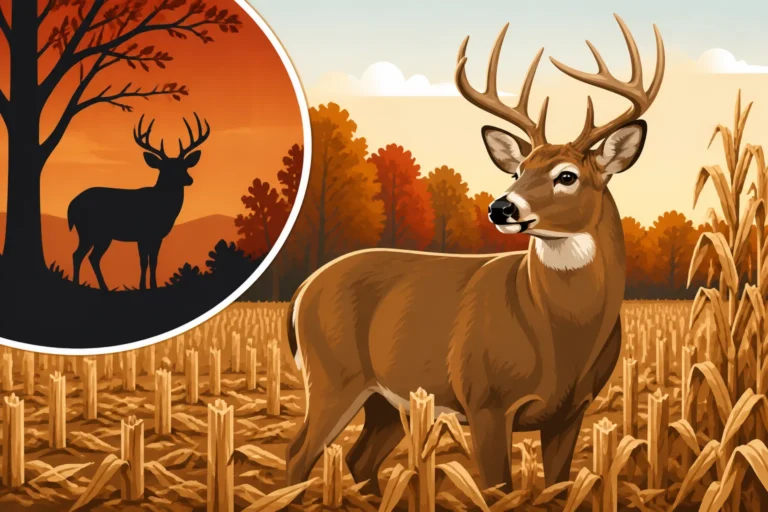
The deer on Maryland's Eastern Shore, particularly in counties like Dorchester, Somerset, and Kent, are a different breed entirely. They thrive in a landscape defined by expansive grain fields, dense loblolly pine plantations, and tidal marshes. Their diet is rich with corn, soybeans, and other agricultural crops, which often leads to larger body sizes and, frequently, impressive antler growth. These deer are often quite visible, especially at dawn and dusk, as they move between feeding areas and bedding cover.
In addition to whitetails, the Eastern Shore is famous for its unique population of Sika deer, an introduced species that has made the region's marshes and pine thickets their own. These smaller, elk-like deer offer a completely different hunting experience, adding another layer of complexity to regional deer hunting. The whitetails here are still wary, but their predictable movements between food and cover make them somewhat more patternable than their mountain counterparts.
Suburban Deer Populations and Their Challenges
Perhaps one of the most intriguing and challenging deer populations in Maryland exists within the sprawling suburbs surrounding major metropolitan areas like Baltimore and Washington D.C. Counties such as Montgomery, Howard, and Anne Arundel are prime examples. Here, deer densities are often incredibly high, sometimes to the point of being a nuisance, leading to significant conflicts with human residents through vehicle collisions and garden damage.
These suburban deer have adapted remarkably to living alongside people. They learn to navigate subdivisions, utilize small patches of green space, and often become largely nocturnal, moving between small woodlots, creek beds, and backyards under the cover of darkness. Hunting these deer requires a very specific approach, often involving archery or shotgun-only zones, strict safety precautions, and participation in managed suburban hunts. While not every hunter enjoys Hunting Deer Behind a Maryland Housing Development, it offers unique opportunities and helps manage local populations.
Navigating Regional Hunting Regulations and Opportunities
Maryland's regional deer management approach means that the regulations you follow and the opportunities you'll encounter can vary dramatically depending on where you decide to hunt. It's not just a suggestion; it's the law, and understanding these differences is paramount to a successful and legal hunt. From antler restrictions to weapon choices, these rules are designed to balance deer populations with ecological health and human safety across diverse landscapes.
Bag Limits and Antler Restrictions Across Regions
This is where the two regions, A and B, really diverge. Maryland's deer bag limits and antler rule are tailored to the specific population goals for each area. In Region A, where deer densities are lower and the focus is on maintaining a healthy, sustainable herd in larger wilderness areas, the antlered deer bag limit is typically more conservative. For instance, you might find a statewide antlered deer bag limit that allows a hunter to take one antlered deer in Region A, with specific rules about antler points. Historically, Region A often has stricter antler point requirements or lower overall buck tags.
Region B, on the other hand, often has more liberal antlered deer bag limits, allowing hunters to potentially harvest more bucks throughout the various seasons. The primary goal in many parts of Region B is population control due to high deer densities, especially for antlerless deer. You'll also find much more generous antlerless bag limits in Region B, with opportunities for hunters to take multiple does throughout the season. Hunters in Region B are crucial for managing deer numbers, and the regulations reflect that need. Make sure you check the current year's "Maryland's Deer Bag Limits and Antler Rule" before heading out, as these can be updated annually.
A key distinction is the "three-point antler restriction." In Maryland, generally, a hunter can only harvest one antlered deer statewide that does not meet the three-point rule on one antler. This means if you shoot a spike or fork horn, that's your one exception for the year. Any subsequent antlered deer you harvest must have at least three points on one antler. Region A and B apply this rule, but with Region A's generally lower buck limits, it means every buck decision counts even more. When you're out there, it's vital to be able to accurately identify Counting Antler Points Before You Shoot to avoid a violation.
Public Versus Private Land Access by Region
Access to hunting land also varies significantly between regions. Region A is a public land hunter's paradise, boasting vast state forests and wildlife management areas (WMAs) like Green Ridge and Savage River State Forest. While these areas can experience high pressure, especially during opening weekends, their sheer size means there's always an opportunity to find solitude and unpressured deer if you're willing to walk. These public lands are managed for diverse recreational use, and hunters are a major component.
Conversely, Region B, particularly the Eastern Shore and central Maryland, is heavily dominated by private land. While there are some excellent WMAs and state parks open to hunting, securing consistent access often means knocking on doors, leasing land, or joining a hunting club. The dynamics of Getting Private Land Permission in Maryland are a big part of hunting success here. Suburban areas, while having high deer populations, often have very limited huntable land, sometimes restricted to special managed hunts on specific public or private parcels. Tools like GoHunt can be invaluable for pinpointing property lines and identifying potential access points, especially when researching private land opportunities.
Weapon Restrictions and Special Hunts
Maryland has specific regulations regarding legal weapons for deer hunting, and these can differ by county, which ties directly into the regional approach. For instance, some populous counties in Region B, especially those with dense suburban areas, may have restrictions on rifle use for safety reasons, often limiting hunters to shotguns, muzzleloaders, or archery equipment. Bowhunting Maryland Suburbs Where Rifles Are Banned is a common scenario.
| Weapon Type | Region A (Western MD) | Region B (Central/East MD) | Notes |
|---|---|---|---|
| Archery | Legal (crossbows too) | Legal (crossbows too) | Statewide, longest season. Ideal for all regions. |
| Muzzleloader | Legal | Legal | Statewide, specific seasons. Great for challenging conditions. |
| Rifles | Legal in most areas | Restricted in many counties | Primarily legal in rural Region A counties; check local regulations carefully. |
| Shotgun | Legal | Legal | Statewide. Often the only firearm option in densely populated Region B counties. |
Disclaimer: Always consult the current Maryland DNR hunting guide for the most up-to-date and specific county regulations, as these can change.
Beyond standard seasons, both regions offer special hunting opportunities. Region B, with its higher deer densities and suburban conflicts, frequently hosts managed deer hunts in parks, open spaces, or even on private lands where traditional hunting is restricted. These hunts are often designed to reduce nuisance deer populations and typically involve specific application processes, weapon restrictions, and often, more liberal antlerless deer limits. These hunts are crucial for Hunting Maryland's Suburban Deer Management Hunts and are a highly effective way to gain access and contribute to conservation.
Key Factors Influencing Deer Populations Regionally
Maryland’s deer populations aren't static; they're dynamic, constantly adapting to a complex interplay of environmental factors, human development, and natural forces. What shapes the size, health, and distribution of deer in Garrett County is often vastly different from the influences at play in Talbot County. Understanding these underlying factors helps hunters predict deer behavior, identify promising areas, and appreciate the conservation efforts in place.
Habitat Diversity and Food Availability
The sheer diversity of habitats across Maryland is perhaps the most significant factor shaping regional deer populations. In Region A, the expansive hardwood forests offer abundant mast crops like acorns, particularly from oak species, which are a critical food source, especially in the fall. During lean winters, deer rely on browse from saplings and shrubs. The availability of clear-cuts and timber harvests can temporarily create dense new growth, providing excellent browse and cover, but the overall food supply can be less consistent than in agricultural areas. When there's a strong acorn crop, deer often spread out and can be harder to pattern.
Contrast this with Region B, particularly the agricultural heartlands of the Eastern Shore. Here, deer have access to a seemingly endless buffet of corn, soybeans, wheat, and cover crops. This consistent, high-protein diet often translates to larger body weights and better antler development for bucks. The proximity of dense woodlots, creek bottoms, and marsh edges provides excellent bedding and escape cover adjacent to these rich food sources. The challenge here is less about finding food, and more about understanding how deer move between these resources, especially when facing hunting pressure. Knowing Late Season Food Sources for Maryland Deer can be a game-changer.
Urban Sprawl and Suburban Pressures
The relentless march of urban and suburban development is an undeniable force shaping Maryland's deer populations, especially in Region B. As forests and farmlands are converted into housing developments, shopping centers, and infrastructure, deer habitat becomes fragmented. This fragmentation can lead to higher deer densities in remaining green spaces, as deer are pushed into smaller, isolated pockets of woods and fields. While this can initially increase local deer numbers, it also leads to increased human-deer conflict.
These pressures force deer to adapt to human presence, often becoming more nocturnal and less wary of non-hunting human activity. They learn to navigate roads and residential areas, leading to more vehicle collisions. The lack of natural predators in many suburban areas also contributes to overpopulation. This is why managed hunts in these areas are so crucial – they provide a necessary tool to control populations where traditional hunting methods are often impractical or unsafe. It’s a testament to the deer’s adaptability, but also a significant challenge for wildlife managers.
Disease Management and Environmental Impacts
Disease is another critical factor influencing regional deer herds. Chronic Wasting Disease (CWD) is a significant concern for the Maryland DNR. While relatively contained, CWD is a fatal neurological disease that poses a serious threat to deer populations. Maryland has established a CWD Management Area (CWDMA) in parts of Region A and B where special regulations, such as restrictions on moving deer carcasses, are in place to try and prevent its spread. Hunters in these areas play a vital role in monitoring and managing the disease.
Environmental factors like weather patterns also impact deer health and survival differently across regions. Harsh winters in Region A with deep snow can make it harder for deer to find food, impacting fawn survival and overall herd health. Prolonged droughts, on the other hand, can reduce forage quality statewide. Diseases like Epizootic Hemorrhagic Disease (EHD), often spread by biting midges, can flare up during hot, dry summers and cause significant localized deer die-offs, particularly in areas with high deer densities and stagnant water sources. These environmental stressors are a constant consideration for wildlife biologists working to maintain healthy deer populations.
Tips for Hunting Different Maryland Deer Regions
No matter your preferred weapon or hunting style, approaching deer hunting in Maryland with a regional mindset will dramatically improve your chances of success. What works wonderfully in the sprawling public lands of Western Maryland might be completely ineffective in a small woodlot surrounded by cornfields on the Eastern Shore. It's about adapting your strategy to the specific landscape, deer behavior, and regulatory environment of your chosen hunting ground.
Strategies for Western Maryland Big Woods
Hunting the big woods of Region A is a truly immersive experience that often demands a different skillset. Still-hunting, where you move slowly and deliberately through the timber, observing and listening, is a highly effective tactic here. Focus on terrain features like saddles, benches, and creek bottoms, as deer will often use these as travel corridors between bedding and feeding areas. Learning to Reading Sign in Maryland Mountain Timber is paramount; look for rub lines, scrapes, and fresh tracks to identify active areas.
For those who prefer stand hunting, scouting is even more critical. Since deer densities are generally lower, finding those prime bedding and feeding areas, or key funnels, takes time and effort. Setting up along ridges that offer commanding views, or near transition zones between different timber types, can be productive. Don't be afraid to hike deep into public land; many hunters only venture a short distance from the road, leaving vast tracts of land less pressured. Consider using mapping tools like GoHunt to analyze topography and identify potential pinch points and remote pockets of cover before you even step foot in the woods. This can save you countless hours of wandering aimlessly.
Tactics for Eastern Shore Farmland and Swamps
Hunting Region B, particularly the Eastern Shore, often revolves around the agricultural calendar. Deer here are often patterned by the availability of corn, soybeans, and other crops. Early season bowhunting can be excellent over standing crops or along their edges as deer move to feed. During the rut, focus on woodlots and creek bottoms that connect larger tracts of cover to feeding fields, as bucks will cruise these areas looking for does. Hunting the Rut in Early to Mid November on the Shore can be explosive if you've done your scouting.
The extensive marshlands, especially in lower Eastern Shore counties, present unique opportunities for deer, and particularly Sika deer. These areas can be incredibly challenging to navigate, but they offer unparalleled solitude and some of the best hunting experiences. Understanding how tides affect deer movement in the marsh is crucial. For whitetails, identify dense cover adjacent to agricultural fields or mature timber stands. Ambush points along travel corridors between these areas are often most productive. Remember, in these flat landscapes, wind direction is even more critical, as thermals are less of a factor.
Approaching Suburban Deer Hunting
Suburban deer hunting requires a truly specialized approach due to safety considerations, public perception, and often, limited access. Archery is often the weapon of choice, and sometimes the only legal option, in these areas. Hunters must be acutely aware of surroundings, knowing exactly what's beyond their target and having a safe backstop. Obtaining permission on private land, even small parcels, is the primary way to gain access. Sometimes, participation in special managed hunts through county parks or local governments is the only option.
When hunting suburban deer, expect them to be accustomed to human noise and activity, but extremely sensitive to direct pressure. Setting up quietly, minimizing disturbance, and hunting from elevated stands that offer good sight lines and safe shooting lanes are critical. Deer in these areas often move during low light or under the cover of darkness, so being in your stand well before dawn and staying until well after dusk is key. These hunts are often more about population control than trophy hunting, and focusing on antlerless deer is usually the goal. It's a different kind of challenge, but a valuable one for local wildlife management.
Maryland's deer hunting landscape is as varied as its geography, offering distinct challenges and rewards from the mountainous western panhandle to the flat, fertile Eastern Shore. By understanding the unique characteristics of each region's deer herd and the specific regulations that apply, you can tailor your approach, enhance your experience, and become a more effective and responsible hunter, no matter where you decide to chase white-tailed deer in the Old Line State.
Disclaimer
Hunting is an inherently dangerous activity. Always prioritize safety, adhere to all local and state regulations, and ensure you have the proper licenses and permits before venturing into the field. This guide provides general information and should not replace official Maryland Department of Natural Resources publications or professional advice. Conditions and regulations can change, so always consult the most current Maryland hunting guide.