Maryland’s Mourning Doves and Where They Feed
Finding a consistent spot to hunt mourning doves in Maryland can feel like chasing a ghost. One day they're there in droves, dipping and diving into a cut field, and the next, it's crickets. It’s frustrating when you’ve put in the time only to find the birds have moved on to greener pastures, or more accurately, seeder pastures. This guide will walk you through understanding Maryland’s mourning dove populations, their preferred feeding habitats, and crucial scouting strategies to help you pinpoint where these fast-flying birds are most likely to be.
Understanding Maryland's Mourning Dove Population
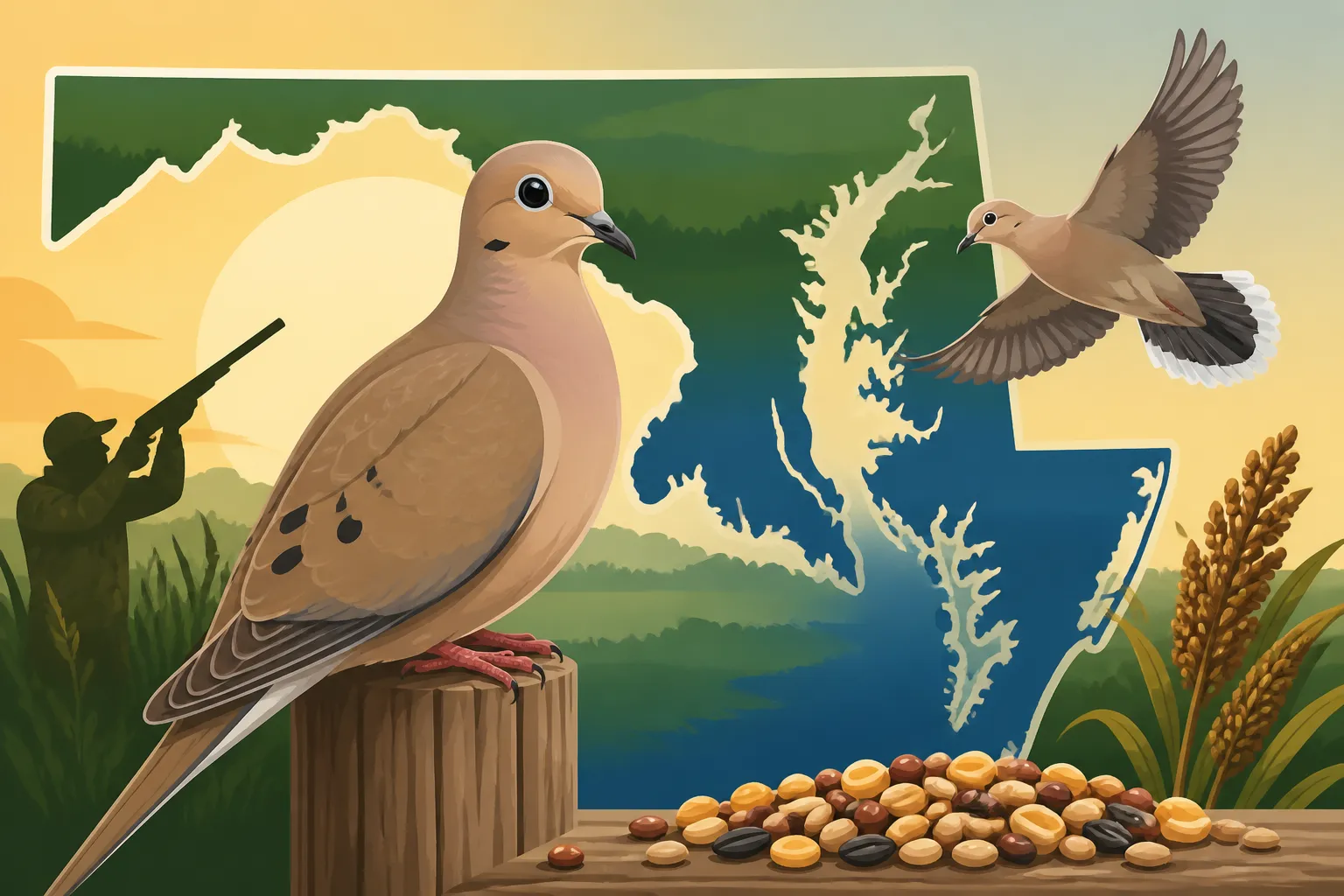
Maryland is home to a robust population of mourning doves, a species that offers an exciting challenge for hunters due to their swift, erratic flight and keen eyesight. These birds are found across the state, from the sprawling farmlands of the Eastern Shore to the more suburban fringes and even into the western mountains. Their presence isn't static, though; it ebbs and flows with the seasons and the availability of food and water, making them a truly dynamic game bird.
Their Annual Cycle and Presence
Mourning doves are one of Maryland's most widespread and adaptable bird species, with a fascinating annual cycle that directly impacts hunting opportunities. While many people think of them as strictly migratory, Maryland actually supports both resident doves and significant numbers of migratory birds that pass through or winter here. Resident doves begin nesting quite early, sometimes as early as March, and can raise multiple broods throughout the spring and summer. This extended breeding season means that by late summer, when hunting seasons typically open, there's a strong local population of both adult and juvenile birds.
As fall approaches, particularly around the opening of Maryland Dove Season Dates and Splits in September, the local populations are augmented by birds migrating south from more northern states. This influx can dramatically increase bird numbers, making early season hunts particularly fruitful. However, their movements are highly influenced by weather patterns and food availability. A sudden cold snap can push birds south quickly, while a mild fall might keep them around longer. Understanding this dynamic interplay between resident and migratory birds is key to predicting where and when you might encounter them.
Population Trends and Local Dynamics
Maryland's mourning dove population is generally considered stable, a testament to their adaptability and effective management strategies by the Maryland Department of Natural Resources (DNR). However, "stable" doesn't mean "uniform." Local populations can fluctuate significantly from year to year, influenced by factors like nesting success, predator pressure, and perhaps most critically, habitat changes. For instance, areas with consistent agricultural activity tend to support higher dove numbers, especially if those farms incorporate practices beneficial to doves, such as leaving some fields fallow or planting specific seed crops.
It's also worth noting that population densities can vary considerably between different regions of the state. The open agricultural landscapes of the Eastern Shore and portions of the Piedmont tend to hold the highest concentrations of doves, simply because these areas offer abundant food sources. Conversely, heavily forested regions or densely urbanized areas might see fewer doves, or at least fewer concentrations suitable for hunting. Hunters often find that certain counties consistently produce more birds, which is usually a direct reflection of the underlying habitat and farming practices. Checking the most recent DNR harvest reports or speaking with local farmers can give you a better feel for the local dynamics in your chosen hunting area, helping you to pinpoint where the birds are more likely to concentrate.
Telling Local Birds from Migrants
For the average dove hunter in the field, distinguishing between a local, resident mourning dove and a bird that has migrated south from another state can be tough, but there are subtle clues. Local birds, especially those that have been feeding heavily in the same area for weeks, might appear slightly heavier or have a more robust appearance. Their plumage can also show signs of wear and tear from a season of nesting and evading predators. Young birds, hatched recently, often have lighter feather edges and can sometimes be identified by a slightly different flight pattern as they are still honing their aerial maneuvers.
Migratory doves, on the other hand, can sometimes appear a bit leaner, having traveled considerable distances. Their flight might seem more purposeful, less focused on a specific local feeding spot, and more on covering ground. The biggest indicator, however, often isn't visual, but behavioral. When a fresh push of migratory birds arrives, the sheer number of doves in an area can increase dramatically, and their feeding patterns might be less predictable, spreading out over wider areas as they discover new food sources. Hunters often describe these days as "waves" of new birds coming in. While it doesn't fundamentally change how you hunt them, understanding that new birds are constantly moving through can keep your spirits up on slower days, knowing that another influx could be just around the corner.
Key Habitats and Feeding Preferences
Mourning doves are primarily seed-eaters, and their diet dictates where you’ll find them. They aren't foragers like some birds; instead, they prefer to pick seeds directly from the ground. This specific feeding habit makes certain types of habitats far more attractive to them than others.
Preferred Food Sources
Mourning doves are essentially ground-feeding granivores, meaning their diet is almost exclusively made up of seeds they glean from the ground. They are not equipped to crack open tough nuts or dig for tubers, so they rely on readily available seeds. Their favorites include a wide array of agricultural crops and wild plants. Think small grains like wheat, oats, and barley, which are often harvested in late summer, leaving a bounty of waste grain scattered across fields. Corn fields, especially after harvest, are also huge magnets for doves, as they pick up kernels missed by machinery. Sunflower fields, particularly those specifically planted for Dove Hunting a Maryland Sunflower Field, are absolute goldmines. The large, easily accessible seeds are a dove's dream come true.
Beyond cultivated fields, doves are also drawn to fields of wild grasses and weeds. Seeds from plants like ragweed, foxtail, smartweed, and pokeberry are important natural food sources, especially in areas where agricultural fields are less common or after crops have been consumed. A key characteristic of a preferred dove feeding area is open ground. Doves prefer to feed in areas with sparse vegetation that allows them easy access to seeds and clear lines of sight to watch for predators. Dense, tall cover makes feeding difficult and exposes them to unseen threats, so they'll generally avoid it.
Water and Grit Needs
Beyond a consistent food source, access to water and grit is absolutely critical for mourning doves, and any successful dove hunt often hinges on finding areas that offer all three. Doves have a high metabolic rate and need to drink regularly, often several times a day, especially during hot weather. They prefer shallow, open water sources where they can land easily and have good visibility. Farm ponds with bare, muddy edges, cattle watering tanks, and even shallow ditches or puddles after a rain can be major drawcards. A prime watering hole often has a "dove line" – a worn path in the mud where birds repeatedly land and take off.
Grit is just as vital. Doves, like many other birds, don't have teeth. They rely on grit – small stones and sand – to help grind up seeds in their gizzard, aiding digestion. They will actively seek out sources of grit, often flying considerable distances to find it. Gravel roads, sandy spots in fields, railroad beds, and even disturbed areas of soil around construction sites can serve as important grit sources. When scouting, pay close attention to the intersection of food, water, and grit. A field full of seeds is great, but if doves have to fly a mile to get water or grit, they might choose a less abundant field that offers a complete package closer by. A spot that provides all three in close proximity is almost guaranteed to hold birds.
Roosting and Loafing Areas
While feeding and watering sites are where you'll typically hunt doves, understanding their roosting and loafing habits is crucial for predicting their movements and optimizing your setup. Mourning doves generally spend their nights roosting in trees, often choosing dense stands of evergreens like pines or cedars, or deciduous trees with thick canopy cover. These roosting sites offer protection from predators and the elements. They tend to gather in large groups at these locations, flying in just before dusk and dispersing at first light.
Loafing areas are spots where doves rest and digest their food during the day, between feeding and watering trips. These are often somewhat elevated, open areas that provide good visibility, such as utility lines, dead trees, fence rows, or the branches of isolated trees near feeding fields. You'll often see them perched in these spots, soaking up the sun and watching the world go by. Doves will typically fly from their roost to a feeding area in the morning, then to a watering hole or loafing area, then back to a feeding area in the afternoon, before returning to the roost for the night. Recognizing these patterns and identifying the specific roosting and loafing sites in an area can give you a significant advantage. If you know where they sleep, where they eat, and where they hang out in between, you can anticipate their flight paths and position yourself accordingly for the best hunting opportunities.
Prime Feeding Locations for Maryland Doves
Knowing what doves eat is one thing; knowing where those foods are most likely to be found in Maryland is another. The agricultural landscape of the state, particularly the Eastern Shore and parts of the Piedmont, provides ideal conditions for dove feeding.
Agricultural Fields: Corn, Wheat, and Sunflowers
Maryland's agricultural landscape is a dove hunter's paradise, especially when it comes to specific crop fields. After harvest, these fields become instant buffets for mourning doves, offering vast quantities of easily accessible seeds.
- Cut Corn Fields: Few places attract doves like a recently harvested corn field. While combines are incredibly efficient, they always leave behind shattered kernels and broken cobs. Doves, with their keen eyesight, quickly locate these remnants. The sparse stubble left after harvest provides just enough cover for them to feel secure, yet is open enough for easy feeding and rapid escape. The edges of these fields, especially near treelines or power lines, can be particularly productive as doves often fly along these features before dropping down to feed. When looking for a spot, pay attention to the combine's path; areas where turns were made or where the combine emptied its hopper often have higher concentrations of spilled grain.
- Cut Wheat and Other Small Grain Fields: Following closely behind corn, fields of harvested wheat, barley, or oats are absolute magnets for early season doves. Wheat is typically harvested in late spring or early summer, meaning these fields have had plenty of time to dry out and for the waste grain to become accessible by the time dove season rolls around. Much like corn, the stubble of a cut wheat field provides perfect ground-feeding habitat. The smaller size of these grains means doves can gobble them up quickly. These fields are often large and flat, making for excellent hunting opportunities where birds fly predictable patterns from watering holes or roosts. When scouting, look for fields that have been recently cut and where the ground is relatively clear.
- Sunflower Fields: If you're looking for the absolute king of dove attractants, it's hard to beat a dedicated sunflower field. Many farmers in Maryland will plant sunflowers specifically for doves, sometimes in cooperation with the DNR for public hunting opportunities. The large, oil-rich seeds are incredibly appealing to doves. When sunflowers mature and begin to drop their seeds, or after they've been mechanically "knocked down" or lightly disked, these fields become incredibly hot spots. The trick is to find a field where the seeds are both abundant and accessible on the ground. A field that’s too thick with standing plants, or where the seeds are still firmly attached, won't be as productive. However, a field with mature, dropping, or knocked-down sunflowers can provide some of the most exciting dove hunting action you'll ever experience. Don't forget to research if there are any specific Maryland Public Land Hunting Permits required for these designated fields.
Natural Seed-Producing Areas
While agricultural fields are prime targets, don't overlook the power of natural habitats that provide ample seed for doves. These areas can be fantastic, especially if you're hunting public land or looking for less pressured birds.
- Fallow Fields and Old Farmsteads: Abandoned or fallow fields that were once cultivated often revert to a mix of native grasses and "weeds" like ragweed, foxtail, smartweed, and pokeberry. These plants are incredible natural seed producers and are highly attractive to doves. The key is finding fields where the vegetation isn't too dense, allowing doves to comfortably feed on the ground. Old farmsteads, with their disturbed soil and edges, can also be productive. These areas often have a mix of cultivated and wild plants, providing a diverse food source. Look for areas where the ground cover is patchy or has been recently disturbed, making seeds more accessible.
- Powerline Cuts and Utility Right-of-Ways: These long, linear clearings are managed to prevent tree growth, often resulting in a mix of grasses, weeds, and small shrubs. This habitat creates perfect ground-feeding opportunities for doves. The exposed soil and sparse vegetation provide ideal conditions for them to find seeds. Moreover, the power lines themselves serve as excellent loafing and staging areas for doves, making them highly visible as they fly in to feed or rest. Hunting these areas often involves setting up along the edge of the cut, anticipating birds flying along the line or dropping into the feeding strip. This can be a great place to focus your scouting efforts, especially using tools like the GoHunt app to identify these linear features on maps.
- Gravel Roads and Disturbed Areas: As mentioned earlier, doves need grit for digestion, and gravel roads are a primary source. But beyond just grit, roadsides and disturbed areas often have pioneer plant species that produce abundant small seeds. The edges of gravel roads, construction sites, logging roads, or recently cleared areas can be surprisingly productive feeding spots. The bare, open ground makes it easy for doves to spot and access seeds, and they often use the road itself as a flight corridor. Keep an eye out for dust baths or concentrations of droppings on these surfaces, which are clear signs of dove activity.
Powerline Cuts and Gravel Roads
Powerline cuts and gravel roads are truly unsung heroes for Maryland dove hunters, often overlooked but incredibly productive. They provide a unique combination of habitat features that doves simply can't resist.
First, let's talk about powerline cuts. These long, open corridors are maintained by utility companies, meaning trees are regularly cleared, resulting in a landscape dominated by grasses, forbs, and low-growing shrubs. This disturbed earth is a fantastic incubator for pioneer plant species that produce small, edible seeds, perfect for doves. Think ragweed, crabgrass, and various smartweeds – all high on a dove's menu. What makes these cuts even better is the presence of the power lines themselves. Doves are notorious for perching on wires, using them as observation points to scan for predators and potential feeding spots. You'll often see them staging on these lines, gathering in groups before swooping down into the cut to feed. Setting up along one of these cuts, especially where it intersects with a field or woodline, can provide consistent action as birds fly in and out. The GoHunt app can be a real asset here, allowing you to easily identify powerline rights-of-way that traverse promising agricultural or natural areas.
Then there are gravel roads. Beyond being a source of grit, which is essential for doves to digest their food, the shoulders and edges of these roads often grow a plethora of seed-producing plants. The constant disturbance from vehicle traffic keeps the vegetation low and sparse, creating an ideal ground-feeding environment. Doves also use roads as natural flight corridors, following them as they travel between feeding, watering, and roosting sites. I've had many successful hunts setting up a few decoys near a dusty gravel road that bordered a cut cornfield. The birds would fly down the road, see the decoys, and drop right in. Always be mindful of public access rules and safety when hunting near roads, but don't underestimate their potential. Sometimes, the most obvious path is the one the birds prefer.
Scouting and Identifying Dove Feeding Areas
Finding doves isn't just about showing up on opening day; it’s about putting in the legwork beforehand. Effective scouting is the single most important factor in a successful Maryland dove hunt.
Pre-Season Reconnaissance
You wouldn't head out on Sika Deer Hunting in Maryland's Tidal Marshes without scouting first, and dove hunting is no different! Pre-season reconnaissance is absolutely non-negotiable for consistent dove hunting success. Doves are creatures of habit but those habits can shift based on food availability and pressure. The best time to start scouting is usually a few weeks before the season opens, and certainly within a week of your planned hunt. Drive or walk the areas you have permission to hunt, paying close attention to recent agricultural activity. Have the wheat fields been cut? Are the sunflowers drooping with heavy seeds? Has that cornfield been combined? These are critical observations.
Look for the "three essentials": food, water, and grit. Identify specific fields that have been harvested, especially wheat, corn, or planted sunflowers. Then, locate nearby water sources – farm ponds, shallow ditches, or even puddles after a rain. Finally, note any gravel roads or exposed sandy spots that could provide grit. As you observe, watch for actual dove activity. Are birds flying into a particular field in the mornings or evenings? Are they congregating on power lines or dead trees near a field? Are there "dove lines" worn into the mud around a pond? Don't be afraid to pull over and watch for 15-30 minutes, especially during the early morning or late afternoon when doves are most active. This crucial pre-season work will inform exactly where you need to be on opening day.
Reading the Landscape for Dove Sign
Beyond just seeing birds, learning to "read" the landscape for subtle signs of dove activity can tell you a lot about where they're feeding, even if no birds are present at that exact moment. One of the most obvious signs is droppings. Doves leave small, white-splattered droppings, and if you see a significant concentration of these on the ground in a field, under a power line, or around a water source, you know birds have been using that spot heavily. The fresher the droppings, the more current the activity.
Another excellent indicator is the presence of dust baths. Doves, like many birds, take dust baths to clean their feathers and rid themselves of parasites. These appear as small, shallow depressions in dry, dusty soil, often with feather fragments nearby. Finding a fresh dust bath confirms active dove use. Look for evidence of feeding as well – discarded seed hulls or peck marks on the ground. Around water sources, look for those "dove lines" or tracks in the soft mud leading to the water's edge. Even just observing the overall "feel" of a field can tell you something. Is the stubble sparse enough for easy feeding? Is there clear flight access from nearby roosts or water? Being observant and piecing together these various clues is like being a detective; each sign brings you closer to solving the mystery of where the doves are.
Using Technology for Scouting
In today's world, hunters have access to incredible technological tools that can drastically improve scouting efficiency for doves, especially for mapping out potential feeding areas. Mapping apps like GoHunt have revolutionized how we approach finding suitable hunting spots. These apps allow you to view aerial and topographic maps with incredible detail, often showing property lines, satellite imagery, and even public land boundaries.
Before you ever set foot in a field, you can use these apps to identify promising areas. Look for patterns: large agricultural fields (especially those that appear recently harvested in the satellite imagery, though this can be dated), proximity to water sources like ponds or creeks, and linear features like powerline cuts or gravel roads. You can mark these potential hot spots on your map, creating a custom scouting plan. This digital reconnaissance saves you countless hours of aimless driving or walking. Once you've identified potential spots on the map, you can then focus your in-person scouting efforts on those specific locations, validating what you saw virtually. This combination of digital and on-the-ground scouting is incredibly effective for staying ahead of the birds and maximizing your time in the field, whether you're planning a trip to Hunting Maryland's Upper Eastern Shore Farm Country or scouting local suburban plots.
Setting Up for Success in Feeding Areas
Once you've done your scouting and identified a prime feeding location, the next step is to set up your spread and blind effectively to draw birds in and get good shooting opportunities.
Decoy Placement and Spreads
Decoys are absolutely essential for dove hunting, acting as a visual magnet to draw in passing birds. While doves are migratory, they are also social, and seeing other doves on the ground or perched sends a clear signal that the area is safe and productive. The type of decoys you use can vary – clip-on decoys that attach to fence lines or dead branches, and motion decoys (like spinning-wing or flapping-wing doves) are particularly effective.
When placing your decoys in a feeding area, aim for a natural-looking spread. If you're hunting a cut field, place some decoys on the ground as if they're feeding. Group them loosely in pairs or small clusters, not in a tight, unnatural line. This creates the illusion of happy, content doves. Mix in a few clip-on decoys on nearby fence posts, low branches, or even on a portable decoy pole to add height and visibility. The real game-changer can be a motion decoy. A spinning-wing dove decoy, placed prominently where it can be seen from a distance, acts like a beacon. The flashing of the wings catches the eye of high-flying doves and draws them in for a closer look. Position your motion decoy facing into the wind, as this is how real doves would orient themselves, and it often creates a more natural landing approach for incoming birds. The goal is to make your spread look as inviting and realistic as possible to encourage passing doves to commit and fly within range.
Concealment and Field Blinds
Doves have incredible eyesight, which means good concealment is paramount for a successful hunt. These birds are constantly scanning for predators, and any unnatural movement or shine will send them flaring out of range. Don't underestimate their ability to spot you!
The simplest form of concealment in a field is to use existing natural cover. A hedgerow, a stand of tall weeds at the edge of a field, or even a small clump of standing corn can provide enough breakup to hide your silhouette. If natural cover is sparse, a portable ground blind is a fantastic investment. Look for blinds with a low profile that blend in with the surrounding stubble or vegetation. Camouflage patterns should match the environment – typically browns, tans, and dull greens for late summer/early fall fields. Remember, it's not just about hiding your body; it's about breaking up your outline. Wearing camouflage clothing that blends with your blind and the surroundings is also critical. Avoid bright colors or reflective surfaces.
When setting up your blind, consider the sun and wind. Try to position yourself with the sun at your back if possible, as it will make it harder for doves to see you and prevent sun glare. Also, doves typically land and take off into the wind, so understanding the prevailing wind direction will help you anticipate their approach. Place your blind or position yourself downwind of your decoy spread, allowing incoming birds to fly past the decoys and present a shot before they reach your position. This setup forces them to commit to the decoy spread, giving you precious seconds for a clean shot before they spot you. Just like when you're Hunting a Chesapeake Bay Blind at First Light for waterfowl, patience and stillness are your best friends in a dove blind.
Shot Selection and Safety
Dove hunting offers fast-paced action, but it's also a sport where responsible shot selection and absolute adherence to safety rules are critical. These birds are small and incredibly fast, leading to some challenging shots, often at varying distances.
For ammunition, lighter loads with smaller shot sizes, typically 7.5 or 8, are ideal. Doves are not heavily feathered birds, and these smaller pellets provide a dense pattern that is effective without excessive recoil or over-penetration. For chokes, modified or improved cylinder are popular choices, offering a good balance of spread and density for the typical ranges doves are shot at. Full choke can be too tight for these fast-moving targets unless you're consistently taking very long shots, which isn't advisable.
Safety is, of course, paramount. Always be aware of your surroundings and other hunters. Establish clear zones of fire if hunting with a group. Never swing your gun on a bird if it means pointing at another hunter, a dwelling, or livestock. Many states, including Maryland, have specific setback rules regarding how close you can shoot to occupied dwellings or public roads. Familiarize yourself with these Maryland Shooting Hours and Legal Light and setback regulations. Hearing protection is a must; prolonged shooting at a dove field can damage your hearing. Eye protection is also highly recommended to guard against errant shot or debris. Finally, know your limitations. Don't take wildly out-of-range shots; it only wounds birds and wastes ammunition. Practice at a skeet or trap range to get a feel for leading fast-flying targets. Ethical hunting means making clean kills and respecting the game you pursue.
Conservation and Management of Dove Habitats
The continued health of Maryland's mourning dove population, and the excellent hunting opportunities they provide, depend heavily on ongoing conservation efforts and habitat management. It’s a delicate balance that involves both agricultural practices and dedicated land stewardship.
The Role of Agricultural Practices
Farmers are often the unsung heroes of dove conservation in Maryland. Their agricultural practices, whether intentional or not, create the primary feeding grounds for mourning doves across much of the state. Fields of corn, wheat, and sunflowers, particularly after harvest, provide the vast majority of food sources that doves depend on. When farmers leave a portion of their crop unharvested, or lightly disk a field after harvest, they are effectively creating a dove buffet.
Some farmers actively participate in programs or simply choose practices that benefit doves. This might include planting specific food plots of sunflowers or millet, leaving crop residue on the surface (no-till farming), or rotating crops in a way that provides consistent food availability throughout the late summer and fall. The key is recognizing that doves thrive in disturbed, open ground with accessible seeds. Farmers who understand this and manage their properties with wildlife in mind contribute immensely to the overall health of the dove population and the quality of hunting available. Building good relationships with landowners and understanding their farming cycles can open up access to these prime feeding areas, demonstrating the value of hunters as conservation partners.
Public Land Management Efforts
While private agricultural lands are a huge component, Maryland's public lands also play a crucial role in providing dove hunting opportunities and ensuring robust populations. The Maryland Department of Natural Resources (DNR) actively manages numerous Wildlife Management Areas (WMAs) and other public access properties to create and maintain dove habitat. This often involves planting designated dove food plots, typically with sunflowers, wheat, or millet, specifically designed to attract and hold birds. These plots are usually disked or mowed just before or during the early season to make the seeds readily available to doves.
Beyond specific food plots, WMAs often manage fields with native grasses and weeds to enhance natural seed production. They might also ensure adequate water sources are available and manage forest edges to provide suitable roosting and loafing habitat. Hunters should always check the DNR website or contact specific WMAs for information on special dove management areas or designated Hunting Released Pheasants on Maryland Public Land days. Some WMAs may require a Maryland Public Land Hunting Permits or have specific sign-in procedures, so it’s important to be informed. These public land efforts are vital, especially for hunters who don't have access to private property, ensuring that everyone has a chance to enjoy the thrill of a dove hunt.
Private Land Stewardship
For private landowners, actively managing property for mourning doves can significantly enhance local populations and create fantastic hunting opportunities. It doesn't always require massive agricultural operations; even smaller parcels can be made dove-friendly with a little planning. The core principle of private land stewardship for doves revolves around providing the essential three: food, water, and grit, along with safe roosting and loafing areas.
Planting food plots specifically for doves is one of the most effective strategies. A mixture of sunflowers, millet, wheat, and even sorghum can provide a buffet throughout the late summer and fall. Timing the planting and subsequent manipulation (e.g., mowing or light disking) is key to making seeds available when the season opens. Enhancing water sources, such as creating shallow edges around a pond or maintaining a small seep, will draw birds in, especially during dry periods. Leaving undisturbed, dusty patches or scattering gravel in specific areas can provide essential grit. Finally, preserving or planting dense stands of evergreens or tall deciduous trees near feeding areas offers secure roosting sites. Landowners can also consider participating in cost-share programs that support wildlife habitat improvements. Engaging in such stewardship not only benefits the doves but often improves habitat for other small game species as well.
| Feeding Area Type | Primary Food Source | Doves' Attraction | Best Time to Hunt | Scouting Tips |
|---|---|---|---|---|
| Cut Corn Fields | Waste Corn Kernels | Abundant, high-energy food | Early to mid-season | Look for spilled kernels, combine tracks, proximity to roosts. |
| Cut Wheat/Small Grain Fields | Waste Wheat, Oats, Barley | Readily available small seeds, open ground | Early season (Sept) | Check for recent harvest, light stubble, dove droppings. |
| Sunflower Fields | Sunflower Seeds | Highly desired, large, oily seeds | Early to mid-season | Identify fields with mature, drooping, or knocked-down heads. |
| Fallow Fields/Old Farmsteads | Ragweed, Foxtail, Smartweed | Natural diversity, less pressure | Throughout season | Search for patchy vegetation, disturbed soil, wild seed heads. |
| Powerline Cuts | Wild Seeds (ragweed, crabgrass) | Seeds, overhead perching, open flight path | Throughout season | Scan power lines for perching birds, identify open cuts on maps (e.g., GoHunt). |
| Gravel Roads/Disturbed Areas | Grit, wild seeds | Grit access, open ground, flight corridors | Throughout season | Look for dust baths, tracks, and droppings on road shoulders. |
Disclaimer
The information provided in this guide is for informational purposes only and is not intended as legal advice. Hunting regulations, seasons, and licensing requirements in Maryland can change, and it is the responsibility of every hunter to consult the most current Maryland Department of Natural Resources (DNR) regulations before engaging in any hunting activities. Always ensure you have the appropriate licenses and permits and adhere to all local, state, and federal laws. Safety should always be your top priority in the field.