How to Identify a Delmarva Fox Squirrel
It’s a scenario many of us have faced in the woods: you spot movement in the canopy or on the forest floor, a flash of fur, and your hunter's instinct kicks in. But in Maryland, a quick trigger finger can land you in serious trouble if that squirrel happens to be a protected Delmarva Fox Squirrel. This comprehensive guide is here to help you confidently distinguish these unique creatures from their more common cousins, ensuring you stay on the right side of conservation and the law.
Why Positive Identification is Absolutely Crucial
We all love the thrill of the hunt, but part of being a responsible hunter means knowing your target inside and out. When it comes to squirrels in Maryland, this isn't just good practice; it's a legal imperative. Mistaking a protected species for a game animal can have significant repercussions, not just for you, but for the ongoing conservation efforts of these remarkable creatures.
The Protected Status of Delmarva Fox Squirrels
Let's be blunt: shooting a Delmarva Fox Squirrel is a big deal, and not in a good way. These aren't just any squirrels; they hold a special protected status under both state and federal law. Their populations once dwindled dramatically due to habitat loss and overhunting, disappearing from much of their historic range on the Delmarva Peninsula. Years of dedicated conservation work, including reintroduction programs and habitat restoration, have brought them back from the brink in certain areas. Because of this, they are strictly off-limits to hunters.
The legal ramifications for mistakenly harvesting a protected species can be severe, including hefty fines and the loss of hunting privileges. It's a stain on the record that no ethical hunter wants. We're all ambassadors for our sport, and upholding conservation laws is paramount. Imagine the frustration of planning a great trip, only to find yourself facing legal challenges because you didn't take an extra moment to verify your target. It's a tough lesson to learn, and one we all want to avoid.
General Squirrel Hunting in Maryland
Now, don't get me wrong, squirrel hunting is a cherished tradition for many of us in Maryland. The fast-paced action and the challenge of stalking these wary critters make for a fantastic day afield. The state offers generous seasons for species like the gray squirrel and, in some western counties, the eastern fox squirrel (which is different from the Delmarva Fox Squirrel, adding to the confusion, I know). Many hunters enjoy spending time in the hardwoods, chasing Squirrel Hunting Maryland Hardwood Ridges or exploring dense cover for Small Game Species in Maryland.
These huntable squirrels provide excellent opportunities, often serving as an entry point for new hunters due to their abundance and accessibility. However, it's precisely because we share the woods with both common and protected species that vigilance is so important. We can't just assume every squirrel is fair game. Understanding the subtle differences is key to enjoying our hunting heritage responsibly and ensuring the continued health of all wildlife populations, including Maryland's Three Huntable Squirrel Species.
Key Visual Identifiers of the Delmarva Fox Squirrel
When you’re trying to make a quick decision in the field, visual cues are your best friend. The Delmarva Fox Squirrel has several distinct features that set it apart, but you need to know what to look for specifically. Don't rely on a vague impression; scrutinize these details closely.
Size and Body Proportions
One of the first things you'll likely notice about a Delmarva Fox Squirrel, if you see it alongside a gray squirrel, is its size. These squirrels are significantly larger, often described as almost twice the size of a typical Eastern Gray Squirrel. They can be anywhere from 20 to 30 inches long, including their tail, and weigh between 2 to 3 pounds. Imagine a small housecat, but with a bushy tail – that's the kind of bulk we're talking about.
Their body shape is also more robust and muscular. While a gray squirrel might appear lithe and quick, the Delmarva Fox Squirrel has a more deliberate, almost heavy-set appearance. They move with a certain gravity, not the frantic, darting movements you see from gray squirrels. If you're looking at a squirrel that seems unusually large and substantial, it's worth taking a closer look. They don't have that delicate, aerial acrobat quality of their smaller relatives.
Coloration and Fur Patterns
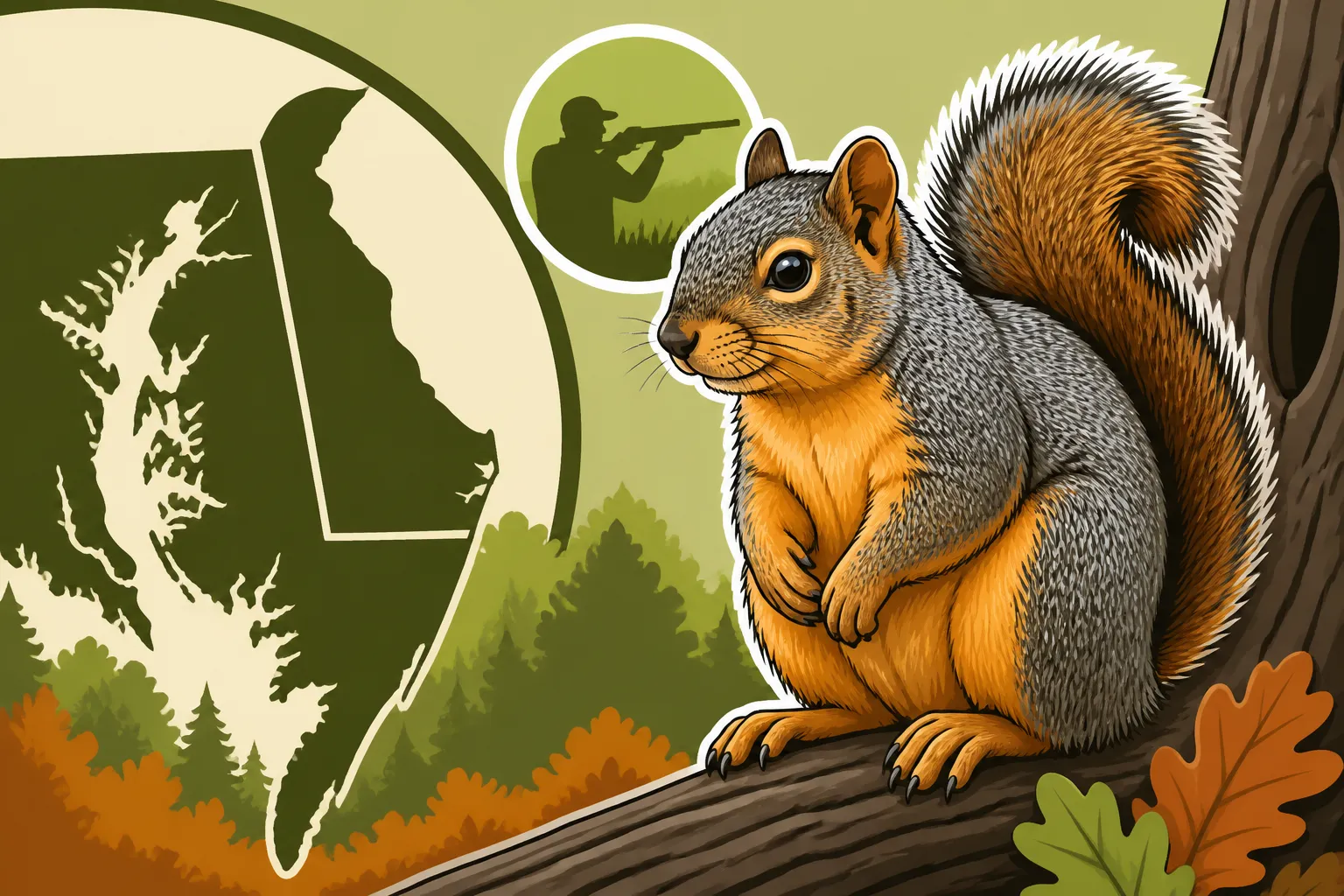
This is probably the single most important identifier, and it's where most mistakes happen if hunters aren't paying close attention. The Delmarva Fox Squirrel typically has a grayish-silver coat on its back, but with a distinctive twist: a bright, clean white belly, and often, prominent white fur on its nose, around its eyes, and on the tips of its ears. This 'frosted' look is characteristic. The overall impression is often a striking contrast between the darker back and the brilliant white underside.
Contrast this with the Eastern Gray Squirrel, which usually has a grayish coat all over, with some reddish or brownish tinges, and a belly that is often a duller white or even grayish. The gray squirrel’s face might be a lighter gray, but rarely has that stark, pure white muzzle and eye ring of the Delmarva variety. The tail of a gray squirrel usually has a distinct white fringe, while the Delmarva's tail typically blends more with its body coloration, although it can still be quite bushy. When you see that clean white on the nose and ears, especially against the grayish body, that should be your immediate red flag.
Tail Characteristics
While less definitive than body coloration, the tail can offer additional clues. The Delmarva Fox Squirrel’s tail is generally very full and bushy, contributing to its overall large appearance. However, unlike the Eastern Gray Squirrel, whose tail often has a distinct white or light gray fringe, the Delmarva's tail typically blends more seamlessly with the color of its body, often exhibiting a frosted or silvery-gray tone without that sharp border.
Sometimes, their tails can also appear a bit flatter or less "poofy" in profile than a gray squirrel's, particularly when they're relaxed or moving slowly. This isn't a hard and fast rule, as tail fluffiness can vary, but combined with the overall size and the crucial face and belly coloration, it adds another piece to the identification puzzle. Always look at the whole picture, but pay close attention to the base colors and lack of stark white fringe on the tail itself when trying to tell The Protected Delmarva Fox Squirrel apart from other species.
Habitat and Behavioral Clues
Beyond what they look like, where and how a squirrel acts can be strong indicators of its species. Delmarva Fox Squirrels have specific habitat preferences and behavioral patterns that further distinguish them from the more commonly encountered Eastern Gray Squirrel.
Preferred Habitat Types
Delmarva Fox Squirrels are somewhat particular about their homes. They tend to favor mature, open woodlands with large, widely spaced trees, especially those dominated by pines and oaks. Think of old growth forests, often with an understory that isn't too dense, allowing for good visibility and easy movement on the ground. These habitats are frequently found adjacent to agricultural fields, which provide additional food sources like corn or soybeans. You'll often find them in isolated woodlots or along wooded edges of farmlands on the Eastern Shore, rather than the deep, dense, contiguous forests or urban parks where gray squirrels thrive.
Their range is also quite specific. While reintroduction efforts have helped them expand, they are still largely confined to certain areas of the Eastern Shore, particularly counties like Dorchester, Talbot, Queen Anne's, and Kent. They also have some populations in pockets of Virginia and Delaware. If you're squirrel hunting in Garrett County, for example, it's highly unlikely you'd encounter a Delmarva Fox Squirrel. Knowing Where Delmarva Fox Squirrels Still Live is crucial for any hunter. Using a mapping tool like GoHunt can help you visualize these habitat types and even potential squirrel activity zones, giving you a better understanding of where you might encounter different species.
Behavioral Differences
Watching how a squirrel moves and behaves can tell you a lot. Delmarva Fox Squirrels are generally less arboreal than their gray squirrel counterparts. While they do climb trees, they spend a considerable amount of time foraging on the ground, often moving more slowly and deliberately. They don't exhibit the same frenetic, acrobatic leaps and bounds through the tree branches that Eastern Gray Squirrels are famous for.
They are often described as being more "stately" in their movements. When startled, a gray squirrel might bolt up the nearest tree and chatter incessantly. A Delmarva Fox Squirrel might still run for cover, but it often does so with a less frantic pace, sometimes pausing to assess the threat before disappearing. They can also be a bit more curious or less immediately skittish in some situations. Paying attention to these subtle behavioral cues, along with their physical appearance, really solidifies your in-field identification. A mapping app like GoHunt can also provide insights into the type of tree cover and ground vegetation, which can influence how different squirrel species forage and move.
Tools and Tips for Positive Identification in the Field
Even with all this knowledge, making a split-second decision in the field can be tough. That's why having the right approach and a few practical tools can make all the difference. Remember, the goal is confident identification every single time.
Binoculars and Patience
Never underestimate the power of good optics and a little patience. When you spot what you think might be a squirrel, resist the urge to immediately raise your firearm. Instead, use your binoculars to get a clear, magnified view. Look for those critical identifying marks: the white nose, white ear tips, and pure white belly. Observe its size and how it moves. Is it the small, zippy gray squirrel, or that larger, more deliberate Delmarva?
Rushing your shot is the quickest way to make a mistake. Take a breath, observe, and confirm. This isn't just about identifying a protected species; it's good hunting practice for any game animal. We owe it to the animal to make a clean, ethical shot, and that starts with positive identification. Tools like GoHunt can also help you mark your location and remind you of species-specific regulations for that particular area if you're ever unsure.
When in Doubt, Don't Shoot
This is the golden rule, etched into the heart of every ethical hunter. If there is any doubt, absolutely any uncertainty at all, do not pull the trigger. It is always better to let an animal walk than to mistakenly take a protected one or make a poor shot on a legal one. The consequences of error are simply too high, both legally and ethically. Another squirrel will come along.
Think about it this way: your reputation, the future of hunting in Maryland, and the conservation of a unique species are all at stake with that single decision. Hunters often share stories of the big buck they "should have shot" but didn't because something felt off – that's the kind of discipline we need with protected species. Your Maryland Hunter Education course undoubtedly drilled this into your mind, and it applies strongly here. Knowing your target is a foundational principle of responsible hunting.
Learning the Local Populations
One of the best ways to ensure you're making accurate identifications is to understand the specific wildlife populations in the areas you hunt. Consult Maryland's Department of Natural Resources (DNR) website for maps and information on Delmarva Fox Squirrel populations. They often provide details on reintroduction areas and current strongholds. Knowing that you're in an area where these squirrels are known to exist should heighten your awareness and prompt extra caution.
If you hunt public lands, check the specific regulations for that Wildlife Management Area or State Forest. Sometimes WMAs in recovery areas will have additional signage or information. Talk to local DNR staff if you have questions. Familiarizing yourself with resources like the GoHunt platform's mapping features can help you identify specific terrain features that favor Delmarva Fox Squirrels, like mature pine stands bordering fields, increasing your situational awareness. Remember that even though you might think you're Telling a Fox Squirrel From a Protected Delmarva Squirrel on appearance alone, habitat context is key.
Here's a quick comparison to help you differentiate:
| Feature | Eastern Gray Squirrel | Delmarva Fox Squirrel |
|---|---|---|
| Overall Size | Smaller (16-20 inches, 1-1.5 lbs) | Larger (20-30 inches, 2-3 lbs) |
| Body Shape | Slender, agile | Robust, stocky, "heavy-set" |
| Back Color | Mostly gray, sometimes reddish/brownish hues | Silvery-gray, often with a "frosted" look |
| Belly Color | Dull white or grayish | Bright, clean white |
| Face/Ears | Lighter gray on face, no distinct white nose | Distinct white nose, around eyes, white ear tips |
| Tail | Bushy, often with a distinct white fringe | Very bushy, but tail color blends more, less distinct white fringe |
| Movement | Quick, frantic, highly arboreal | Slower, deliberate, spends more time on ground |
| Preferred Habitat | Diverse forests, urban/suburban woodlots | Mature, open pine-oak woodlands, adjacent to ag fields |
| Legal Status | Huntable species | Federally and state protected, not huntable |
Before you head out, make sure your Maryland Hunting Licenses and What They Cost are in order, and always remember to pay attention to your surroundings, whether you're Scouting Maryland Public Land With Aerial Photos or just walking a familiar woodlot. Safe hunting means smart hunting, and smart hunting includes knowing exactly what you're aiming at.
Disclaimer
This article is for general informational purposes only and does not constitute professional advice. Laws, prices and regulations vary by location and change over time. Consult a qualified professional for guidance on your specific situation.