Maryland Deer in Suburban Neighborhoods
Suburban deer populations in Maryland damage property and cause vehicle collisions while thriving in developed residential landscapes.
Know what you’re after.
Big game, small game, upland birds, and waterfowl — identification, behavior, rut and migration timing, and how each species moves through the season.

Suburban deer populations in Maryland damage property and cause vehicle collisions while thriving in developed residential landscapes.

Aging a harvested deer through lower jaw teeth provides hunters a reliable scientific method to understand Maryland herd health.

Maryland three-point deer regulations and antler restrictions protect yearling bucks, typically allowing these animals to reach 1.5 years.
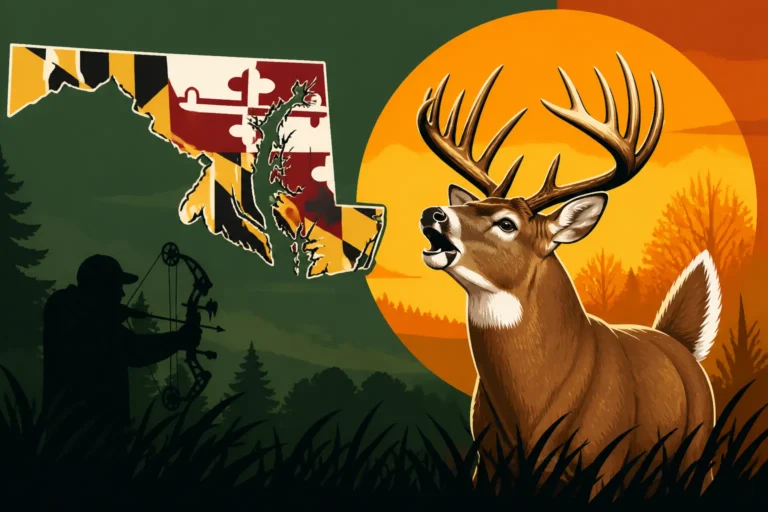
Maryland whitetail breeding peaks in early November, driven by photoperiod biology across phases from late October to December.
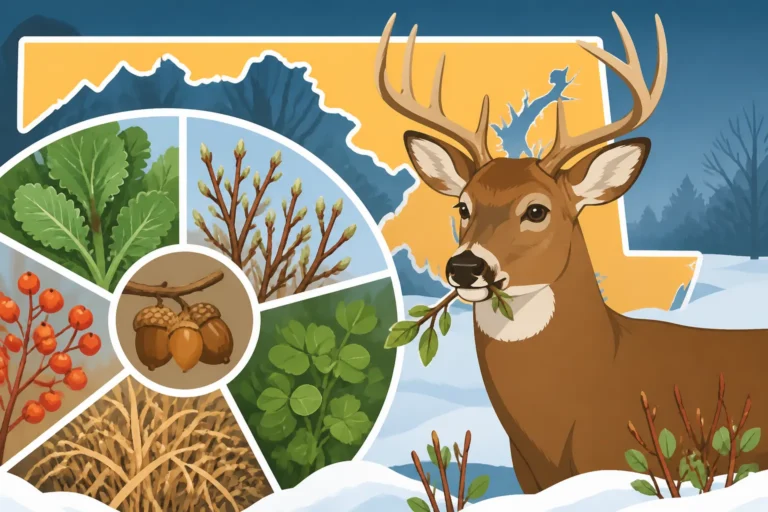
Maryland deer winter food sources include lingering acorns, woody browse, greenbrier, honeysuckle, and persistent green undergrowth.
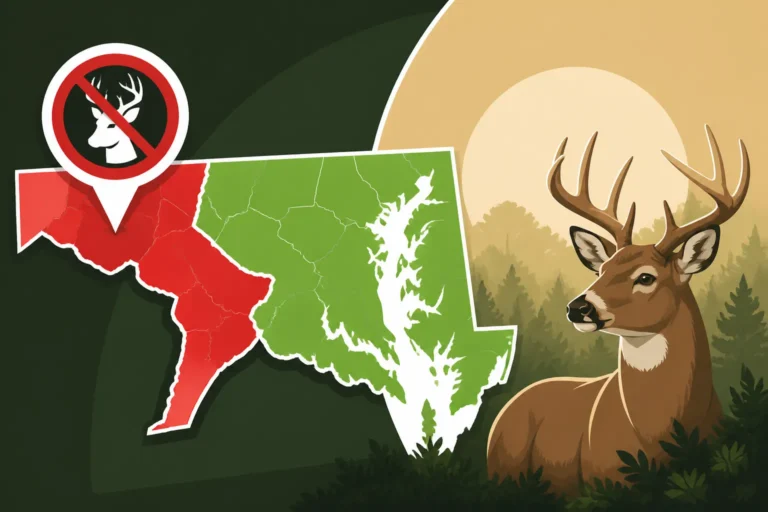
Appalachian geography, forest dominance, and distinct management goals explain lower white-tailed deer densities in western Maryland.
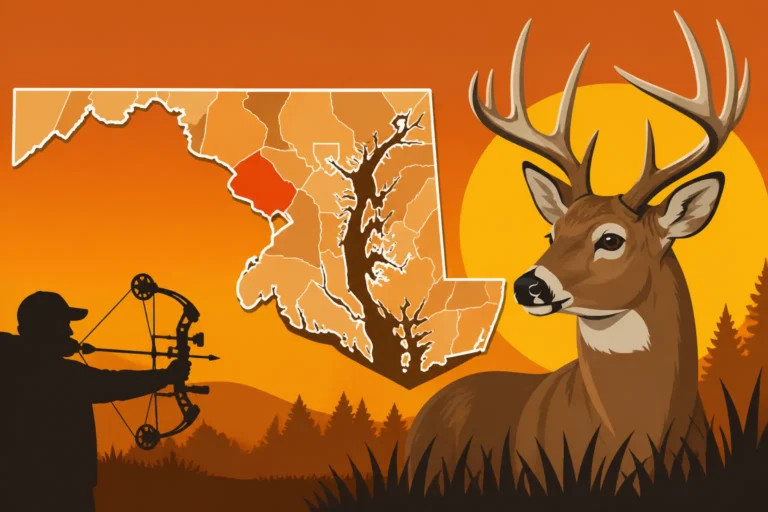
Maryland deer harvest statistics, management regions, and bag limits reveal local population densities across Garrett, Allegany, and Washington counties.
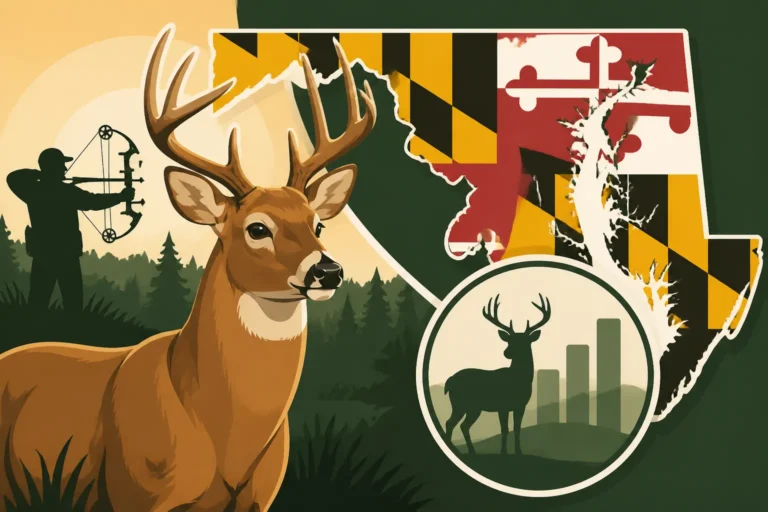
Maryland statewide deer harvest numbers provide registered hunter data, regional trends, and herd health statistics for hunting strategy.
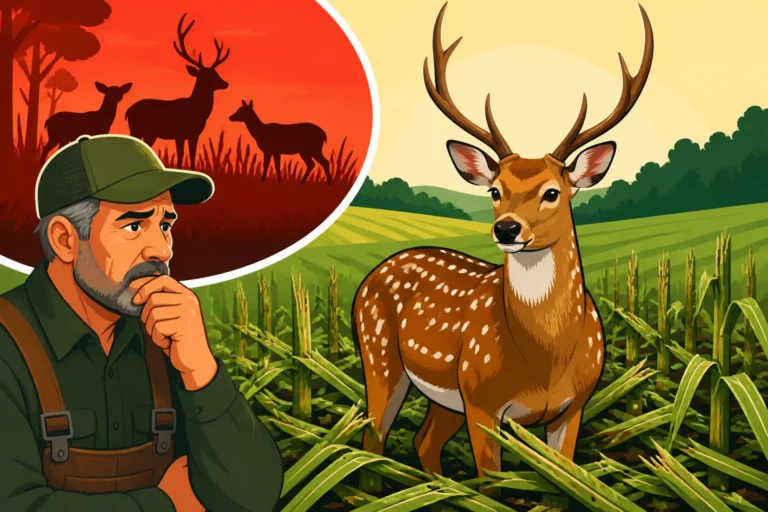
Sika deer expanding from Maryland marshes into agricultural fields cause severe crop damage and economic stress for farmers.
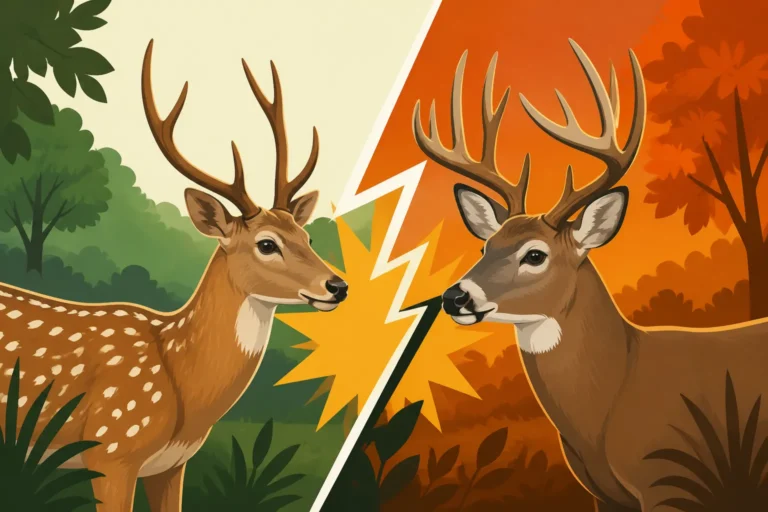
Resource competition between Sika deer and white-tailed deer on Maryland Eastern Shore highlights habitat overlap and dietary needs.