Why Region A Holds Fewer Deer
It’s a common experience for hunters across Maryland: you spend weeks scouting, pouring over maps, and talking to fellow outdoorsmen, only to hear whispers that deer numbers feel lower in certain parts of the state. If you’ve ever found yourself scratching your head about why Region A, particularly the western counties, seems to hold fewer deer than its eastern counterparts, you’re not alone. This guide will walk you through the distinct ecological, historical, and management factors that contribute to these differences, helping you understand what to expect and how to adapt your hunting strategies when you’re out in Maryland’s more rugged terrain.
Understanding Maryland's Deer Management Regions: A Tale of Two Landscapes
Maryland, with its diverse geography, wisely divides its deer management into two distinct areas: Region A and Region B. This isn't just an arbitrary line drawn on a map; it's a recognition of the vastly different habitats, human populations, and deer densities that exist across our state. For hunters, understanding these regions is fundamental to grasping why deer numbers vary so much.
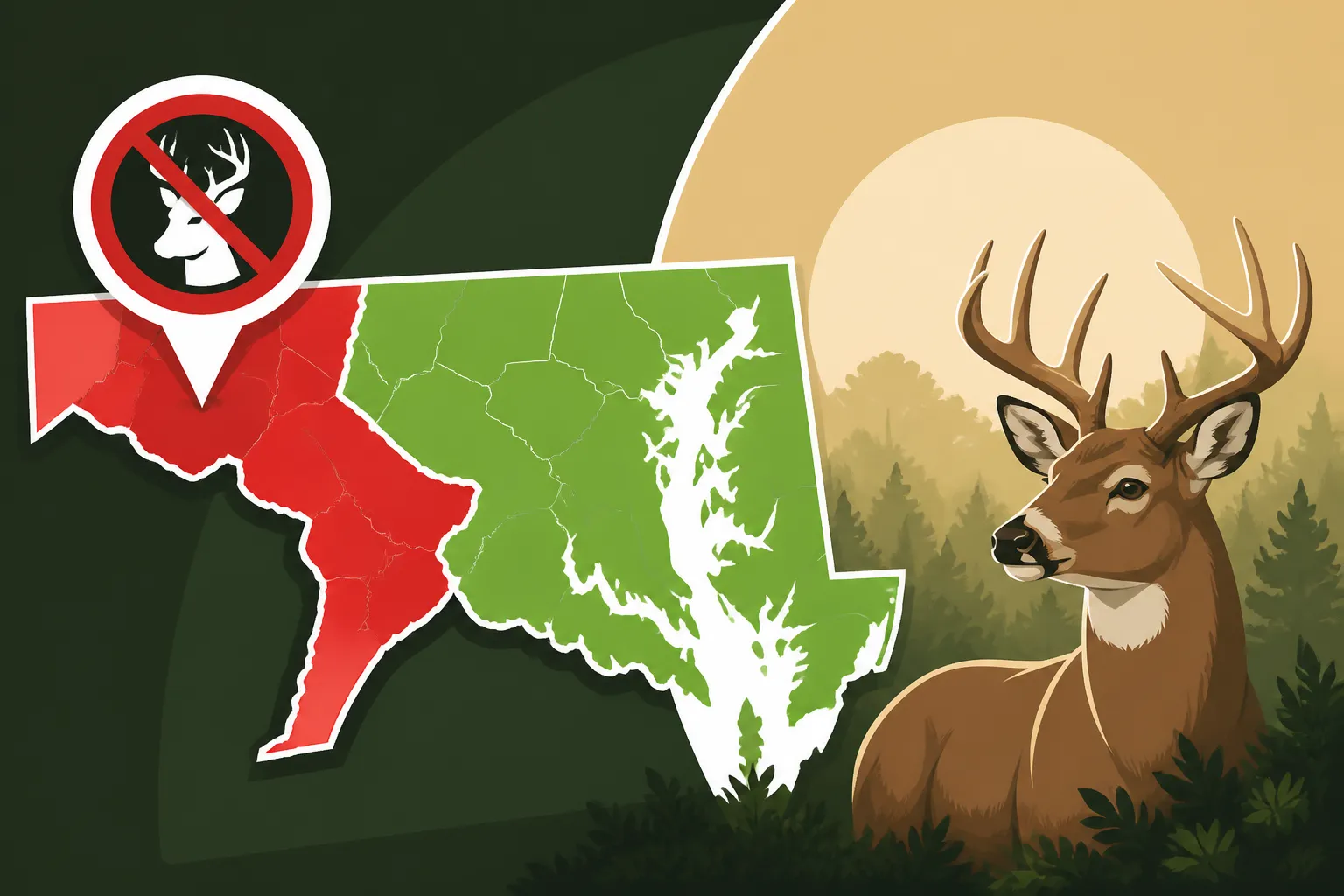
Region A primarily encompasses the mountainous and forested western counties – Garrett, Allegany, and western Washington County. Think of the rugged Appalachian foothills, dense hardwood forests, and steeper terrain. This region historically has lower agricultural land use and less suburban sprawl, leading to a different ecological picture. On the other hand, Region B covers the remaining counties, stretching from the Piedmont plateau down to the flat, agricultural lands of the Eastern Shore, including the bustling suburban corridors around Baltimore and Washington D.C. Here, you’ll find a mix of farms, smaller woodlots, and much higher human population density, often resulting in more fragmented habitat but also abundant food sources for deer.
The management goals for these two regions reflect these disparities. In Region B, deer populations are generally higher and often need to be managed more aggressively due to agricultural damage, suburban conflicts, and concerns over vehicle collisions. In contrast, Region A's management tends to focus on maintaining a healthy, sustainable herd in a more wild, less developed landscape. This often means different bag limits and regulations, which we'll touch on later. Knowing these foundational differences is the first step in understanding why one area might seem emptier than the other when you're deer hunting. If you want to dive deeper, we have a whole guide on Hunting Maryland's Two Deer Management Regions.
Geographical and Habitat Influences on Deer Density in Region A
The very landscape of Region A plays the most significant role in why it typically supports fewer deer compared to Region B. It's a combination of elevation, forest type, land use, and even soil quality that dictates the carrying capacity of the land for white-tailed deer.
Mountainous Terrain and Forest Dominance
When you head west into Garrett and Allegany counties, you're entering the Appalachian Mountain region. Here, the terrain is characterized by steep slopes, narrow valleys, and significantly higher elevations than most of the rest of Maryland. Deer, while incredibly adaptable, still prefer areas where travel is easier and energy expenditure is lower. Navigating steep, rocky hillsides day in and day out is more taxing than trotting across flat agricultural fields.
Furthermore, Region A is heavily forested, dominated by mature hardwood forests. While beautiful and vital for wildlife, these expansive, unbroken forests, especially older growth, can be less productive for deer than younger, mixed habitats. Mature forests tend to have a closed canopy, which means less sunlight reaches the forest floor, limiting the growth of diverse understory plants that deer browse. Think about it: a dense, mature oak forest provides acorns in the fall, which is great, but for the rest of the year, it might be a "green desert" with limited forage compared to areas with more edge habitat or clear-cuts. When you're Still-Hunting Western Maryland Mountain Timber, you quickly realize how different the browse can be from a lowland farm woodlot.
Limited Agricultural Land and Food Sources
Another critical factor is the significantly reduced amount of agricultural land in Region A. Deer are often drawn to the abundant, high-energy food sources provided by farms – corn, soybeans, alfalfa, and winter wheat. These crops offer a buffet that boosts deer health, reproduction rates, and overall population density. In Region A, while there are farms, they are far less prevalent and tend to be smaller, often nestled in valleys rather than stretching for miles across flat plains.
This means deer in Region A rely more heavily on natural browse, acorns, and other mast crops. While these are essential, they can be more variable year to year based on weather and tree health. A poor acorn crop, for instance, can stress deer populations more profoundly in a heavily forested, low-agriculture region than in an area where they can simply shift to standing corn. When you're trying to locate Late Season Food Sources for Maryland Deer in the mountains, you might be looking for remnants of oak flats or specific browse, rather than vast fields of leftovers. This reliance on natural forage, while fostering a wilder, more challenging hunt, contributes directly to lower deer densities.
Human Population Density and Development Patterns
It might seem counterintuitive, but lower human population density in Region A can actually contribute to lower deer numbers, at least in comparison to the exploding suburban herds of Region B. In Region B, human development creates a patchwork of habitat: small woodlots, suburban green spaces, ornamental plantings, and golf courses, all interspersed with agricultural fields. This fragmented landscape, combined with reduced hunting pressure in some suburban pockets, creates ideal conditions for deer to thrive and multiply. They learn to adapt to living close to people, finding ample food and cover right in people's backyards.
In Region A, while vast tracts of public land like Savage River State Forest or Green Ridge State Forest offer incredible hunting opportunities, they don't necessarily provide the same buffet of high-quality, easily accessible food sources that suburban and agricultural areas do. The sheer size of these areas also means deer can spread out more, making them feel less concentrated. When you look at Maryland's Statewide Deer Harvest Numbers, you'll see that while Region A accounts for a good portion of the overall harvest, the density of deer per square mile is often lower. This makes finding a particular animal more of a challenge and emphasizes the need for thorough Scouting Maryland Public Land Before Season with tools like GoHunt, which can help you understand terrain and vegetation even before you step foot in the woods.
| Feature | Region A (Western Maryland) | Region B (Central, Southern, Eastern MD) |
|---|---|---|
| Terrain | Mountainous, steep, rugged | Flat to rolling hills, coastal plain |
| Dominant Habitat | Extensive mature hardwood forests | Mixed forests, agricultural fields, suburban areas |
| Agricultural Land | Less prevalent, smaller plots | Highly prevalent, large farms |
| Deer Density | Generally lower | Generally higher |
| Browse Quality | More reliant on natural browse and mast | Abundant crops, diverse understory, ornamentals |
| Human Density | Lower, more rural | Higher, suburban and urban encroachment |
| Management Focus | Sustainable wild herds, habitat quality | Population control, agricultural damage, public safety |
Historical Context and Management Strategies in Region A
The current state of deer populations in Region A isn't just a result of current geography; it's also deeply tied to historical land use and ongoing wildlife management strategies. Our understanding of deer, and how to manage them, has evolved significantly over the centuries.
Past Land Use and Deer Population Recovery
Centuries ago, before extensive settlement and logging, deer populations throughout Maryland were likely quite different. As European settlers moved in, widespread deforestation for agriculture and timber, coupled with unregulated hunting, decimated deer herds across the entire state. By the late 1800s and early 1900s, deer were virtually extirpated from many areas, including much of what is now Region A.
The recovery of Maryland's deer population, which began in earnest in the mid-20th century through regulated hunting, habitat restoration, and reintroductions, has unfolded differently in the two regions. Region B, with its more fertile soils and rapid reforestation of abandoned farmlands into excellent deer cover, saw a faster and more robust rebound. The mix of early successional habitat, small woodlots, and burgeoning agricultural land created a perfect storm for deer to thrive. Region A, while also recovering, did so in a landscape that returned to dense, often mature, forests. While these forests provide security cover, as discussed, they don't always offer the same caloric abundance as a mosaic of forest and farmland.
Regulatory Differences and Hunter Impact
Maryland's deer management agency (DNR) recognized these distinct ecological differences decades ago, leading to the creation of Region A and Region B with varying hunting regulations. The goal in Region A has generally been to maintain a healthy, stable population, often with more conservative antlerless deer harvest limits than in Region B, especially on public lands. This is a direct acknowledgment of the lower carrying capacity and the need to allow the herd to maintain its numbers.
For instance, Maryland's Three-Point Antler Restriction applies differently across the state, and understanding these rules is crucial, especially in areas where you might be Deciding Which Weapon Season to Spend Your Buck Tag. The antler restrictions in Region A and B, or specific bonus tags, are often designed to influence hunter harvest pressure on different segments of the deer herd, reflecting regional population goals. In Region A, where deer densities are lower, every management decision aims to ensure herd health while still providing ample recreational opportunities. Hunters play a crucial role in this management, and understanding the specific rules for What Makes Region A Different for Deer Hunters can help you contribute responsibly.
Public Land Management and Hunter Crowding
Region A boasts some of Maryland's largest tracts of public hunting land, including vast state forests. While this offers incredible opportunities for hunters seeking a more remote experience, it also means that these areas absorb significant hunting pressure, especially during firearms season. Even with lower deer densities, concentrated hunter effort on these public lands can make deer more wary and nocturnal, further challenging hunters. Using a mapping tool like GoHunt can help hunters find less-pressured areas by identifying remote corners or areas with difficult access within these vast public forests, giving them an edge. Knowing the regulations and applying for specific permits for areas like Green Ridge State Forest or Savage River State Forest is also crucial to manage access and pressure.
While Region A offers a truly wild hunting experience, its inherent geographical features, historical land use, and specific management objectives mean that deer populations will likely remain lower than in the fertile, fragmented landscapes of Region B. This isn't necessarily a bad thing; it just means a different kind of challenge and a different approach for the avid Maryland hunter.
Hunting Strategies for Lower Deer Densities in Region A
Recognizing that Region A holds fewer deer isn't a reason to skip it entirely; rather, it’s an invitation to refine your hunting skills and appreciate a different kind of challenge. Hunting in these western Maryland mountains demands patience, a deeper understanding of deer behavior in big woods, and a willingness to cover ground.
Emphasizing Scouting and Understanding Habitat
In areas with lower deer densities, thorough pre-season scouting becomes absolutely paramount. You can't just expect to stumble upon deer; you need to find where they are concentrating their efforts. This means looking for key resources:
- Food Sources: Identify mast crop production, particularly oak ridges, which can be critical for deer movement in the fall. Look for areas with younger regeneration or specific browse preferred by deer. Using mapping applications like GoHunt can help you identify different timber stands and potential food sources by analyzing satellite imagery and topographical features.
- Water: While not as scarce as in some western states, understanding local water sources, especially during dry periods, can be a major draw for deer.
- Cover: Thick laurel thickets, regenerating clear-cuts, or steep, inaccessible ravines will be where deer feel safe. These are often the places they bed during daylight hours. Wind and Thermals in Western Maryland Terrain play a huge role in how deer use these areas, especially along ridge lines and in hollows. Pay attention to how the wind will carry your scent into these bedding areas without alerting deer.
Instead of hunting "sign" that might be a week old, focus on fresh activity. Look for fresh tracks, recent droppings, and active rubs or scrapes, especially during the rut when bucks are more active.
Adapting Hunting Methods
Traditional stand hunting can still be effective, but you might need to adjust your approach. Instead of hunting a small woodlot with high traffic, you might be looking at miles of timber.
- Still-Hunting: This method, where you move slowly and deliberately through the woods, pausing frequently to observe, listen, and glass, can be incredibly effective in big woods with lower deer numbers. You're covering ground, actively looking for deer, rather than waiting for them to come to you. This is especially true when Still-Hunting Western Maryland Mountain Timber. The key is to move with the wind in your favor and be incredibly stealthy.
- Funnels and Bottlenecks: Even in expansive forests, deer will use the path of least resistance. Look for saddles between ridges, creek crossings, natural benches along steep hillsides, or pinch points created by thick cover or terrain features. These natural funnels concentrate deer movement and can be prime locations for a stand or ambush point.
- Hunting the Edges: While Region A is heavily forested, look for the edges where different habitat types meet – where mature timber meets a younger clear-cut, or where forest transitions into a small field or powerline right-of-way. These transition zones often provide both food and cover, making them attractive to deer.
Remember, deer in Region A tend to be wilder and less accustomed to human presence than their suburban counterparts. They will quickly detect anything out of place. Stealth, patience, and a deep respect for the challenging terrain will be your best allies. While the deer might be fewer, the satisfaction of harvesting one in the rugged beauty of western Maryland is a reward in itself. Planning your trip, including understanding Maryland Hunting Licenses and What They Cost, is also crucial before heading out.
Disclaimer
This article is for general informational purposes only and does not constitute professional advice. Laws, prices and regulations vary by location and change over time. Consult a qualified professional for guidance on your specific situation.