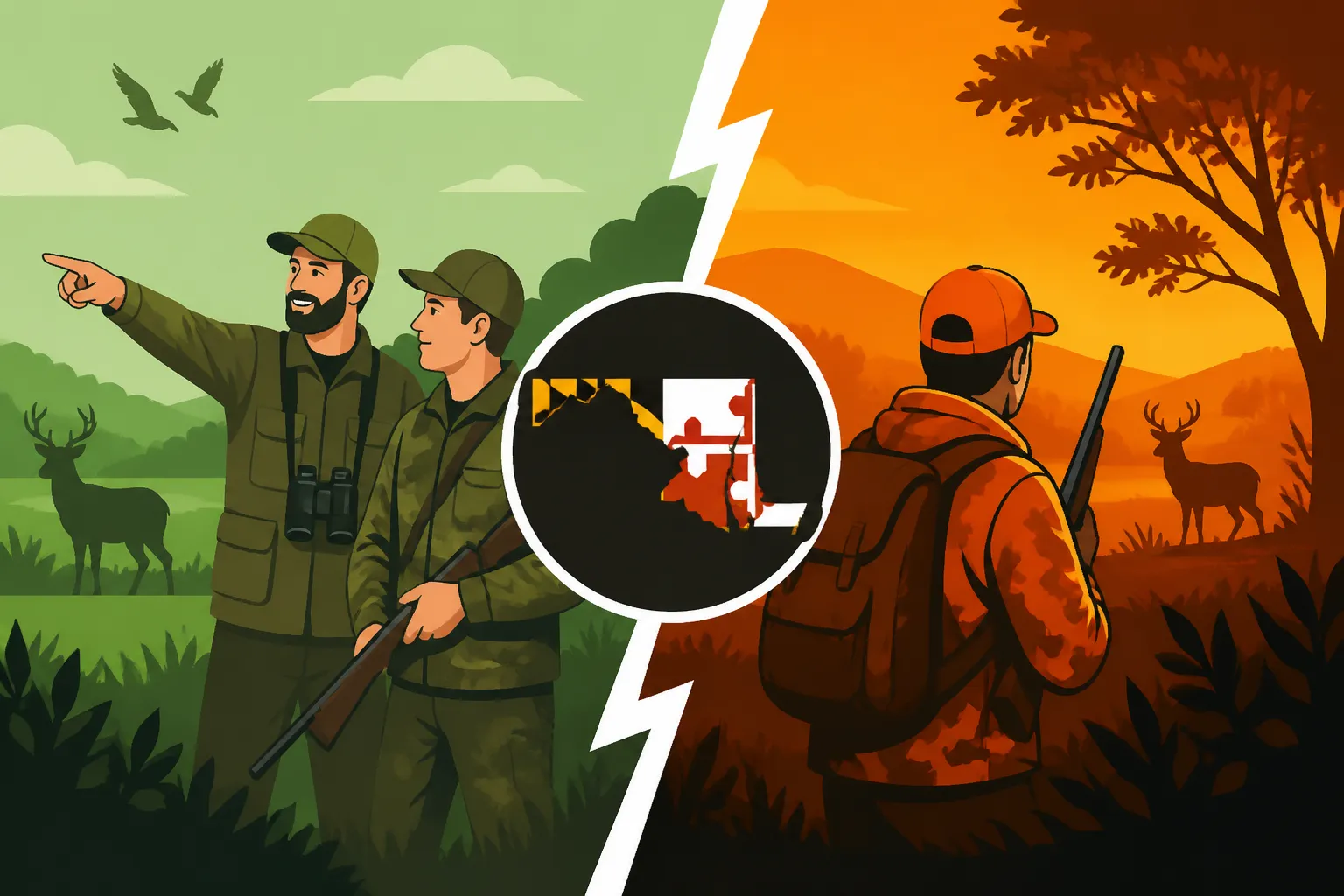
Guided Versus Do-It-Yourself in Maryland
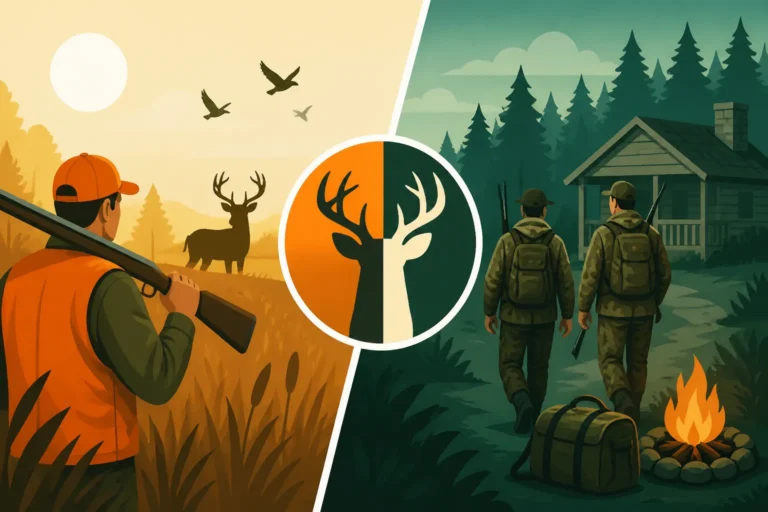
Every hunter who steps foot into the rich, diverse landscapes of Maryland eventually grapples with a fundamental choice: do you tackle the challenge of the hunt yourself, relying solely on your own skills and research, or do you enlist the expertise of a professional guide? It's a question that can spark lively debates around campfires, and it’s not always about just the cost. Many of us feel that pull between the independence of a DIY hunt and the desire to maximize success, especially when time is limited or the species is new. This guide will help you unpack the realities of both guided and do-it-yourself hunting in Maryland, laying out the practicalities, costs, and unique experiences each option offers so you can make the best choice for your next adventure.
Understanding the Guided Hunt Experience
Opting for a guided hunt in Maryland isn't just about paying someone to take you to animals; it's about buying into an entire experience curated by professionals. For many hunters, especially those new to the area or pursuing challenging species, a guide can be an invaluable asset. They bring local knowledge, specialized equipment, and often, access to prime private land that would otherwise be unattainable.
What a Maryland Outfitter Provides
A reputable Maryland outfitter or guide service essentially removes a significant portion of the planning and logistical burden from your shoulders. Imagine arriving in Dorchester County for a Sika Deer Hunting in Maryland's Tidal Marshes hunt, where tides, deep mud, and notoriously elusive deer make for a tough proposition. A guide will typically provide the marsh boat, often custom-built for navigating the shallow guts and dense phragmites, and possess an intimate understanding of the deer's movements based on years of experience. They know where the deer are bedding, what food sources they're currently hitting, and how to approach them without spooking them in such an open environment. This isn't just about showing you a spot; it's about reading the marsh, predicting deer behavior, and adapting to conditions on the fly.
Beyond just the hunting itself, many guides offer a comprehensive package. This often includes transportation from a designated meeting point to the hunting area, expertly placed blinds or stands that have been scouted and maintained, and sometimes even meals and lodging. For waterfowl hunting on the Chesapeake Bay, for example, a licensed Maryland's Licensed Waterfowl Guides will have pre-arranged blind sites or layout boats, a spread of decoys, and the knowledge of how to set up for varying wind and tide conditions. They'll also be responsible for ensuring all state and federal regulations are followed, like having the proper licenses and stamps ready. Platforms like BookYourHunt can connect you with these licensed outfitters, providing details on what each specific package includes and giving you a clearer picture of the services provided.
The Financial Investment of a Guided Trip
Let's be real: guided hunts come with a price tag, and it’s often a significant one. This isn't just a fee for a day of hunting; it covers the guide's expertise, their extensive scouting time, maintenance of equipment (boats, blinds, decoys, vehicles), fuel, insurance, and the overhead of running a business. The cost structure can vary wildly depending on the species, the duration of the hunt, and the level of service included. A single day of Goose Hunting Maryland's Eastern Shore Grain Fields might be priced per gun, while a multi-day Sika deer hunt package could include lodging and food.
It's crucial to understand what is, and isn't, included in the quoted price. For instance, while some guided trips include meals, you might be responsible for your own snacks and drinks. Gratuities for your guide are almost always separate and expected; a good rule of thumb for Tipping a Maryland Guide is 15-20% of the hunt's total cost, especially if they worked hard and put you on game. Travel expenses to and from Maryland, your Maryland Hunting Licenses and What They Cost, and meat processing or taxidermy fees are almost universally additional costs you'll need to budget for. When you're looking at options on platforms like BookYourHunt, pay close attention to the fine print and don't hesitate to ask outfitters for a detailed breakdown of all potential expenses. This upfront honesty about the financial commitment can save you from any unwelcome surprises down the road.
Embracing the Do-It-Yourself Challenge
For many hunters, the appeal of a DIY hunt goes beyond just saving money; it's about the deep satisfaction of earning every step, every piece of sign, and ultimately, every animal harvested through your own grit and determination. Maryland offers a wealth of opportunities for the self-reliant hunter, from vast public lands to accessible private parcels (if you can get permission).
The Time and Effort of DIY Scouting
The cornerstone of a successful DIY hunt in Maryland is exhaustive scouting, and this is where the real "cost" often lies for the DIY hunter: time. While a guided hunt might condense years of a guide's experience into a few days, a DIY hunter must accumulate that knowledge themselves. This means countless hours spent before the season even opens. For whitetail deer, it involves walking countless miles of potential habitat on public lands like Public Hunting Land in Maryland or private parcels you've gained access to. You're looking for sign: rubs, scrapes, tracks, bedding areas, and pinch points. You're studying aerial maps, like those found on various mapping applications, to identify funnels and travel corridors.
Understanding game patterns in Maryland often means understanding seasonal food sources, local pressure points, and even weather patterns. For example, knowing Late Season Food Sources for Maryland Deer can be critical when temperatures drop. Scouting isn't a one-time event; it's an ongoing process. You might spend weekends in the summer looking for acorn crops or checking on bean fields. You'll install trail cameras, analyze hundreds of photos, and make adjustments based on what you see. This deep immersion in the habitat and game sign is incredibly rewarding, forging a connection to the land that a guided hunt, by its nature, can't replicate. It teaches you to "read" the woods and anticipate animal movements, skills that serve you for a lifetime.
Gear, Knowledge, and Logistics for DIY Success
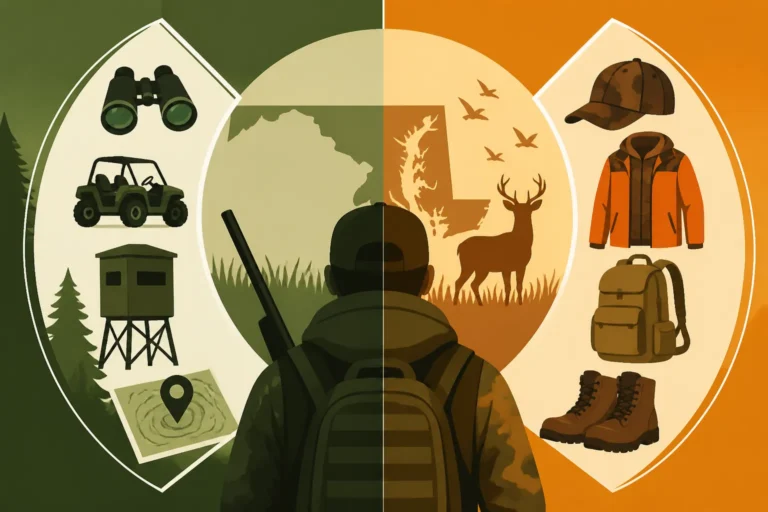
Beyond scouting, a successful DIY hunt requires a significant investment in both gear and knowledge. You become your own outfitter, responsible for every logistical detail. For instance, if you're pursuing Waterfowl Hunting Maryland's Chesapeake Bay, you'll need not just a shotgun and shells, but also waders, decoys, a boat (and the skill to operate it safely in unpredictable bay waters), and potentially a blind or camouflage netting. For a backcountry deer hunt in Western Maryland, you're packing your own stand or ground blind, calls, scent control, first-aid, navigation tools, and often, the means to pack out your harvest over challenging terrain.
Knowledge is equally, if not more, important than gear. You need to be intimately familiar with Maryland's Deer Bag Limits and Antler Rule, local hunting regulations, shooting hours, and how to register your harvest. You'll likely learn how to field dress an animal efficiently, perhaps even bone it out yourself, and handle the meat properly to prevent spoilage, especially if you're far from a processor. Many DIY hunters also invest in advanced hunting education beyond the mandatory course, such as blood trailing techniques, advanced calling strategies, or even self-rescue skills. This continuous learning curve is a huge part of the DIY appeal, transforming you from a passive participant into a truly competent and self-sufficient hunter.
Weighing the Pros and Cons: Guided Versus DIY
The decision between a guided hunt and a do-it-yourself adventure isn't about one being inherently "better" than the other. It's about aligning the hunting experience with your personal goals, budget, time constraints, and skill level. Both paths offer unique advantages and disadvantages that are worth considering carefully.
The Learning Curve and Skill Development
When you go on a guided hunt, particularly if you're a novice or targeting a new species, you're essentially enrolling in an accelerated masterclass. A skilled guide can teach you more in a few days than you might learn in years of trial and error. They'll show you how to read sign specific to the region, demonstrate calling techniques, explain animal behavior patterns, and help you understand how to navigate challenging terrain. For instance, a Sika guide in Dorchester will quickly demonstrate how to identify a fresh track in the mud or how to call a stag during the Hunting Sika Stags During Their Fall Whistle. This direct, hands-on instruction can dramatically shorten your learning curve and boost your confidence.
On the flip side, the DIY path is a crucible for self-reliance and profound skill development. Every mistake is your own to learn from, and every success feels deeply earned. While the learning process might be slower and more frustrating at times, the skills you develop – from advanced scouting and tracking to navigation and game recovery – are more deeply ingrained. You're not just executing a guide's plan; you're developing your own strategy, adapting it, and ultimately becoming a more complete hunter. For some, this journey of self-discovery and mastery is the very essence of hunting.
Success Rates and Expectations
Let's address the elephant in the room: success rates. While no guide can ever guarantee a kill (and you should be wary of any who do), a reputable guide significantly increases your odds, especially for hard-to-hunt species or in unfamiliar territory. They know where the game is, when it's moving, and how to position you for a shot. For a hunter with limited vacation time, a guided hunt provides the peace of mind that you're in a prime location with someone who knows how to put you on game efficiently. If your primary goal is to put a specific animal, like a trophy Sika stag or a limit of Canada geese, on the ground, a guide is often the most direct route.
However, "success" in DIY hunting is often measured differently. While harvesting an animal is always the ultimate goal, the DIY hunter often finds immense satisfaction in the process itself: successfully scouting a new area, deciphering complex animal movements, or simply having a meaningful encounter. A DIY hunt might not always result in a filled tag, but the personal growth and connection to the hunt can be just as, if not more, fulfilling. It shifts the focus from purely the outcome to the entire journey. You might pass on a smaller buck because you've learned to identify mature deer or simply enjoy the challenge of getting closer.
Here's a quick comparison to summarize some key points:
| Feature | Guided Hunt | Do-It-Yourself Hunt |
|---|---|---|
| Cost | Higher upfront expense; covers guide, gear, access. | Lower upfront, but significant investment in time, personal gear, and travel. |
| Effort | Minimal planning for hunter; guide handles logistics. | Extensive personal scouting, planning, and execution. |
| Knowledge | Leverages guide's deep, current local expertise. | Builds personal knowledge through research and experience. |
| Success Rate | Generally higher odds due to guide's skill and access. | Varies greatly; depends on hunter's skill, time, and luck. |
| Flexibility | Fixed schedule and location set by outfitter. | Complete control over schedule, location, and tactics. |
| Experience | Curated, efficient; focus on the hunt itself. | Immersive, self-reliant; emphasis on the journey. |
| Gear Required | Often provided by guide (boats, blinds, decoys, etc.). | Hunter must own/acquire all necessary equipment. |
| Access | Often includes private land access otherwise unavailable. | Primarily public land or permission secured by hunter. |
Tailoring Your Choice to Specific Maryland Game
Maryland's diverse habitats support a wide range of game species, and the "guided versus DIY" decision can often hinge on what you're actually hunting. Some species and their environments lend themselves more readily to guided services, while others are perfectly suited for the independent hunter.
Guided Advantages for Sika Deer and Waterfowl
If there are two species in Maryland where a guide can dramatically enhance your experience and success, it's Sika deer and waterfowl. Sika Deer Hunting in Maryland's Tidal Marshes is famously challenging. The habitat is brutal – thick phragmites, deep mud, tidal creeks, and often little dry ground. Sika deer are small, incredibly elusive, and their marsh-dwelling habits make them difficult to locate and retrieve. A local guide has specialized marsh boats, knows the tide schedules intimately, understands how to navigate the maze of guts and islands, and can often get you into private sections of marsh where deer pressure is lower. The logistical nightmare of hunting Sika on your own, especially for an out-of-state hunter, is immense. Without a guide, you're risking getting lost, stuck, or simply never seeing a deer.
Similarly, Waterfowl Hunting Maryland's Chesapeake Bay is a world unto itself. The Chesapeake is vast, and navigating its waters, understanding bird migration patterns, setting decoys effectively for different species (like divers versus puddle ducks), and securing prime blind locations requires years of experience. Licensed Maryland's Licensed Waterfowl Guides will have established blind sites or layout boats in proven areas, often through a Maryland Waterfowl Blind Site Licensing process, that attract birds. They monitor flight patterns daily and can adapt spreads to changing conditions. Trying to run a successful waterfowl hunt on the Bay without prior experience and dedicated equipment is incredibly difficult and can even be dangerous given the unpredictable weather and currents. A guide ensures safety, legality, and a much higher chance of success.
DIY Rewards for Whitetails and Small Game
While guides exist for just about any species, whitetail deer and small game are where the DIY hunter in Maryland can truly shine. Maryland has a robust whitetail population across the state, and whether you're still-hunting the timber in Still-Hunting Western Maryland Mountain Timber or Bowhunting Maryland Suburbs Where Rifles Are Banned, there are ample opportunities for the independent hunter. Public lands offer extensive acreage, and with diligent scouting and a little bit of legwork to get away from the crowds, success is very achievable. Scouting Maryland Public Land Before Season with aerial photos and boots on the ground can reveal overlooked pockets where deer feel safe. Getting Private Land Permission in Maryland on smaller farms is also a rite of passage for many DIY hunters and often leads to excellent opportunities without the guide fee.
Small game like squirrels, rabbits, and doves also offer fantastic DIY opportunities. These hunts are generally less equipment-intensive, less costly, and less logistically complex than marsh or open-water hunts. You can often find great small game hunting on public lands or easily accessible private parcels. Squirrel Hunting Maryland Hardwood Ridges or Rabbit Hunting Maryland Farm Hedgerows are classic DIY endeavors that require keen observation, stealth, and a good understanding of habitat rather than specialized guides or boats. These hunts are excellent for introducing new hunters, especially youth, to the sport in a low-pressure, high-engagement setting.
Hybrid Approaches and Finding the Right Fit
The decision between guided and DIY doesn't have to be an all-or-nothing proposition. Many hunters find a balance, employing hybrid strategies that combine the best aspects of both worlds. This flexibility allows you to tailor your hunting experience to your specific needs, budget, and learning objectives.
Semi-Guided Hunts and Lease Opportunities
A "semi-guided" hunt can be a fantastic middle-ground, particularly for deer hunters. In this scenario, an outfitter might provide access to private land, offer pre-scouted stand locations, and give you valuable local insights, but then leave you to hunt independently. They might assist with game retrieval or provide basic camp amenities, but the actual hunting is up to you. This cuts down on the overall cost compared to a fully guided trip, as you're not paying for a guide's direct presence in the field for every minute of your hunt. It allows you to leverage expert knowledge and access without the full expense, giving you more autonomy while still benefitting from a professional setup. It's often ideal for those who have some hunting experience but are new to a specific area or property.
Another popular hybrid approach, especially for those who want consistent access to quality ground, is joining a hunting lease or club. Maryland Hunting Lease Costs can vary widely, but for a seasonal or annual fee, you gain exclusive (or semi-exclusive) access to private property. This empowers you to conduct your own extensive scouting, set up stands, plant food plots, and manage the property to your liking, essentially becoming your own "outfitter" for that specific parcel. It requires a significant time commitment, but for many, the freedom and control over their hunting land are priceless. You get the DIY satisfaction of success on "your" ground, coupled with the advantage of not having to knock on doors every year for Getting Private Land Permission in Maryland.
Building Your Own Local Expertise
Ultimately, the goal for many hunters, whether they start with guided trips or jump straight into DIY, is to build their own local expertise. Guided hunts can serve as incredible educational tools. Pay attention to everything your guide does: how they set up decoys, how they read the wind, what calls they use, and why they choose specific locations. Ask questions – a good guide loves to share their knowledge. This learning can then be applied to your future DIY endeavors, allowing you to gradually become more self-sufficient and confident in new environments.
For those committed to the DIY path, building local expertise is a continuous journey. It involves meticulously pouring over maps, studying game cameras, observing natural cycles, and perhaps most importantly, spending time in the woods when you're not hunting, just observing. Understanding When the Maryland Whitetail Rut Peaks or Late Season Food Sources for Maryland Deer in your specific hunting area makes all the difference. Joining local hunting forums or conservation groups can also connect you with experienced Maryland hunters who are willing to share insights and advice. The more you learn about the specific nuances of hunting in Maryland, the more rewarding and successful your independent hunts will become.
Disclaimer
This article is for general informational purposes only and does not constitute professional advice. Laws, prices and regulations vary by location and change over time. Consult a qualified professional for guidance on your specific situation.