Hunting Maryland’s Two Deer Management Regions
Trying to make sense of Maryland's deer hunting regulations can feel like deciphering ancient scrolls, especially when you start hearing about "Region A" and "Region B." It's not always clear where these lines are drawn or, more importantly, how they impact your tags, your season dates, and even your hunting strategy. This comprehensive guide is here to clear up all that confusion, breaking down Maryland's two distinct deer management regions so you can hunt with confidence and knowledge.
Understanding Maryland's Deer Management Philosophy
Maryland's approach to deer management isn't a one-size-fits-all strategy; it's a carefully crafted system designed to address the diverse landscapes, ecological challenges, and human-wildlife conflicts found across our beautiful state. The division into two primary deer management regions, Region A and Region B, is at the heart of this philosophy. It acknowledges that a deer herd living in the rugged mountains of Western Maryland faces entirely different pressures and presents different management concerns than a herd thriving in the suburban woodlots or agricultural fields of the Eastern Shore.
The Rationale Behind Regionalization
The Maryland Department of Natural Resources (DNR) didn't just draw arbitrary lines on a map. These regions were established based on a variety of critical factors, including habitat type, deer population density, land use patterns, and the prevalence of agricultural damage or human-deer conflicts. In Western Maryland, the primary concerns might revolve around herd health in more expansive, less fertile forestlands, or managing public land hunting pressure. Conversely, in the more developed and agricultural areas of Central and Eastern Maryland, controlling overpopulation to mitigate crop damage, reduce vehicle collisions, and prevent the spread of disease becomes paramount. This regionalized approach allows the DNR to implement targeted regulations that are biologically sound and socially acceptable for each specific area, ensuring sustainable deer populations while addressing the needs of both the deer and the people who share their habitat.
How Regional Rules Impact Hunter Behavior
For us as hunters, understanding these regional nuances isn't just about memorizing rules; it's about fundamentally altering our approach. The differences in bag limits, season lengths, and even legal weapons between Region A and Region B directly influence how we plan our hunts, how we manage our antlered and antlerless tags, and even which properties we might choose to pursue. If you're accustomed to the generous antlerless opportunities in Region B, heading to Region A without adjusting your expectations and strategy could lead to frustration. Conversely, a hunter who only knows the sparse deer woods of the mountains might be overwhelmed by the sheer numbers and different tactics required in Region B. The regulations are designed to funnel hunter effort where it's most needed for population control, making it crucial for every hunter to know their region inside and out. It’s about being an effective and responsible participant in the state's wildlife management efforts, no matter where you punch your tag.
Delving into Region A: The Western Mountain Zone
Region A is Maryland's wild heart, encompassing the rugged, forested landscapes of the westernmost counties. This is a dramatically different hunting experience than what many imagine when they think of Maryland. Here, the mountains truly begin, offering a challenging yet incredibly rewarding pursuit for the big game hunter.
Geographic and Habitat Overview of Region A
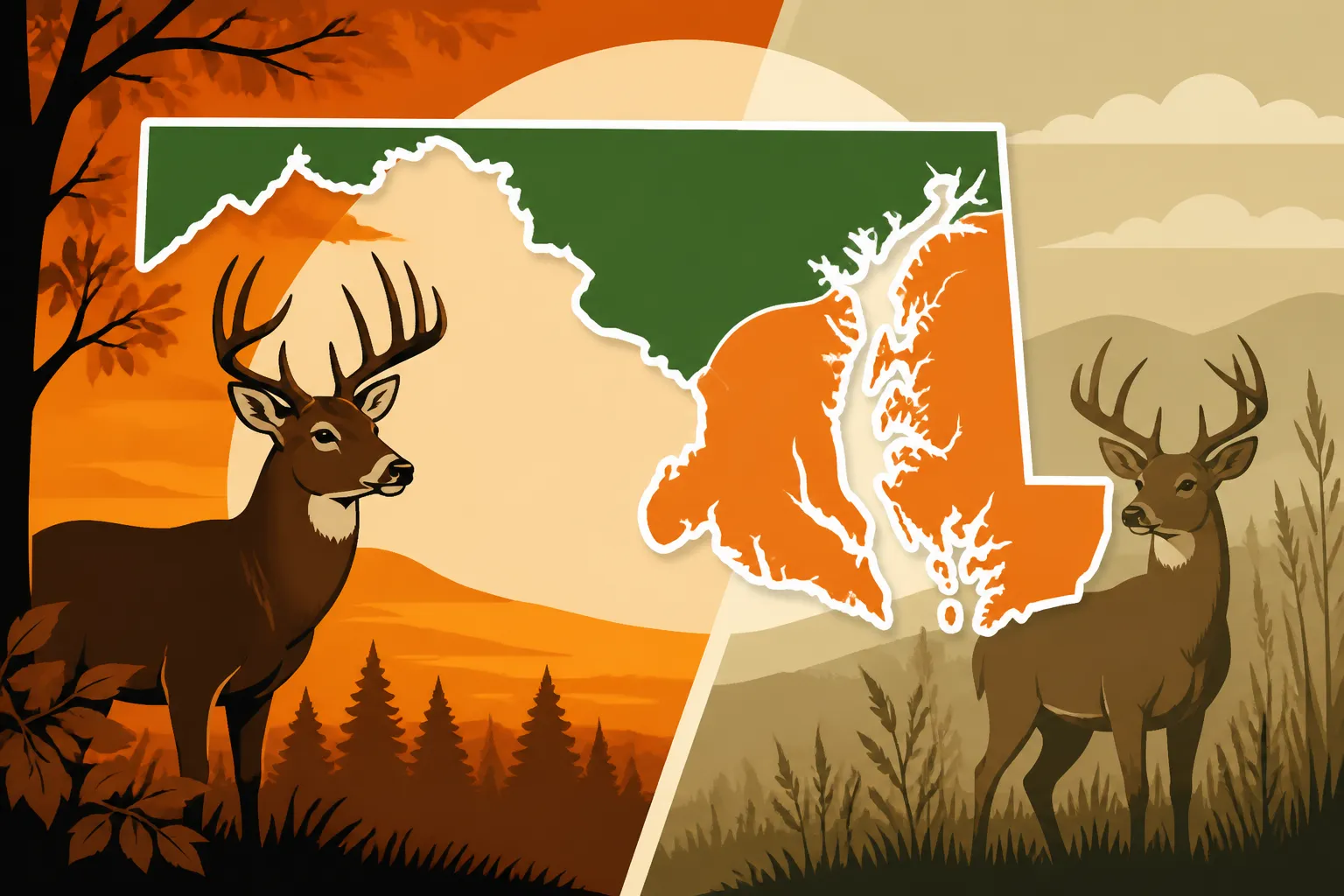
Region A is specifically defined as Garrett County, Allegany County, and the part of Washington County west of the last paved public road (excluding any town) that crosses the ridgeline of South Mountain. This definition is crucial, as even within Washington County, you can move between regions. Geographically, it's characterized by the steep ridges and deep hollows of the Appalachian Mountains, dominated by expansive hardwood forests – oak, maple, hickory – with scattered pine stands, particularly on public lands like Savage River State Forest or Green Ridge State Forest. You'll find fewer expansive agricultural fields compared to other parts of the state, and human population density is significantly lower. The habitat here is less "edge" and more continuous forest, providing vast tracts for deer to roam, but often at lower densities per acre than in the more fertile, fragmented landscapes to the east. This also means food sources are more naturally occurring – acorns, soft mast, browse – rather than heavily reliant on agricultural crops. When you're Still-Hunting Western Maryland Mountain Timber, you're truly immersing yourself in this unique environment.
Deer Population Dynamics and Challenges in Region A
The deer population in Region A, while healthy, generally exists at lower densities than in Region B. This is largely due to the less fertile soil, more rugged terrain, and the sheer vastness of the unbroken forest, which naturally supports fewer animals per square mile. Hunting success often requires more effort, more walking, and a deeper understanding of deer movement through elevation changes and natural funnels. The challenges here aren't typically about managing overpopulation; rather, they focus on maintaining a robust, healthy herd within the carrying capacity of the extensive forest habitat. Hunters in Region A might find themselves tracking deer over longer distances, utilizing glassing techniques on clear-cuts, or focusing on subtle sign in creek bottoms and bench cuts. The deer here tend to be wilder, less accustomed to human presence, and their patterns are more dictated by natural food sources and topography than by suburban pressure or farm routines.
Hunting Regulations Specific to Region A
The regulations in Region A reflect the lower deer density and different management goals. Generally, antlerless deer bag limits are significantly more conservative here compared to Region B. For example, while Region B might allow a hunter to take an unlimited number of antlerless deer on certain seasons with the appropriate stamps, Region A typically restricts hunters to a much lower antlerless bag limit, often one or two antlerless deer per license year, depending on the weapon and season. This is intended to prevent overharvesting of does and ensure the herd's reproductive potential remains strong. Season lengths for certain weapon types, particularly firearms, can also be shorter in Region A. It's crucial for hunters to pay close attention to the specific dates for Maryland's Split Firearms Deer Season or Muzzleloader Deer Hunting in Maryland in this region, as they might differ from the more liberal seasons further east. Before you head out, always double-check the current year's guide, paying close attention to the specific rules for Region A and Region B Deer Rules.
Exploring Region B: The Eastern and Central Zone
Region B encompasses the vast majority of Maryland, stretching from the eastern slopes of South Mountain all the way to the coastal plain and the Chesapeake Bay. This region is a melting pot of agricultural lands, sprawling suburbs, dense marshlands, and fragmented forest blocks, each contributing to a dynamic and often prolific deer population.
Geographic and Habitat Overview of Region B
Region B covers a massive and incredibly diverse geographic area. This includes everything east of Region A's boundary line in Washington County, Frederick, Montgomery, Carroll, Baltimore, Harford, Cecil, Howard, Anne Arundel, Prince George's, Calvert, Charles, St. Mary's, Kent, Queen Anne's, Caroline, Talbot, Dorchester, Wicomico, Somerset, and Worcester counties. Essentially, if you're not in the rugged mountains of the far west, you're almost certainly in Region B. The habitat here is incredibly varied: you'll find expansive fields of corn, soybeans, and wheat on the Eastern Shore, interspersed with loblolly pine plantations and productive hardwood river bottoms. Central Maryland offers rolling hills, extensive woodlots, and suburban green spaces. Southern Maryland boasts mixed pine and hardwood forests with abundant creeks and wetlands. And of course, the unique tidal marshes of the lower Eastern Shore are home to both whitetails and the distinctive Sika deer. This mosaic of habitats, often rich in food sources and diverse cover, allows for a thriving deer population. You might find yourself Hunting a Chesapeake Bay Blind at First Light or navigating dense suburban parcels depending on your location within Region B.
Deer Population Dynamics and Management in Region B
Deer populations in Region B are generally much higher, often exceeding the land's natural carrying capacity in certain areas, particularly where suburban development meets agricultural land. This higher density leads to a host of management challenges. Crop damage can be extensive, causing significant financial losses for farmers. Deer-vehicle collisions are a major safety concern, especially in rapidly developing areas. Furthermore, high deer numbers can impact forest regeneration and native plant communities, altering the ecological balance. As a result, the management philosophy in Region B heavily emphasizes population control through liberal antlerless harvest opportunities. Hunters are a critical tool in this effort, helping to maintain a healthier, more balanced ecosystem and reduce human-wildlife conflicts. While these high densities can make for exciting hunting, they also require hunters to be incredibly responsible and adhere strictly to regulations designed to keep the population in check.
Hunting Regulations Specific to Region B
To address the higher deer populations and associated challenges, hunting regulations in Region B are designed to encourage a robust antlerless harvest. Hunters typically have much more liberal antlerless bag limits, often being able to take multiple antlerless deer per license year, sometimes even an unlimited number with the appropriate bonus stamps, during certain seasons and on private land. This contrasts sharply with Region A's more conservative limits. Season lengths are often longer in Region B, providing more opportunities for hunters to get out into the field, particularly during the archery and muzzleloader seasons. For instance, Bowhunting Maryland's Long Archery Season offers extensive opportunities across Region B. Special deer management hunts, often occurring in parks or other managed areas, are also more prevalent in Region B, specifically targeting localized overpopulation issues. These hunts often have their own specific rules regarding weapons, permits, and harvest limits, requiring hunters to do their homework. The overall goal is to maximize the take of antlerless deer to help stabilize and, in some areas, reduce the overall population.
Key Differences in Bag Limits and Season Structures
Navigating the Maryland deer hunting regulations truly hinges on understanding the specific distinctions between Region A and Region B. It's not just a suggestion; it's the law, and missing a nuance could lead to a violation or a missed opportunity. These differences are most pronounced in the antlerless bag limits and, to a lesser extent, in the specific season dates for certain weapons.
Antlered Deer Bag Limits Across Both Regions
When it comes to antlered deer, Maryland employs a generally statewide bag limit, with a significant catch that can effectively change your options. Regardless of whether you're hunting in Region A or Region B, the statewide antlered deer bag limit is typically two antlered deer per hunter per license year. This means you can only tag two bucks that meet the legal antler point requirements. However, this is where the Bonus Antlered Deer Stamp comes into play. If you purchase this stamp, it allows you to take an additional antlered deer, bringing your potential total to three antlered deer. It's important to remember that this stamp applies statewide, meaning it doesn't matter which region you're in when you use it. The primary goal of this statewide limit, even with the bonus stamp, is to maintain a healthy age structure within the buck population and provide quality hunting opportunities across the entire state. For a complete rundown on how these tags work, check out Maryland's Deer Bag Limits and Antler Rule.
Antlerless Deer Bag Limits and Their Variations
Here's where the regional differences become starkest and most critical for hunters. The antlerless deer bag limits are the primary tool the Maryland DNR uses to manage deer populations, which, as we've discussed, vary dramatically between the two regions.
-
Region A Antlerless Limits: In Region A, reflecting the lower deer densities and different management priorities, antlerless bag limits are much more conservative. Typically, a hunter might be limited to one or two antlerless deer per license year, depending on the specific weapon season. For instance, during the archery season, you might be allowed two antlerless deer, but during the muzzleloader or firearms season, that limit might drop to one. These lower limits are designed to protect the breeding potential of the herd in an area where increasing populations isn't the primary goal. Hunters in Region A must be particularly judicious with their antlerless tags, often saving them for specific opportunities or passing on younger does to help the herd grow.
-
Region B Antlerless Limits: In stark contrast, Region B offers much more liberal antlerless opportunities. Here, the goal is significant population reduction in many areas. Hunters can often harvest multiple antlerless deer per season, and in some cases, with the appropriate stamps, the antlerless bag limit can be unlimited on private land during certain seasons (like the full archery or firearms seasons). This encourages hunters to take advantage of every opportunity to harvest does, helping to alleviate agricultural damage and reduce deer-vehicle collisions. These liberal limits provide a powerful incentive for hunters to focus on doe harvest, making a real impact on local deer numbers. It’s crucial to refer to the current year’s hunting guide for the exact numbers, as they can be adjusted based on population assessments.
Weapon-Specific Season Lengths and Openings
While many season dates, such as the general opening of archery season in September, are statewide, there are significant regional variations, especially concerning firearms and muzzleloader seasons, that hunters absolutely need to be aware of.
-
Archery Season: The archery season typically runs for an extended period across both regions, from September through January, with some specific dates for Sunday hunting in certain counties. However, even within this long season, the available antlerless tags will differ based on your region. For detailed information on specific opening and closing dates, consult When Maryland's Archery Season Opens in September.
-
Muzzleloader Season: Maryland has both an early and a late muzzleloader season. While the early season usually runs statewide, the late muzzleloader season can have regional restrictions. For example, some years, the late muzzleloader season might only be open in Region B counties, or have different durations, allowing for more time to harvest deer in areas needing additional population control. Always verify these dates in the current hunting guide.
-
Firearms Season: This is often where the most significant regional differences in season length occur, particularly for antlerless deer. Region B typically enjoys longer firearms seasons, including the January firearms reopening, designed to allow for continued population management. Region A's firearms season might be shorter, again, due to different management objectives. It’s imperative to consult the specific dates for Maryland Firearms Season Opening Day and subsequent splits based on your target region. These variations are a testament to the DNR's adaptive management strategy, responding to localized herd conditions and the feedback from landowners and hunters alike.
Navigating the Maryland Deer Registration Process by Region
Once you've successfully harvested a deer, the process isn't quite over. Maryland's deer registration system is a critical component of wildlife management, and understanding how it interacts with the regional distinctions is vital. It's not just a formality; it's how the DNR collects the data needed to make informed decisions about future seasons and regulations.
The Importance of Accurate Region Reporting
When you register your deer, whether it's through the online COMPASS portal or by phone, one of the crucial pieces of information you'll be asked for is the county and, implicitly, the region where the deer was harvested. This isn't just a suggestion; it's a mandatory step in the data collection process. The DNR relies on this accurate reporting to track harvest numbers in each region. Without precise data on how many antlered and antlerless deer are taken from Region A versus Region B, their population models become less accurate. This directly impacts future decisions regarding bag limits, season lengths, and management strategies. If hunters consistently misreport their harvest location, it could lead to regulations that don't truly reflect the deer populations on the ground, potentially harming herd health or exacerbating human-wildlife conflicts. Think of it as your direct contribution to scientific wildlife management; every registration helps paint a clearer picture. It’s also important to remember The Maryland Deer Registration Deadline After a Kill to ensure your harvest counts.
Using COMPASS for Registration
Maryland's online licensing and registration system, COMPASS, has streamlined the process significantly, making it more convenient for hunters. You can access the COMPASS portal via the DNR's website or through a dedicated mobile app. After harvesting your deer, you'll need to gather some basic information: your hunter ID, the date and time of harvest, the county and region, the deer's sex, and whether it was antlered or antlerless. For antlered deer, you'll typically need to count the points and note whether it meets the three-point antler restriction criteria.
The system will then generate a confirmation number, which is your proof of legal harvest. This number must be attached to the deer (or readily available if the deer is quartered or processed) until it is butchered and stored. The COMPASS system is designed to be user-friendly, but it's always a good idea to familiarize yourself with it before you're standing in the woods after a successful hunt, perhaps with limited cell service. Many hunters use their smartphones in the field to register, but if signal is an issue, remember you have a grace period (usually 24 hours, but always confirm in the current guide) to register the deer. This system helps DNR track harvests, and it's also where you'd report if you're taking advantage of any special permits, like those for deer damage or specific managed hunts.
Strategic Hunting Approaches for Each Region
Because Region A and Region B present such different landscapes and deer dynamics, a savvy hunter understands that a "one-size-fits-all" strategy simply won't cut it. Adapting your hunting approach to the specific characteristics of each region is key to consistent success.
Tactics for Region A: Mountain Hunting
Hunting in Region A's Western Maryland mountains is an experience that demands a different kind of preparation and execution. Forget sitting over a small food plot; here, it's about covering ground and understanding topography.
-
Still-Hunting and Scouting: With lower deer densities spread across vast public land, active hunting is often more effective than sitting. Still-Hunting Western Maryland Mountain Timber becomes an art form. You'll move slowly, pausing frequently, scanning the woods ahead for movement or deer sign. Scouting beforehand is paramount – using aerial photos, like those found on tools like GoHunt, to identify potential pinch points, saddles, benches, and thick cover that deer will use to travel or bed. Look for fresh rubs, scrapes, and tracks along old logging roads, creek bottoms, and ridgetops.
-
Understanding Topography and Wind: Deer in the mountains are masters of using elevation and thermals to their advantage. In the morning, thermals typically rise, carrying your scent uphill. In the evening, they fall, carrying it downhill. Positioning yourself to take advantage of these shifts is critical. Deer will often bed on lee sides of ridges, out of the wind, where they can see and smell danger approaching from below. Hunting benches—flat spots on steep hillsides—can be incredibly productive as deer often travel these natural highways.
-
Persistence and Physical Fitness: Hunting Region A is physically demanding. Be prepared for steep climbs, long walks, and potentially rugged conditions. The reward, however, is a deep sense of accomplishment and the chance to encounter truly wild deer in a stunning setting. Focus on hunting smarter, not just harder, by understanding their travel corridors and bedding areas in relation to elevation.
Tactics for Region B: Farmland, Woodlots, and Suburban Areas
Hunting in Region B presents a completely different set of challenges and opportunities. Here, the landscape is often a mosaic of private land, with deer populations that can be incredibly dense but also highly pressured.
-
Food Source Dominance: Much of Region B's deer movement is dictated by food sources. Agricultural fields—corn, soybeans, wheat, alfalfa—are major attractants, especially in the fall and winter. Deer will move from bedding areas in woodlots and thick cover to these fields at dawn and dusk. Setting up on a field edge, either in a ground blind or a tree stand, can be highly effective. Hanging a Stand on a Maryland Farm Edge involves careful consideration of entry/exit routes and wind direction to avoid spooking deer.
-
Pressured Deer and Sanctuary Areas: With more hunters and fragmented habitat, deer in Region B often become highly nocturnal and will seek out dense cover or unhunted sanctuary areas during daylight hours. Learning to identify these pockets of security – a thick swamp, a clear-cut, an overgrown creek bottom – is crucial. Tactics like still-hunting through these areas or setting up on funnels leading to them can be productive, especially during midday when other hunters are out of the woods. For those Hunting a Suburban Woodlot in Montgomery County, understanding how deer navigate human development is key.
-
Private Land Access: A significant portion of prime deer habitat in Region B is private land. Gaining access through knocking on doors, developing landowner relationships, or securing a hunting lease is often the most consistent path to success. Respecting private property and following all local regulations (including those for Maryland's Legal Weapons by County) is paramount to maintaining these valuable relationships. Many outfitters operate in Region B, offering guided hunts on private lands, which can be an excellent option for those without their own access.
Special Considerations and Exceptions
While understanding the broad strokes of Region A and Region B is essential, Maryland's hunting regulations include several important nuances and exceptions that hunters need to be aware of. These specific rules can significantly impact when and where you can hunt, and even what you can harvest.
Sunday Hunting Rules by County and Region
Maryland's Sunday hunting rules are notoriously complex, varying not just by region but also by county and even by the type of land (public versus private). It's one of the most common sources of confusion for hunters, and misinterpreting these rules can lead to serious legal trouble.
- County-Specific Approval: Each county in Maryland must explicitly approve Sunday hunting within its borders. Not all counties allow it, and those that do often have specific restrictions. Some counties may permit Sunday hunting only on private land, while a smaller number allow it on both private and certain public lands.
- Weapon and Season Restrictions: Even in counties that permit Sunday hunting, there might be limitations on which weapon types are allowed or which specific seasons are open. For instance, some counties might allow Sunday bowhunting but prohibit Sunday firearms hunting outside of specific dates.
- Time Restrictions: Historically, Sunday hunting often had a 10:30 AM cutoff, meaning hunting ceased mid-morning. While this restriction has been lifted in some areas for deer, particularly on private land, it's vital to check the current regulations for the specific county and public land you plan to hunt.
- Regional Impact: While Sunday hunting isn't explicitly defined by Region A or B boundaries, the counties within those regions will have their own rules. For example, Garrett County (Region A) will have its own set of Sunday hunting allowances that might differ from those in Dorchester County (Region B). Always consult the Maryland's Sunday Hunting Rules by County for the most up-to-date information before planning a weekend hunt. Digital mapping platforms like GoHunt can often provide overlays showing public land boundaries and sometimes even specific county regulations, making it easier to verify your location.
The Three-Point Antler Restriction and How It Applies
Maryland has a statewide three-point antler restriction (3PAR) that applies to all antlered deer harvested during regulated hunting seasons. This rule states that an antlered deer must have at least three points on one antler to be legally harvested, or a minimum of two points on each antler if the hunter chooses to use a specific type of tag. This regulation is a critical part of Maryland's deer management strategy, aiming to improve the age structure of the buck population by allowing younger bucks to mature.
- Understanding the Rule: A "point" is defined as a projection on an antler that is at least one inch long and longer than it is wide at its base. This rule applies uniformly across both Region A and Region B.
- One "Spike" Exception: Hunters are allowed one antlered deer per license year that does not meet the 3PAR rule. This "button buck" or "spike" buck exception provides some flexibility and acknowledges that identifying antler points in low light or dense cover can be challenging. However, once you've used your "one exception" tag, all subsequent antlered deer must meet the 3PAR.
- Impact on Hunting: The 3PAR encourages hunters to be more selective, passing on younger bucks to allow them to grow. This can be particularly challenging in areas with high deer densities where you might see many younger bucks. However, it fosters a healthier, more mature buck population over time. You can learn more about this by reading Maryland's Three-Point Antler Restriction.
CWD Management Areas and Carcass Import Restrictions
Chronic Wasting Disease (CWD) is a neurological disease that affects deer, elk, and moose. While not known to be transmissible to humans, it is fatal to deer and can have devastating impacts on wild populations. Maryland DNR takes CWD management very seriously, and specific rules are in place, particularly in designated CWD Management Areas.
- Designated Areas: CWD has been detected in parts of Western Maryland, primarily in Region A counties like Allegany and Washington, and potentially spreading into Frederick and Carroll counties in Region B. These areas are designated as CWD Management Areas, and special regulations apply within them.
- Carcass Restrictions: Within CWD Management Areas, there are strict rules about the movement of deer carcasses. Generally, hunters are prohibited from moving certain parts of a deer carcass (brain, spinal cord, lymph nodes, etc.) out of the CWD Management Area to prevent the potential spread of the disease. Only deboned meat, clean skull plates, and taxidermy-ready hides are typically allowed to cross these boundaries.
- Mandatory Testing: The DNR may also implement mandatory CWD testing checkpoints or require hunters to submit samples from harvested deer within these areas. This helps monitor the prevalence and spread of the disease.
- Import Restrictions: Additionally, Maryland has regulations regarding bringing deer carcasses from out-of-state, especially from areas known to have CWD. Generally, only deboned meat and clean hides/skulls can be imported. Staying informed about Maryland Carcass Import Restrictions is crucial for all hunters, especially those traveling from other states. Always check the DNR website for the most current CWD information and specific boundaries before you hunt.
Leveraging Resources for Regional Information
In today's interconnected world, hunters have access to an incredible array of resources that can make understanding Maryland's deer management regions and planning your hunts much easier. Gone are the days of relying solely on a paper map and a thick regulation booklet. Utilizing both official state resources and modern digital tools is the smartest way to stay informed and successful.
Official Maryland DNR Resources
The Maryland Department of Natural Resources (DNR) is your primary and most authoritative source for all hunting regulations and information. Always start here, as their publications and website provide the definitive legal framework for hunting in the state.
- Annual Hunting & Trapping Guide: This is your bible. Available in print at license agents and online as a downloadable PDF, the guide details all season dates, bag limits, regional boundaries, legal weapons, and special regulations for the current license year. It clearly outlines the differences between Region A and Region B. Make sure you're always consulting the most recent edition, as regulations can change annually.
- DNR Website (dnr.maryland.gov): The DNR's website is a treasure trove of information. You'll find sections dedicated to deer hunting, CWD updates, public land maps, license information, and news releases that might announce important changes to seasons or management areas. They often have interactive maps or clearer explanations of complex rules.
- COMPASS System: As mentioned earlier, the COMPASS online portal is where you purchase your Maryland Hunting Licenses and What They Cost and register your harvests. It's a direct interface with the regulatory system and keeps an official record of your compliance.
- Local DNR Offices: Don't underestimate the value of speaking with local wildlife biologists or enforcement officers. They are on the ground, dealing with the day-to-day realities of deer management and hunter concerns. They can often provide insights into local conditions, herd health, and specific public land opportunities that might not be obvious from a general guide.
Digital Mapping Tools for Regional Boundaries
In addition to official DNR resources, modern digital mapping tools have revolutionized how hunters scout and plan their trips, especially when dealing with complex boundaries like those between Maryland's deer regions.
- onX Hunt: This popular app provides highly detailed property line maps, which are invaluable for identifying private vs. public land. Crucially, onX also includes various layers that can show specific hunting zone boundaries, including the line between Region A and Region B. This visual aid makes it incredibly easy to see exactly where you are in relation to these crucial regulatory zones, preventing accidental trespass or misinterpretation of bag limits.
- GoHunt: While often associated with Western big game, GoHunt is another excellent mapping and planning platform that can be highly beneficial for Maryland hunters. Similar to onX, it offers detailed land ownership maps, but it also integrates hunting regulations directly into its platform. This means you can often view specific season dates, bag limits, and regional rules directly on the map interface, tailored to your location. This can be a huge time-saver and provide an extra layer of confidence when hunting near a regional boundary or planning a trip to an unfamiliar area.
- Google Earth / Satellite Imagery: While not specifically designed for hunting regulations, Google Earth and other satellite imagery apps are fantastic for scouting terrain, identifying bedding areas, travel corridors, and potential food sources within a given region. You can layer this visual information with your knowledge of regional rules to develop a robust hunting strategy. When combined with apps that show regional boundaries, you get a powerful visual aid that clarifies where you can hunt and what rules apply. These tools are indispensable for Scouting Maryland Public Land Before Season.
By combining official DNR guides and websites with sophisticated mapping tools, you'll be well-equipped to navigate the intricacies of Maryland's two deer management regions, ensuring you're always hunting legally, ethically, and effectively.
Maryland Deer Management Regions: A Comparison Table
To help consolidate the key differences, here's a quick comparison of Maryland's two deer management regions:
| Feature | Region A (Western Mountain Zone) | Region B (Eastern & Central Zone) |
|---|---|---|
| Counties Included | Garrett, Allegany, Western Washington County (west of South Mtn.) | All other Maryland counties (East Washington, Frederick, Eastern Shore, Central, Southern MD) |
| Primary Habitat Type | Rugged mountains, extensive hardwood forests, public land | Agricultural fields, suburban woodlots, fragmented forests, tidal marshes, private land |
| Deer Population Density | Generally lower, wilder deer | Generally higher, often overpopulated in localized areas |
| Antlered Deer Bag Limit | Statewide: 2 (3 with Bonus Antlered Deer Stamp) | Statewide: 2 (3 with Bonus Antlered Deer Stamp) |
| Antlerless Deer Bag Limit | More conservative (typically 1-2 per season/year) | More liberal (often multiple or unlimited with stamps on private land) |
| Firearms Season Length | Typically shorter | Typically longer, includes January reopening |
| Muzzleloader Season | Early statewide, Late may have regional restrictions or shorter dates | Early statewide, Late often more liberal |
| Archery Season | Extended statewide, but antlerless tags limited by region | Extended statewide, antlerless tags more liberal |
| Management Focus | Herd health, public land access, quality hunting | Population control, crop damage mitigation, public safety |
| Hunting Style | Still-hunting, scouting, understanding topography | Stand hunting over food, targeting funnels, managing pressure |
Disclaimer
The information provided in this guide is for general informational purposes only and is not intended to be legal advice. Hunting regulations in Maryland are subject to change. It is the responsibility of every hunter to consult the most current Maryland Department of Natural Resources (DNR) Hunting & Trapping Guide and any relevant local ordinances before engaging in any hunting activities. Always verify specific season dates, bag limits, and regional boundaries for the current license year directly with the Maryland DNR.