Red Flags in an Outfitter’s Website
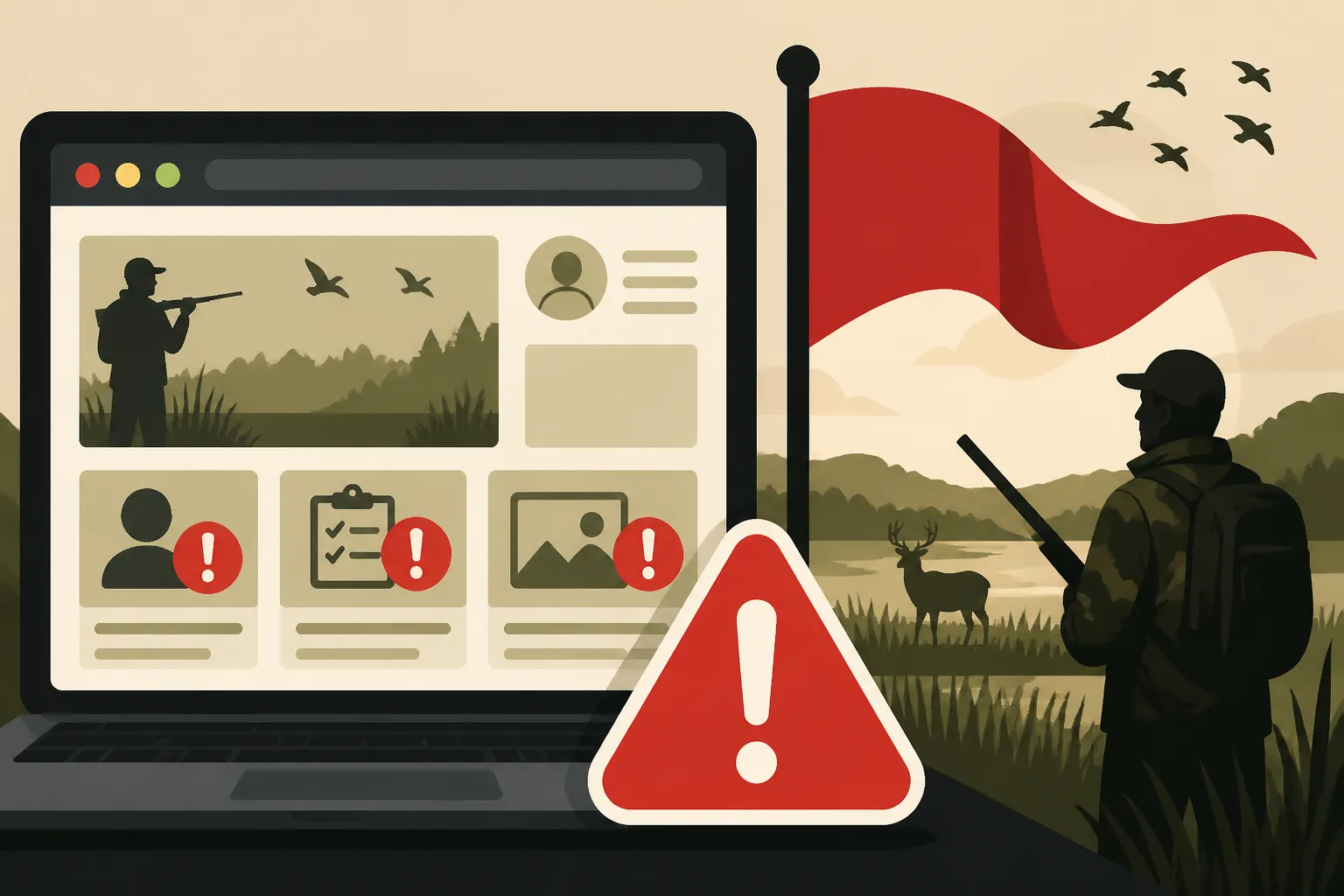
Finding a reliable hunting outfitter in Maryland can feel like wading through chest-high marsh grass in the dark. You're trying to plan an exciting trip, maybe chasing that elusive sika deer or a big Canada goose, and the first place you often look is their website. But let's be real, a website can be both a window into their operation and a carefully constructed illusion. It’s tough to sort the seasoned professionals from the less-than-stellar operations when all you have are digital promises. This guide will walk you through the tell-tale red flags that should make you pump the brakes and investigate further before you commit your hard-earned money and precious vacation time to a Maryland hunting outfitter.
Vague or Missing Information is a Major Warning Sign
One of the biggest red flags you'll encounter on an outfitter's website is a general lack of specific, concrete information. Think about it: if they're proud of their operation and want to earn your business, shouldn't they be transparent about what they offer? When details are sparse, it often means they either haven't formalized their offerings, or worse, they're intentionally being vague to avoid scrutiny or to give themselves wiggle room to change things later.
You might stumble upon a page that just says, "Call for rates" or "Contact us for availability" without any starting price ranges or package descriptions. While a direct conversation is always good, a professional outfitter typically provides at least a baseline of what to expect. Imagine you're trying to book a weekend getaway – you'd expect to see room types, amenities, and at least a 'starting at' price, right? The same goes for a guided hunt. You should be looking for clear descriptions of the hunt packages, including the number of days, what species are targeted, the included services like lodging and meals, and whether transportation from a local airport is part of the deal. If it's a waterfowl hunt, do they specify if it's layout blinds, pit blinds, or shore blinds? For deer, what weapon types are allowed? Do they mention the specific season dates they operate, like when Maryland's Archery Season Opens in September or during Maryland's Split Firearms Deer Season?
Furthermore, a critical piece of missing information is often related to licenses and permits. A good outfitter knows that nonresident hunters especially need a clear understanding of what's required. Their website should ideally have a dedicated section or at least a strong mention of necessary licenses, stamps (like the Maryland Sika Deer Stamp Rules or Maryland Migratory Game Bird Stamp Cost), and how to acquire them. If you have to dig through countless state agency websites just to figure out what you need, and the outfitter's site doesn't even point you in the right direction, that's a sign they might not be as helpful or organized as you'd hope once you're on the ground. Professional operations will often guide you through the process, and some may even assist with Nonresident Licensing Through an Outfitter. This level of detail shows they care about your overall experience, not just getting you into a blind or a stand.
Another area where vagueness raises a flag is in the location itself. Does the website generally state "Eastern Shore hunting" without narrowing it down to a county or general area? While specific spots might be kept secret for obvious reasons, a reputable outfitter will at least tell you the general region or county they operate in. This helps you understand travel logistics and what kind of terrain or habitat to expect. For example, a quality outfitter will tell you if they primarily hunt the tidal marshes of Dorchester County for sika deer or the grain fields of Kent County for geese. Without this basic geographical context, you're essentially booking a hunt blind, which is rarely a good idea.
| Red Flag (Vague/Missing Info) | Green Flag (Clear/Present Info) |
|---|---|
| "Call for rates" | Specific package pricing or clear price ranges. |
| "Great hunting in Maryland" | Specific species, hunt type (e.g., layout hunt, stand hunt), and region/county. |
| No mention of licenses/stamps | Links to licensing information, explanation of requirements, or assistance with permits. |
| General "contact us" form only | Phone number, email, physical address, and names of key contacts. |
| No specific season dates mentioned | Clear calendar or dates correlating with Maryland Deer Season Dates by Weapon or Maryland Duck Season Dates. |
| Generic photos of hunters/game | High-quality, recent photos of their hunters, their guides, and their hunted area. |
Over-the-Top Promises and Unrealistic Guarantees
We all want a successful hunt. We dream of that monster buck or a limit of greenheads. But if an outfitter's website makes promises that sound too good to be true, they probably are. Hunting is hunting, not shopping. There are countless variables at play: weather, animal movement, hunting pressure, and, let's be honest, hunter skill. A true professional understands and respects the unpredictable nature of wild animals.
Look out for phrases like "100% success rate," "guaranteed kill," or "you will bag a trophy." These kinds of claims are immediate red flags. No ethical outfitter can guarantee a kill on wild, free-ranging animals. While they can guarantee opportunity, a safe environment, and hard work from their guides, the outcome ultimately depends on many factors outside their control. Maryland has healthy game populations, but it’s still hunting. If a website boasts nothing but massive, record-book animals in every photo and every testimonial, question its authenticity. Are these truly typical animals from their hunts, or are they carefully curated images that set unrealistic expectations? It's essential to understand What Success Rates Actually Mean when evaluating an outfitter. A high success rate in terms of opportunity is excellent, but a guaranteed kill is simply not realistic in fair chase hunting.
Be wary of websites that don't discuss hunting ethics, fair chase, or conservation. A reputable outfitter will often highlight their commitment to ethical hunting practices and sustainable harvesting. If a site only focuses on the kill and lacks any mention of the experience, the guides' knowledge, or respect for the game, it could indicate a less ethical operation. They might not emphasize safety or responsible hunting practices if they're purely driven by guaranteeing a harvest. This can also tie into how they discuss rules around Maryland's Three-Point Antler Restriction or Maryland's Deer Bag Limits and Antler Rule – a good outfitter will ensure hunters understand and adhere to these regulations.
Sometimes, the unrealistic promises manifest subtly through photos. While good photography is important, if every single photo features a client posing with a gigantic animal that looks like it came straight out of a taxidermy display, and there are no candid shots of the camp, guides working, or the hunting environment itself, it might be a red flag. These might be stock photos, or photos from a different region, or simply not representative of the average hunt. A seasoned hunter knows that great memories are made through the entire experience, not just the trophy. An outfitter focused on genuine experiences will show a broader range of moments, not just the "grip and grin" photos of extraordinary harvests. They might even show images of their gear, their boats for Marsh Hunting Sika Deer by Boat, or their comfortable lodging for Maryland Hunting Lodges and Where to Stay.
Finally, be skeptical of any outfitter who promises exclusive access to areas that are publicly known to be difficult or heavily pressured, without a clear explanation of how they achieve that exclusivity. While some outfitters genuinely have access to phenomenal private land, others might imply it without actually having it. Do your research on the general hunting pressure in the region they claim to operate. Sites like BookYourHunt or GoHunt can offer independent information and reviews that might give you a reality check on some of these lofty claims. Remember, when Hunting Pressure on Maryland Public Land is high, private land access is a huge advantage, but it should be verifiable.
Poor Website Quality and Lack of Professionalism
In today's digital age, an outfitter's website is often their storefront. If that storefront is messy, outdated, or poorly put together, it can reflect poorly on the entire operation. This isn't just about aesthetics; it's about attention to detail and a commitment to professional communication.
An immediate red flag is a website that looks like it hasn't been updated in years. Are the season dates from three years ago? Are there broken links or pages that don't load? Outdated information can be misleading and frustrating. You might see references to old regulations or fees that are no longer accurate, leading to confusion when you call or arrive for your hunt. For example, if they're still talking about past bear lottery dates or turkey permit rules that have changed, it shows a lack of dedication to keeping clients informed about critical information like Maryland Bear Lottery Application Rules or Maryland Spring Turkey Permit Rules.
Grammatical errors and typos, especially abundant ones, can also be a subtle warning. While everyone makes mistakes, a website riddled with errors suggests a lack of professionalism and attention to detail. If they can't take the time to proofread their own advertising, what does that say about the care they'll put into your hunt, or their communication when something goes awry? It might seem minor, but these small details often accumulate to paint a larger picture.
Another aspect is the quality of the visual content. If the photos are low-resolution, blurry, or clearly generic stock images that have no connection to Maryland or the specific species they claim to hunt, it's a concern. High-quality, authentic photos of their actual guides, clients, and hunting areas demonstrate pride in their operation and provide a realistic preview of what you can expect. You want to see pictures of actual hunts, actual guides, and the actual scenery you'll be experiencing, whether it's the mountains of Garrett County or the marshes of Dorchester. If all the pictures look like they could have been taken anywhere, that's a problem.
Finally, consider the contact information. Is it easy to find? Is there a phone number, email address, and perhaps even a physical address? A legitimate business will have clear ways for you to reach them. If the only way to contact them is through a generic web form, it can be a barrier to communication and make it difficult to get your questions answered quickly. Transparency in contact information speaks volumes about an outfitter's willingness to be accessible and accountable. Before booking, you should always feel confident that you can verify details and ask Questions to Ask Before Booking.
Lack of Social Proof or Verifiable Testimonials
In the digital world, social proof is king. People trust what others say about a business more than what the business says about itself. If an outfitter's website lacks genuine testimonials, reviews, or any way to verify their claims, it’s a significant red flag.
Many websites feature a "Testimonials" page, but if these are just generic quotes without full names, locations, or even photos of the clients, how can you trust them? "John D. said, 'Best hunt ever!'" isn't nearly as convincing as "John Doe from Frederick, MD, raved about his guided sika hunt last October, praising the expert calling and marsh navigation." The more specific the testimonial, the more credible it generally is. Even better, look for video testimonials or links to external review platforms.
A truly transparent outfitter will often provide references from past clients upon request. If a website indicates they will do so, that's a green flag. If they don't mention it, or if you ask and they balk, be cautious. Asking an Outfitter for References is a crucial step in vetting any guide service. Speaking directly to someone who has hunted with them can provide invaluable insight into the actual experience, the guide's demeanor, the quality of the hunting, and how they handle situations when things don't go perfectly.
Beyond their own website, do they have a presence on reputable hunting forums, review sites, or platforms like BookYourHunt or GoHunt? These third-party sites often host reviews that are harder for outfitters to manipulate. While you should always Reading Outfitter Reviews Honestly and look for patterns rather than isolated negative comments, a complete absence of any external reviews or mentions can be concerning. It might mean they're a very new operation, or perhaps they've intentionally kept a low profile to avoid negative feedback.
Conversely, a flood of only five-star, overly enthusiastic reviews without any nuanced feedback can also be a red flag. Real-world experiences are rarely perfect, and a balance of genuinely positive feedback with perhaps a few constructive comments tends to be more authentic. Look for specific details in reviews that match the outfitter's advertised services and location. If every review talks about incredible elk hunting, but the outfitter is advertising Maryland deer and waterfowl, something isn't right. This vigilance helps you avoid services that might not be exactly what they appear to be.
Final Considerations Before Booking
Even if an outfitter's website appears clean and professional, always remember to combine your online research with direct communication. A phone call allows you to gauge their responsiveness, their knowledge, and their general demeanor. It’s also an opportunity to ask those crucial follow-up questions that clarify any lingering doubts from the website.
Consider how they handle cancellations or unforeseen circumstances. A professional outfitter will have clear policies regarding deposits, refunds, and rescheduling, especially with Maryland's sometimes unpredictable weather. You should understand Maryland Deposit and Cancellation Terms upfront.
Lastly, trust your gut. If something feels off, it probably is. There are many fantastic, ethical outfitters and guides operating in Maryland who genuinely want to provide you with an unforgettable experience. Taking the time to properly vet their online presence will save you potential headaches and ensure your Maryland hunting adventure is everything you hoped for. When you choose wisely, you'll be out there experiencing the wild beauty of Maryland, whether you're Hunting a Chesapeake Bay Blind at First Light or Still-Hunting Western Maryland Mountain Timber, creating memories that last a lifetime.
Disclaimer
This article is for general informational purposes only and does not constitute professional advice. Laws, prices and regulations vary by location and change over time. Consult a qualified professional for guidance on your specific situation.