Pass-Shooting Geese Over Cut Corn
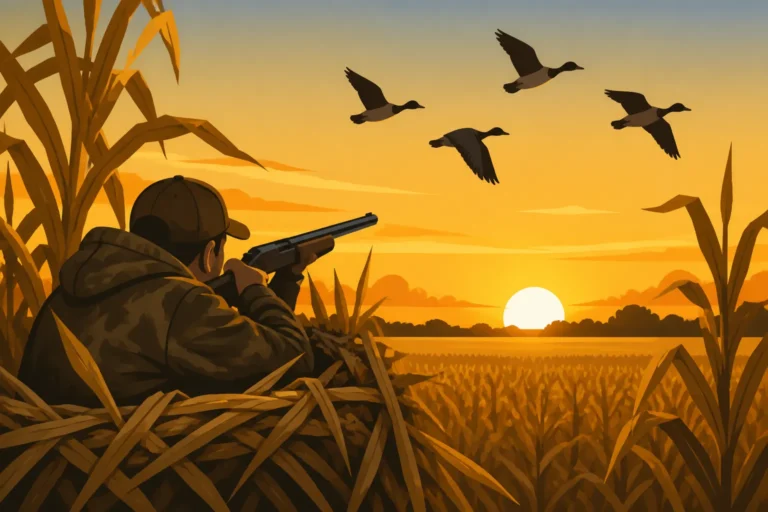
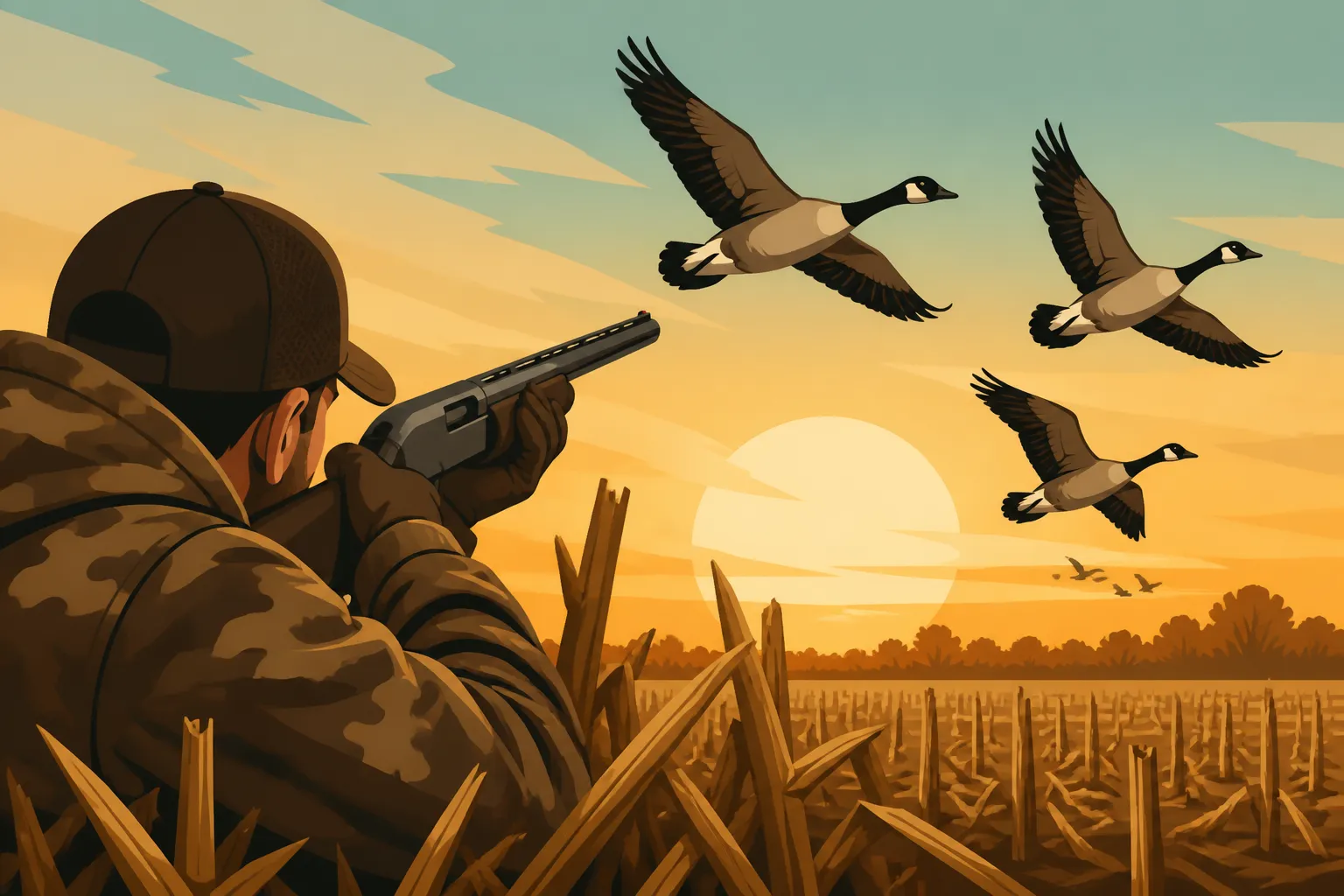
There's nothing quite like the sight of a big flock of Canada geese winging their way across a frosty Maryland sky, but sometimes those birds are just too smart, too high, or too wary to commit to a traditional decoy spread. Trying to pull them into a field you've meticulously set up, only to watch them flare at 100 yards, can be incredibly frustrating. This guide is all about embracing a different strategy: pass-shooting geese over cut corn fields, a method that leverages their natural flight paths and feeding habits, offering you a unique and often productive way to fill your freezer in Maryland.
Understanding Goose Behavior Over Cut Corn
Hunting geese effectively, especially with a strategy like pass-shooting, hinges on a deep understanding of their behavior. These birds aren't just flying aimlessly; they have routines, preferences, and patterns that, once deciphered, can be used to your advantage. Cut corn fields are not just random spots on the landscape; they are critical resources that geese rely on heavily, making them prime locations for observant hunters.
Why Geese Choose Cut Corn Fields
Geese are voracious eaters, and after the harvest, cut corn fields become a veritable buffet. The scattered kernels left behind are a high-energy food source, crucial for waterfowl building up fat reserves for migration or simply surviving the colder months. It’s not just about the calories, though; the open nature of a cut corn field offers a sense of security. Geese, being ground feeders, are constantly on the lookout for predators. A wide-open field allows them an unobstructed view for hundreds of yards in every direction, making it harder for foxes or coyotes to sneak up unnoticed.
Think about it from a goose's perspective. After a night spent loafing on a large body of water like the Chesapeake Bay or a vast pond, they need to fuel up. A freshly cut corn field, especially one that hasn't been picked clean by other birds or wildlife, is an irresistible draw. They'll often return to the same fields day after day until the food source is depleted or hunting pressure makes it too risky. This predictability is what makes pass-shooting such a viable tactic. They want to be in those fields, even if they don't commit to a decoy spread. Your job is to position yourself along their preferred routes to and from that prime feeding location.
Flight Patterns and Entry Points
Geese are creatures of habit, and their flight patterns to and from feeding grounds are often incredibly consistent, especially in areas with specific terrain features or prevailing winds. They're not just landing anywhere; they're looking for the easiest, safest approach. Often, this means following natural corridors like tree lines, drainage ditches, power lines, or waterways that lead directly to the cut corn. These features offer not only a visual navigation aid but also a measure of comfort, as they're familiar routes.
The wind plays a huge role in how geese approach a field. Like any aircraft, they prefer to land and take off into the wind. This means their final approach will typically be against the wind direction. Observing this can give you a significant advantage in determining where they might try to enter the field. They'll often circle a field, gaining altitude or losing it, testing the air currents and surveying for danger before committing. Pay close attention to these initial passes. Are they consistently coming in from one side of a wood line? Are they flying low over a particular creek? These are your clues. Using a tool like GoHunt or even just spending some time scouting from a distance, watching how the geese work the fields before you hunt, can reveal these crucial flight lines. Understanding these entry points is key to positioning yourself for a successful pass-shot, as you’ll want to be along these main thoroughfares, not necessarily right in the middle of where they eventually land. This is a very different approach from setting up an elaborate spread for Layout Hunting Canada Geese on the Upper Shore.
Essential Gear for Successful Pass-Shooting
Unlike traditional decoying where a considerable investment in decoys, blinds, and calls might be necessary, pass-shooting is often about mobility and minimalism. However, certain gear choices remain paramount, especially when it comes to maximizing your chances of a clean kill at potentially longer ranges.
Shotguns and Ammunition Selection
When pass-shooting geese, you're generally engaging birds that are flying higher and faster than those committed to decoys. This demands a shotgun that can deliver a dense pattern with enough energy to bring down a large bird ethically. A 12-gauge shotgun is the most popular choice, offering a great balance of power and manageable recoil, but a 10-gauge can provide an extra punch and pattern density, especially for those truly high flyers. It's less common, but some experienced hunters even opt for 20-gauge with modern heavy-load ammunition, though shot selection becomes even more critical.
For chokes, a Full or Improved Modified constriction is generally preferred. These tighter chokes keep the shot pattern dense at longer distances, increasing your chances of hitting vital areas. As for ammunition, forget about small shot. You need knockdown power. Steel shot, as required by federal regulations for waterfowl, in sizes like BB, BBB, or even T shot, is ideal. Bismuth or tungsten-based alternatives, while more expensive, offer superior density and energy retention at range, mimicking lead performance without the environmental impact. Remember, the goal is a clean, ethical kill. If you can't consistently connect with these larger shot sizes at the distances you anticipate, it's better to hold your fire and wait for closer opportunities rather than risk wounding a bird.
Camouflage and Concealment Techniques
Concealment is absolutely non-negotiable for pass-shooting. Geese have incredible eyesight, and any unnatural movement or outline will send them packing faster than you can blink. Your camouflage needs to blend seamlessly with the specific environment of a cut corn field. This means patterns that mimic dried corn stubble, muted browns, tans, and dark earth tones. A full-body ghillie suit or a layout blind designed for agricultural fields can be highly effective.
If you don't have a layout blind, you'll need to get creative with natural cover. Piles of corn stalks left from the harvest, a fencerow, or even a slight depression in the field can provide enough cover if you remain absolutely motionless. The key is to break up your human silhouette. Laying flat against the ground, using a minimalist ground blind, and covering every inch of exposed skin (face mask, gloves) are critical. Don't underestimate the small details; a shiny gun barrel or a flash of white from a shirt cuff can be enough to spook a distant flock. Utilize mapping tools like those offered by GoHunt to identify specific areas within a large field that might offer a slight rise or a patch of thicker stubble for natural concealment. The less you stand out, the better your chances of getting those birds within range before they know you're there.
Strategic Positioning and Setup
Successful pass-shooting isn't just about good gear; it's about smart real estate. You need to be in the right place at the right time, and that requires careful scouting and an understanding of how geese interact with the landscape. Your setup should be subtle, tactical, and prioritize your ability to engage birds along their natural flight paths.
Identifying Key Shooting Lanes
This is where your scouting pays dividends. Before you even think about setting up, you need to spend time observing. Watch where the geese enter and exit a field. Do they consistently fly over a specific dip in the terrain, a fence line, or a particular corner of a wood lot? These are your "shooting lanes." Geese tend to follow the path of least resistance and often stick to established routes that offer a measure of safety or familiarity. For instance, if there's a low point in a tree line, they might dip down there. If a field slopes gently, they might hug the higher ground before dropping into the feeding area. You can gain valuable insights by Reading Goose Flight Lines Off the Chesapeake, even if you're not hunting on the bay itself, as the principles of identifying travel corridors remain the same.
Consider the wind direction, which is paramount. Geese will almost always fly into the wind on their approach to a field. If the prevailing wind is from the west, they'll often approach from the west. If you can position yourself downwind of where they enter the field, along their flight path, they'll be coming towards you. Conversely, setting up upwind might mean they spot you earlier as they're flying away from you. This observation period might take a few days of watching from a distance, or even just an hour or two before daylight on your hunt morning. The better you understand their chosen lanes, the more precise and effective your setup can be, ensuring you're not just hoping for a stray bird, but actively intercepting them.
Setting Up Your Shooting Position
Once you've identified your key shooting lanes, the next step is to choose your exact setup spot. This is a critical decision. You want to be close enough to those flight paths to get ethical shots, but far enough away from their primary landing zone that they don't immediately associate your position with danger. Ideally, you want to be within 40-50 yards of where they'll fly past, allowing for effective engagement with your chosen ammunition.
When setting up, consider your background. If you're silhouetted against the sky, you're a dead giveaway. Use a darker background like a tree line, a brushy fencerow, or even a dark dirt bank to break up your outline. If you're hunting with a partner, spread out enough to cover different approach angles, but stay within communication distance for safety. Remember, you're not trying to decoy them to you, but rather intercept them as they pass. This means your setup is less about attracting and more about concealing. For a solo hunter, this might mean a small, low-profile layout blind nestled into a pile of corn stalks. For a group, it might be a series of ground blinds strategically spaced along a ditch or field edge. Always prioritize safety, ensuring clear fields of fire and knowing where your hunting partners are at all times. Think about your Entry Routes Through Cut Corn Before Daylight to ensure you can get into your spot undetected.
The Art of the Pass-Shot
Pass-shooting geese is arguably one of the most challenging forms of waterfowl hunting. It demands patience, keen observation, and above all, excellent wing-shooting skills. Unlike decoying, where birds are often slowing down and presenting easier targets, pass-shooting requires you to hit fast-moving, often high-flying birds with precision.
Leading and Swing for Moving Targets
This is where the rubber meets the road. Hitting a goose that's traveling at 40-60 miles per hour, often 30-50 yards up, requires a significant lead and a smooth, consistent swing. There’s no magic formula for lead distance; it varies wildly based on the bird's speed, angle, and distance. Generally, you'll need to lead geese much more than you might lead a duck over decoys. We're talking several feet, not just a few inches.
The technique involves establishing your swing before the bird reaches your anticipated shooting window. Mount your gun smoothly, swing through the bird from behind, establish your lead, and maintain that swing as you pull the trigger. Critically, follow through after the shot. Many missed shots occur because hunters stop their swing the moment they pull the trigger. Imagine you're painting a continuous line with your muzzle through the air. Practice is the only way to truly master this. Consider clays shooting, especially sporting clays that simulate crossing and incoming birds, to hone your reflexes and muscle memory. Mentally calculate your lead for different scenarios—a goose flying straight across your front will require more lead than one coming directly at you (though you shouldn't shoot directly at an incoming bird for safety and pattern density reasons, wait for it to pass or turn). This isn't just about hitting the bird; it's about putting enough pellets into its vitals for a clean, ethical kill.
Ethical Shot Placement and Retrieval
Ethical hunting dictates that you only take shots that you have a high probability of making a clean kill. For pass-shooting geese, this means resisting the urge to take Hail Mary shots at birds that are too high or too far. A wounded goose can fly a long way, leading to unnecessary suffering and lost game. Stick to your effective range, typically 40-55 yards for most experienced pass-shooters with appropriate loads. Wait for the bird to commit to its flight path and present a good profile. The most ethical shots are generally taken when the bird is slightly quartering away or crossing, offering a good target zone for the vitals.
Once you've taken a shot and a goose is down, immediate retrieval is paramount. Geese are large, resilient birds, and even mortally wounded, they can sometimes run or swim a surprising distance. If hunting in a group, appoint a designated "spotter" whose sole job is to watch downed birds and direct the shooter or retriever to their exact landing spot. If you're hunting near water or thick cover, a good retrieving dog is invaluable. If you don't have a dog, carefully mark the spot with a visual reference point as soon as the bird hits the ground. Cut corn can be tall, and a dark goose can disappear quickly. Walking directly to the mark and searching methodically will increase your chances of finding your bird. Using mapping software like GoHunt can also help you mark the exact spot where a bird landed, aiding in efficient retrieval.
Adapting to Maryland's Goose Zones and Regulations
Maryland offers fantastic goose hunting opportunities, but it also comes with a complex set of regulations tied to different management zones and populations. Understanding these rules is crucial for staying legal and maximizing your success when pass-shooting over cut corn fields.
Understanding Maryland's Goose Season Dates and Limits
Maryland's goose hunting is divided primarily into two main categories: the Atlantic Population (AP) Zone and the Resident Population (RP) Zone. The Atlantic Population consists of migrant geese that breed in northern Canada and travel south, while Resident Population geese breed within Maryland and nearby states. These two populations have very different management needs and, consequently, different season dates and bag limits. The AP Zone generally covers the majority of the Eastern Shore, while the RP Zone includes much of the rest of the state, though boundaries can be complex. There's also a specific Late Western Zone with extended seasons in Garrett and Allegany counties. Before planning any hunt, you must consult the current Maryland DNR waterfowl hunting guide to confirm the specific dates and bag limits for your exact hunting location. This guide will clarify Maryland Canada Goose Season Dates for each zone.
For pass-shooting over cut corn, you might encounter both populations, depending on when and where you're hunting. Early season hunts might see more resident birds, while later in the fall and winter, you're more likely to intercept migrants. Knowing the difference, and understanding Telling a Migrant Goose From a Resident Bird, is important because the bag limits can differ significantly. For example, the bag limit for Atlantic Population geese is typically much more restrictive than for resident geese, especially during the core migration periods. Always keep track of your daily bag and possession limits. Being caught with an overlimit, or hunting out of season in the wrong zone, can result in hefty fines and license revocation.
Public vs. Private Land Considerations
Finding suitable cut corn fields for pass-shooting in Maryland can be a challenge, particularly for those relying on public access. While Maryland has some excellent public lands, many of the prime agricultural areas, especially those with extensive cut corn fields, are privately owned.
On public land, such as some Wildlife Management Areas (WMAs) on the Eastern Shore or certain State Forests, you might find cut corn fields or fields of other grains. However, these areas often see significant hunting pressure, and the geese can become very wary very quickly. Scouting is even more critical here to find less-pressured areas or to identify times when pressure is lower. You'll need to be exceptionally mindful of other hunters and adhere strictly to all public land rules regarding access, blinds, and shooting hours.
For many, securing private land access is the best route for consistent pass-shooting opportunities. This often involves Knocking on Doors in Maryland Farm Country and building relationships with landowners. Farmers are often keen to have hunters help manage goose populations that can cause significant crop damage, even after harvest. When seeking permission, always be respectful, offer to share game, and ensure you understand the landowner's specific rules. Always get explicit permission before entering any private land. Whether public or private, setting up on a Setting Up on a Maryland Grain Field Edge will be key to success, as geese often follow these natural boundaries.
Here's a quick reference for common goose pass-shooting setups:
| Shotgun Gauge | Recommended Choke | Shot Sizes (Steel) | Effective Range (yards) | Typical Shot | Advantages | Disadvantages |
|---|---|---|---|---|---|---|
| 12 Gauge | Full, IM | BB, BBB, T | 40-55 | 3" or 3.5" | Versatile, common, good power | Higher recoil with heavy loads |
| 10 Gauge | Full | BBB, T | 45-65 | 3.5" | Maximum range and pattern density | Heavy, more recoil, less common |
| 20 Gauge | Full, X-Full | BBB (Bismuth/Tungsten) | 30-45 | 3" | Lighter, less recoil | Limited range, expensive ammo |
Note: Always verify current regulations for legal shot types and sizes.
Advanced Tactics and Field Intelligence
Once you've mastered the basics of concealment, positioning, and shooting, you can start to layer in more nuanced tactics that can subtly influence goose behavior, even during pass-shooting scenarios. These aren't about mimicking a full decoy spread, but rather about using minimal tools to gain a slight edge.
Decoy Spreads for Pass-Shooting (Minimalist Approach)
The core principle of pass-shooting is not to decoy birds into your location. However, a small, strategic decoy spread can sometimes serve a different, more subtle purpose: funneling. Instead of trying to bring every bird in close, a handful of decoys placed wisely can influence their flight path just enough to put them over your shooting lane. Imagine a small cluster of 6-12 full-body or shell decoys placed slightly off to one side of their main flight corridor. Geese are curious, social birds. They might shy away from a large, aggressive spread if they're wary, but a small group of "safe" geese on the ground might draw their attention and cause them to adjust their flight by 20-30 yards, bringing them perfectly into your wheelhouse.
The key here is minimalism and placement. Don't overdo it. You're not trying to create a landing zone. You're simply providing a visual focal point that suggests "other geese are here, and it's safe." Place them downwind of your position, maybe 50-70 yards out, along the edge of the expected flight path. Use realistic full-body decoys if possible, as their three-dimensional presence is more convincing. The aim is to create a subtle psychological draw, not an irresistible magnet. This can be especially effective when you're hunting during the core migratory period, where you might be targeting The Atlantic Population Goose Zone Limit and encountering more wary birds.
Using Calls to Influence Flight
Just like with decoys, the use of calls in pass-shooting is about subtle influence, not aggressive decoying. You're not trying to bring them in close with a series of pleading greetings and clucks. Instead, you're using calls to get attention, confirm their direction, or perhaps make a slight course correction. Think of it as a conversational nudge, not a full-blown sales pitch.
Soft clucks, moans, and single honks can be incredibly effective for distant birds. If a flock is flying wide or high, a few soft calls can catch their attention, causing them to turn their heads, perhaps bank slightly, and give you a better look or bring them a few yards closer to your shooting lane. You might use a series of quiet clucks to simulate feeding geese on the ground, making your area seem safe. If they respond to your soft calls, it often indicates they're interested, even if they won't fully commit. However, if they ignore you or flare, stop calling. Over-calling can make wary geese even warier. Pay close attention to their reactions. Are they looking your way? Are they holding their altitude or dipping slightly? These are all cues that tell you whether your calling is having the desired effect. The goal is to make them fly precisely where you want them to be – over your gun barrel – without giving away your presence as a threat.
Disclaimer
Hunting is an inherently dangerous activity. Always prioritize safety, follow all local, state, and federal regulations, and practice responsible firearm handling. Consult the Maryland Department of Natural Resources for the most current hunting seasons, bag limits, and licensing requirements. The information provided here is for educational purposes and should not replace professional guidance or official regulations.