Tracking a Sika Stag Into Thick Marsh Grass
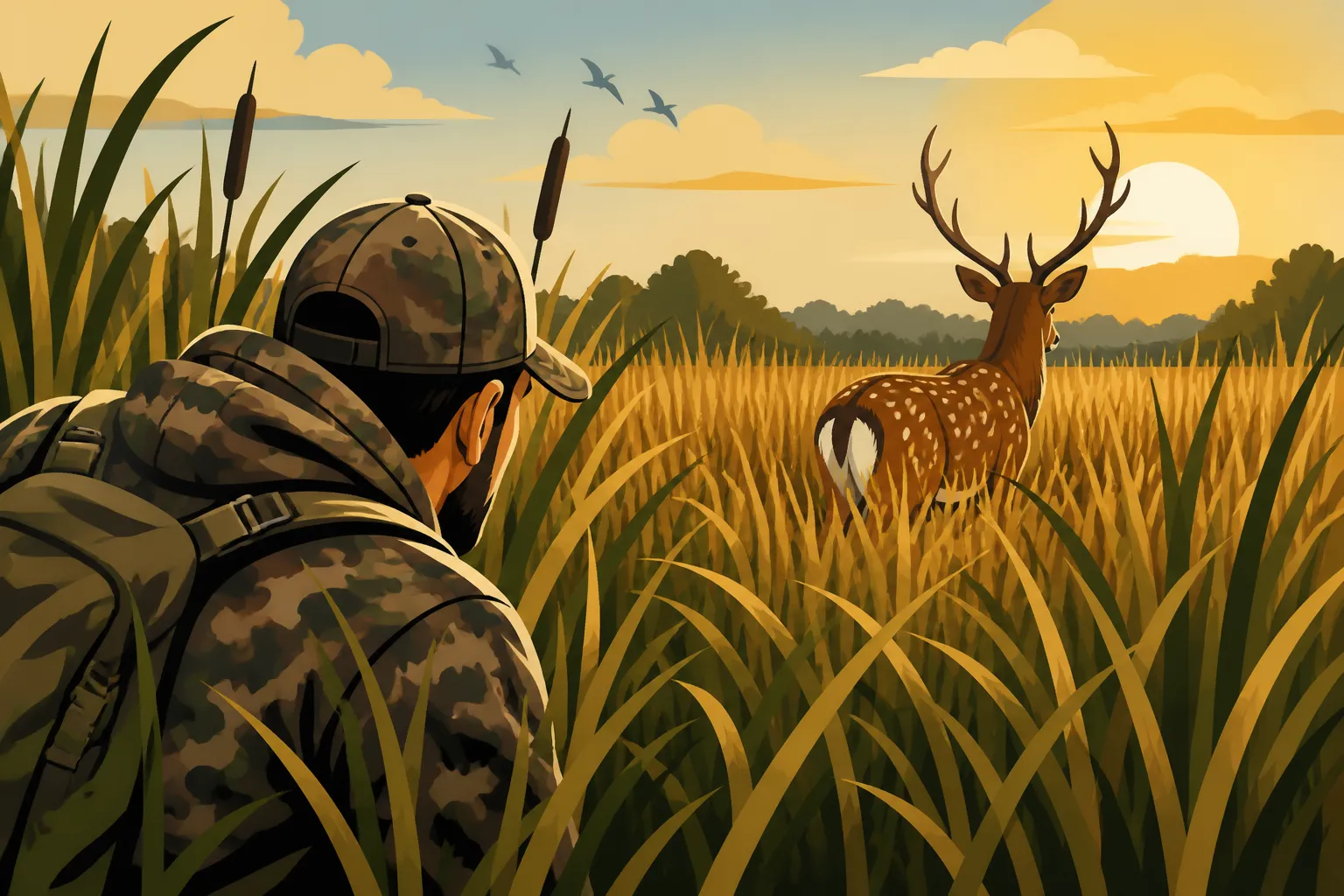
There’s almost nothing more deflating than making what felt like a good shot on a Maryland sika stag, only to watch it disappear into that thick, unforgiving marsh grass. The adrenaline immediately turns to a cold knot in your stomach as you realize the tracking job ahead is unlike anything you’ve faced with a whitetail. This guide is dedicated to equipping you with the knowledge and tactics to successfully track and recover a sika stag, even when it seems the marsh is actively trying to swallow your quarry.
The Unique Challenges of Marsh Tracking Sika
Tracking any wounded animal is tough, but a sika stag in a tidal marsh presents a whole new level of difficulty. It’s not just about finding a blood trail; it’s about understanding the environment and the animal itself. The frustration of losing a faint sign in the muck or thick reeds is something every marsh hunter has experienced, and it’s completely justified.
Why Marsh Grass is a Tracking Nightmare
Imagine trying to follow a subtle path through a dense, tangled mattress of vegetation, often submerged in water or mud. That’s essentially what tracking in a sika marsh entails. The dominant vegetation, especially Phragmites (common reed), grows incredibly thick and tall, creating a nearly impenetrable wall. These dense stands mean very little light hits the ground, making faint blood drops almost impossible to see, even in broad daylight.
Furthermore, the marsh floor itself is a constantly changing, unstable environment. Mud flats, submerged potholes, and water-logged areas conspire to obliterate any clear tracks. The ground is often so soft that even a wounded deer might not leave distinct hooves prints, or the prints quickly fill with water. And then there are the tides. A rising tide can completely wash away or obscure a blood trail, making what was already difficult seem impossible. What looked like a clear sign at low tide can be entirely gone an hour later. It’s enough to make you want to throw your hands up in exasperation, but with the right approach, you can still beat the odds. Understanding "Where Sika Deer Bed in Phragmites" can sometimes give you a clue as to where they might try to hide after a shot.
Sika Behavior After the Shot in the Marsh
Sika deer are known for their incredible toughness and small stature, which are both significant factors in tracking. Unlike a larger whitetail that might stumble or leave a more obvious disturbance, a sika, even when mortally wounded, can appear to just vanish. They are incredibly adept at using the dense marsh cover to their advantage. A sika stag, when hit, often doesn't run far in the open. Instead, its instinct is to dive immediately into the thickest, nastiest cover available, often burrowing deep into a tangle of Phragmites or a dense patch of wax myrtle.
Their small body size means they don't lose as much blood volume as quickly as a larger deer, and any blood loss might be internal or well-hidden by their coarse hair and the marsh environment. They can also travel a surprising distance on adrenaline, seemingly unphased, before succumbing to their injuries. This combination of toughness, small size, and their tendency to seek dense refuge makes for an incredibly challenging tracking scenario. Many hunters, accustomed to tracking whitetails, are often surprised by the sheer difficulty of finding a downed sika in the marsh. It’s a completely different ball game, and understanding that difference is your first step towards success. For more insight into their size, consider "Why Sika Deer Run Smaller Than Whitetails", which further emphasizes this challenge.
Essential Gear and Preparation for Marsh Tracking
Successfully tracking a sika stag in the dense Maryland marsh isn't just about sharp eyes; it's about being prepared with the right tools and mindset. You're heading into a challenging environment, and having the proper gear can make the difference between a successful recovery and a heartbreaking loss. Don't underestimate the marsh; it demands respect and preparation.
Personal Gear for the Tracker
First and foremost, your personal attire and safety gear are paramount. You will get wet, you will get muddy, and you will be pushing through dense, often abrasive vegetation. Start with appropriate footwear. Forget your typical hunting boots; you’ll need at least hip boots, and for many marsh conditions, chest waders are truly non-negotiable. They protect you from waist-deep water, thick mud, and the abrasive nature of Phragmites and marsh elder. Waders also offer some protection against cuts and scrapes from sharp reeds. Choosing between "Hip Boots Versus Chest Waders in Sika Country" often comes down to the specific marsh you're hunting and the expected water levels.
Beyond footwear, robust, waterproof outer layers are crucial, even if it's not raining, as you'll be constantly brushing against wet foliage. A good quality headlamp with a powerful beam and extra batteries is an absolute must. Even if you start tracking in daylight, you might find yourself still at it after dusk. Consider a handheld spotlight as well for cutting through the darkness in dense cover. For communication, assume cell service will be spotty or nonexistent in many marsh areas. A satellite communicator (like a Garmin inReach or similar device) can be a literal lifeline for emergencies or simply to let family know you’re okay and your estimated return time. Finally, bring plenty of water and some high-energy snacks. Tracking in the marsh is physically demanding, and you need to stay hydrated and fueled.
Tracking Tools and Aids
Beyond your personal gear, specific tracking tools will greatly increase your chances of success. A reliable GPS device or, more commonly these days, a robust mapping application on your smartphone is invaluable. Platforms like GoHunt or onX Hunt are fantastic for marking your shot location, the last known blood, the deer's last known direction of travel, and for simply navigating the featureless marsh. Make sure you have downloaded offline maps before heading out, as signal can be nonexistent. Learning to use a mapping app for scouting, like "Scouting Maryland Public Land With Aerial Photos", can give you a leg up before you even step foot in the marsh.
Flagging tape (biodegradable, brightly colored) is another essential. Use it liberally to mark every drop of blood, every disturbed patch of grass, and your entry point. This creates a visual breadcrumb trail, especially useful if you need to back out and restart your search, or if a partner is joining the effort. A tracking stick or pole can be incredibly helpful for parting dense grass, testing mud depth, and moving aside vegetation to reveal hidden signs without disturbing the trail. Finally, consider a partner. Two sets of eyes are always better than one, and a partner can maintain a position at the last sign while you search ahead, preventing you from losing the main trail. If you really get stuck, finding a certified tracking dog service is an option, though regulations and availability vary in Maryland.
Step-by-Step Guide to Tracking a Sika Stag in the Marsh
When that moment comes, and your sika stag bolts into the marsh, the actions you take in the immediate aftermath are critical. Panic can set in quickly, but a methodical, patient approach is your best friend. Every minute detail matters when the signs are as subtle as they are in this unique environment.
Initial Assessment and Marking the Shot Site
The first thing you need to do, before you even take a step towards where the stag disappeared, is to mentally note or physically mark the precise location of your shot. This means pinpointing exactly where you were standing when you fired. Use a tree, a specific marsh point, or drop a piece of flagging tape right there. Next, observe the deer's reaction. Did it mule kick? Hunch up? Run with its tail tucked or flagging? Did you hear a crash? Any of these observations can give you clues about the shot placement and how far the deer might have traveled. A deer that humps up or kicks violently often indicates a good lung shot, while a deer that runs off steadily might be hit further back.
After noting the reaction, and this is crucial, resist the urge to immediately charge in. Give the deer time, especially if you suspect a gut shot or a less-than-ideal hit. For a suspected lung or heart shot, waiting 30-60 minutes can be enough. For a gut shot, a minimum of 4-6 hours, or even until morning if it's late in the day, is often recommended. This allows the animal to bed down and expire, rather than being pushed further into the marsh, making recovery nearly impossible. Once you've waited, approach the exact shot location (where the deer was standing when hit) carefully. Mark this spot with flagging tape and take a GPS waypoint on your GoHunt app. Look for initial blood, hair, bone fragments, or disturbed earth. These first signs are often the most telling. This initial reconnaissance is paramount, as everything else hinges on accurately determining the starting point of your trail. Just as you might strategize for "Reading a Marsh Trail for Sika Sign", carefully documenting the shot site is the first critical step.
Following the Trail: Blood, Tracks, and Broken Cover
Now, the real work begins. Start tracking slowly and deliberately. If there's blood, mark each spot with flagging tape as you find it. Never walk beyond the last sign. If you lose the trail, return to the last marked spot and begin searching in a grid pattern. Marsh grass often conceals blood, so you're not just looking for bright red spots on the ground; you're looking for subtle disturbances. Bent or broken stalks of Phragmites, scuff marks in the mud, displaced moss, or a faint sheen of blood on vegetation are all critical clues.
Use your tracking stick to gently part the dense grass ahead of you, revealing potential signs that would otherwise be hidden. Pay close attention to the direction of broken vegetation; a deer pushes through the cover, leaving a distinct path. Sometimes, you might not find blood for long stretches, especially if the deer is bleeding internally or traveling through water. In these cases, you’re relying almost entirely on disturbance. Look for spots where the deer stepped or pushed through, creating a funnel in the dense growth. If you're tracking at night, your headlamp and a good spotlight become your best friends. The beam can sometimes make blood "shine" differently or highlight disturbed vegetation. Remember, in a marsh, the deer will often follow the path of least resistance – ditch banks, the edges of drier hummocks, or subtle ridges in the terrain.
| Sign Type | What to Look For | Significance |
|---|---|---|
| Blood Trail | Drops, smears, frothy (lung), watery (gut), bright/dark | Color indicates shot placement. Frothy blood is a good sign; watery blood suggests a less lethal hit. |
| Tracks/Impressions | Hoof prints, scuff marks in mud, disturbed moss | Indicates direction of travel, size of deer. Can be obscured by water or soft mud. |
| Broken Vegetation | Bent, broken, or scraped stalks; rubbed saplings | Primary sign in dense cover. Shows direction, height of deer, and effort to push through. |
| Hair | Small clumps on brush, single strands | Color and length can confirm it's your deer. Often found near the shot site or where deer rubbed cover. |
| Peeled Bark/Scrapes | Antler rubs on small trees (if stag) | Less common post-shot, but can indicate deer was struggling or tried to clear its antlers. |
| Gut Contents/Stomach | Green, partially digested vegetation, strong odor | Definitely a gut shot. Requires a longer wait time before continuing tracking to allow deer to expire. |
If you find yourself in the unenviable position of "Blood Trailing in Marsh Grass After Dark", patience and multiple light sources are key.
Dealing with Lost Trails and Tides
It's almost inevitable that you'll lose the trail at some point in the marsh. When this happens, do not forge ahead blindly. Go back to the last piece of definitive sign you found. Mark it clearly. Then, start expanding your search in ever-widening circles or a systematic grid pattern. Look for the deer's likely escape routes. Sika, like whitetails, will often gravitate towards slightly higher ground if available, or follow the natural contours of the marsh, such as the banks of a ditch or creek. They might even try to cross a narrow body of water to throw you off.
The tides are a constant challenge. If the tide is rising, you need to work quickly, as your precious blood trail might soon be submerged. If it’s high tide, you might have to pause your search, marking the last known sign, and return when the tide recedes. This can be agonizing, but pushing through a submerged trail can destroy any remaining evidence. Conversely, a falling tide can sometimes reveal tracks or blood that were previously hidden under shallow water. Knowing the tide charts for your specific area is just as important as knowing your wind direction when hunting "Wading Into a Dorchester Marsh Before Daylight" or "Boating Into a Sika Marsh at Low Tide". If you truly cannot find any more signs after an exhaustive search, it might be time to consider calling for help, either from a buddy or a professional tracking dog. Losing a sika in the marsh is a tough pill to swallow, but sometimes, knowing when to stop and rethink your strategy is the most responsible action. If the deer expired and you locate it later, "Recovering a Deer From a Tidal Marsh" has its own unique set of challenges.
Strategies for Success and Safety in Sika Marsh Tracking
Successfully recovering a sika stag from the Maryland marsh is a testament to perseverance and smart decision-making. It's not just about finding the deer, but also about ensuring your own safety and making an ethical recovery.
When to Call for a Tracking Dog or Expert Help
There comes a point in every difficult tracking job where you have to honestly assess whether you're capable of continuing effectively. In the dense, often featureless marsh, this point can come sooner than you expect. If you've spent hours meticulously searching, returned to the last sign multiple times, and expanded your grid search without success, it's time to consider calling in a professional. Maryland has certified tracking dog services available. These dogs are specifically trained to follow blood trails, even faint ones, and can often pick up a scent that human eyes simply can't detect, especially after many hours or if the trail is old or water-logged.
Don't view calling for help as a failure; view it as an ethical choice to ensure a downed animal is recovered. When contacting a dog handler, provide as much detail as possible: precise shot location, time of shot, deer's reaction, last known sign, and how long you've been tracking. The sooner you call, the better the chances for the dog. While it might cost a fee, it's a small price to pay for the recovery of your animal and the peace of mind that comes with it. Beyond tracking dogs, sometimes bringing in an experienced friend who hasn't been mentally fatigued by the initial search can offer fresh eyes and a renewed perspective on the trail. It’s also important to remember the local regulations regarding tracking dogs. Always confirm that using a tracking dog is permissible in the specific area you are hunting.
Safety Considerations in the Marsh
Tracking a wounded animal into a vast, often remote marsh environment carries inherent risks beyond just getting lost. The physical demands alone are significant. You'll be wading through thick mud, potentially knee-deep or even waist-deep water, and pushing through dense vegetation that can obscure hidden obstacles like submerged logs, old fence lines, or deep, unforeseen ditches. Exhaustion and hypothermia are real concerns, especially if you get wet in colder weather. Always dress in layers of moisture-wicking clothing, even under your waders.
Before you even step foot into the marsh for a tracking job, inform someone of your exact plans, including your general location and estimated return time. Carry a fully charged cell phone (though don't rely on signal), and ideally, a satellite communicator. A whistle can also be useful for signaling a partner if you get separated. Be mindful of dehydration, even in cool weather; the physical exertion of wading and pushing through marsh grass is immense. It's also easy to become disoriented in the homogeneous landscape of a marsh. Your GPS or mapping app is crucial not just for tracking the deer, but for navigating your way back out. Always approach a downed animal with caution, especially a sika stag, as even an expired animal can shift or react in surprising ways. Never track alone if possible, and always prioritize your safety above all else, especially when venturing deep into areas like "Hunting Maryland's Lower Eastern Shore Marshes".
Disclaimer
Please remember that hunting regulations and land access rules in Maryland can change. Always consult the Maryland Department of Natural Resources (DNR) official website or current hunting guide for the most up-to-date and complete information before heading afield. This guide is for informational purposes only and does not supersede official regulations.