Hunting a Funnel Between Two Grain Fields
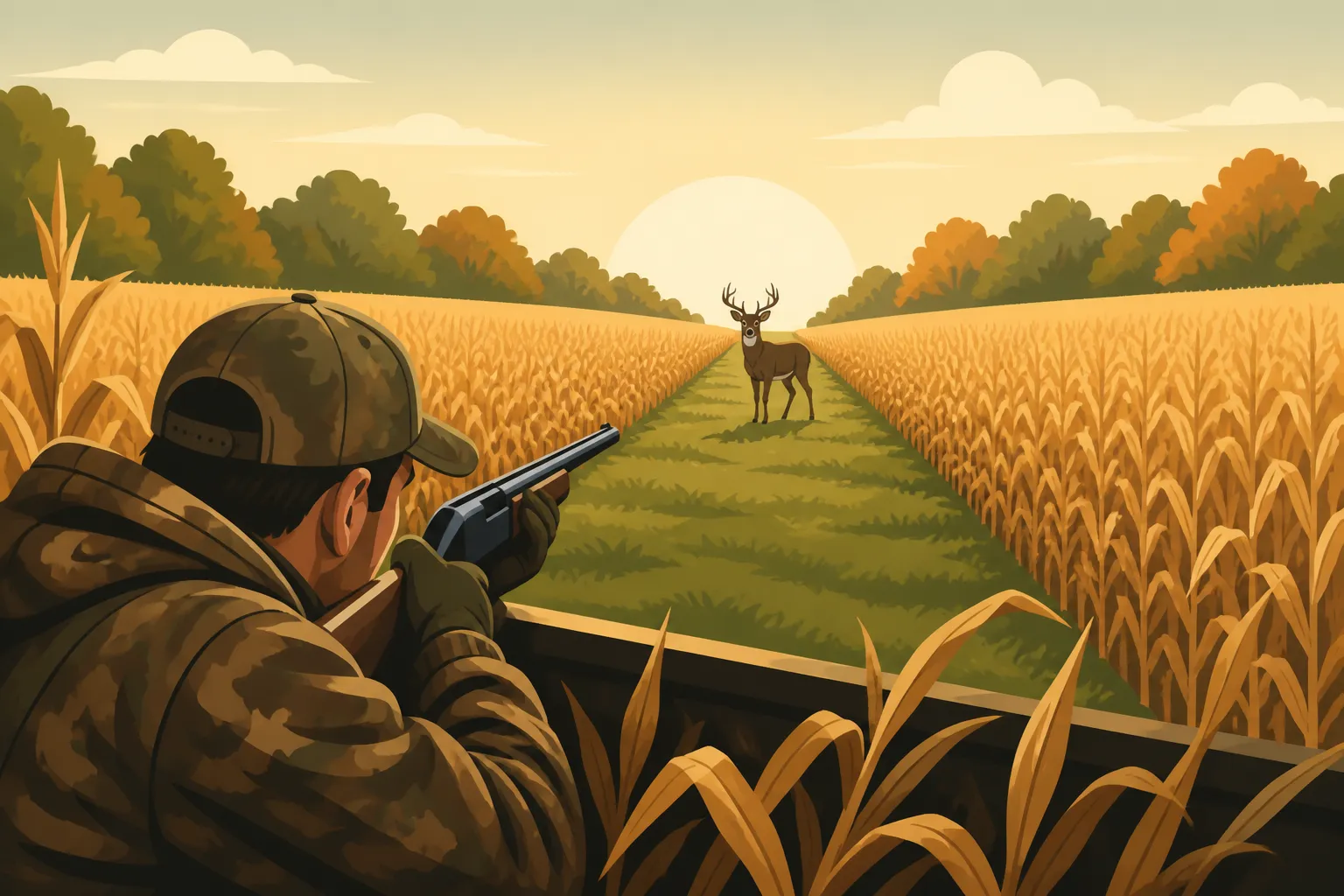
There's nothing quite like the sight of a mature whitetail buck slipping silently between two vast grain fields, heading from bedding to dinner. For many Maryland hunters, this scenario is a familiar one, often accompanied by the frustration of seeing deer far out of range in open agricultural country. This guide is all about tackling that very problem, helping you understand, identify, and effectively hunt those critical travel corridors – the funnels – that deer depend on between towering corn and sprawling soybean fields.
Understanding Deer Movement in Agricultural Landscapes
Hunting deer in Maryland's agricultural areas, particularly on the Eastern Shore or in the Piedmont regions where farming is prevalent, presents a unique set of challenges and opportunities. While vast fields offer abundant food, they also create wide-open spaces that can make deer movement unpredictable and difficult to intercept.
The Allure of Grain Fields for Deer
It's no secret that whitetails absolutely adore grain fields. These agricultural powerhouses are essentially giant buffet lines and security blankets rolled into one. Standing corn, for example, offers incredible cover, allowing deer to bed, travel, and feed completely out of sight of predators and hunters alike. You've likely seen the evidence – deer trails disappear into a sea of green stalks, only to emerge on the far side.
Soybean fields, too, are a massive draw, offering protein-rich forage throughout the summer and into the early fall. Once the beans turn yellow and drop their leaves, deer are often found browsing the remaining pods. Even after harvest, the leftover kernels and shattered beans provide a persistent food source, especially in colder months. Wheat and other small grains offer lush green forage in the cooler parts of the year when other natural food sources are scarce. Maryland's farm deer are very patternable around these resources.
The Challenge of Open Spaces
While the food abundance is fantastic, hunting vast, open fields can be incredibly frustrating. You scout a gorgeous standing cornfield or a recently cut soybean field, you see deer pouring into it every evening, but they’re often hundreds of yards away, making a clean shot nearly impossible for most setups. Trying to sneak across a wide-open expanse without being busted is a fool's errand. Deer in these environments are constantly on high alert, relying on their keen eyesight and sense of smell to detect danger from afar.
This is where understanding funnels becomes absolutely critical. Instead of trying to ambush deer in the middle of a sprawling field, the savvy hunter focuses on the narrow choke points that force deer into predictable travel patterns. These funnels are the deer highways, the natural bottlenecks that offer the best chance to intercept a wary buck or a cautious doe as they move between the safety of dense cover and the promise of a bountiful meal. Without these funnels, deer movement in open country would be far too erratic to consistently hunt.
Identifying and Scouting Funnels Between Grain Fields
Finding these deer highways is the first step to success. It requires a keen eye on maps and boots-on-the-ground investigation.
What Exactly is a Funnel?
In essence, a funnel is any geographical feature, natural or man-made, that constricts deer movement into a narrower path. Imagine pouring water through a funnel – it forces the liquid into a predictable stream. Deer operate similarly. In agricultural landscapes, these funnels often connect larger blocks of timber or thickets that serve as bedding areas to expansive grain fields.
Common examples of funnels between Maryland grain fields include:
- Narrow Wooded Strips: These are perhaps the most classic examples. A thin line of trees, brush, or overgrown hedgerow connecting two larger woodlots or a woodlot to a distant field is a prime funnel. Deer will often follow the edge of this cover, staying out of the open.
- Ditch Lines and Creek Bottoms: Even a seemingly insignificant drainage ditch or a small creek with a slight depression and some cover can act as a funnel. Deer prefer to walk in the lowest, most concealed terrain, especially if it offers some brush.
- Fencerows and Hedgerows: Old fencerows that have grown up into lines of small trees and shrubs provide vital cover and travel corridors. They might not be tall timber, but they offer enough concealment for deer to feel comfortable moving through them.
- Ravines and Swales: Any dip or depression in the landscape, even if subtle, can concentrate deer movement. These natural contours offer both cover and an easier path across otherwise flat terrain.
Leveraging Topography and Aerial Maps
Before you even step foot in the field, spend some quality time with aerial photos and topographic maps. Tools like GoHunt are invaluable for this. Zoom in on areas where large grain fields meet woodlots or other thick cover. Look for those skinny fingers of woods, those thin lines of dark green that connect bigger timber blocks. These are your primary suspects for funnels.
When you're using aerial imagery, pay close attention to the contours of the land. Subtle changes in elevation might not look like much on a flat map, but on the ground, they can create micro-funnels. Look for where a drainage or a low spot connects two fields, or where a slight rise forces deer to walk along its base. Identify where a major river or creek runs, as the wooded banks of these waterways almost always act as superhighways for deer. These riparian corridors often serve as primary travel routes, especially when surrounded by open farmland. This kind of detailed map scouting is a critical component of Scouting Maryland Public Land With Aerial Photos, helping you pinpoint key areas without burning scent or disturbing game.
Don't forget to consider human elements. Roads, old abandoned farmsteads, or even dense housing developments bordering agricultural areas can create artificial funnels by limiting where deer can safely travel. These areas often force deer into narrower, more predictable paths.
On-the-Ground Scouting for Active Funnels
Once you've identified potential funnels on your maps, it's time to hit the ground. This is where you confirm your suspicions and find the active funnels. Deer may theoretically use a funnel, but you want to find the one they're using right now.
Start by walking the edges of the grain fields, especially where they meet the suspected funnel. Look for distinct deer trails entering and exiting the funnel. These aren't just faint impressions; you want to see well-worn paths, almost like miniature cattle trails, especially where they cross softer ground or are regularly used.
Within the funnel itself, look for fresh sign. Tracks are your best friend here. Pay attention to the size and direction of the tracks. Are they consistently moving one way? Are there multiple deer using the same path? Look for rubs on small trees and saplings, indicating bucks are working the area. Fresh scrapes, particularly during the pre-rut and rut, are like neon signs telling you bucks are actively patrolling this corridor. A fresh scrape, often with an overhanging licking branch, is a clear indicator of buck activity, much like the detailed signs discussed when hunting Scrape Lines Along a Maryland Field Edge. Look for fresh droppings and beds tucked just inside the cover, especially along the funnel's edges.
Observe how the funnel interacts with the surrounding cover. Does it lead directly to a dense thicket? Does it open up into a prime feeding area? Understanding the "purpose" of the funnel – where deer are coming from and where they're going – is key to predicting their movement and timing your hunt. Remember, deer will often use different funnels or different parts of the same funnel depending on the time of day and what they are doing (e.g., morning movement from feeding to bedding, evening movement from bedding to feeding).
Strategic Stand Placement and Hunting Tactics
Once you've found an active funnel, the next challenge is setting up your ambush effectively. This isn't just about finding a tree; it's about minimizing your impact and maximizing your shot opportunity.
Wind Direction and Scent Control are Paramount
In open agricultural settings, wind direction and scent control aren't just important; they are absolutely critical. Deer have an incredible sense of smell, and any trace of human odor will send them packing faster than you can blink. You simply cannot cheat the wind in these environments. Always approach and set up with the wind in your favor, blowing your scent away from where you expect deer to come from.
Consider local thermals. In the mornings, air often sinks, carrying your scent down into low-lying areas. In the evenings, air rises, carrying your scent upwards. While often discussed in the context of mountainous terrain, understanding Wind and Thermals in Western Maryland Terrain also applies to subtle elevation changes in farm country. Even a slight dip or rise can create a thermal current that you need to account for.
Scent control should be a multi-faceted approach. Shower before you hunt with unscented soap, use scent-eliminating sprays on your clothes, and store your hunting clothes in airtight containers or bags with natural elements like pine needles or earth wafers. Wear rubber boots to minimize ground-level scent. Avoid handling anything that carries human odor (gas cans, food, cigarettes) once you're dressed for the hunt. Every detail matters when deer are downwind.
Entry and Exit Routes Without Spooking Deer
This is often the trickiest part of hunting funnels in farm country. How do you get to your stand and back out again without spooking every deer in the vicinity? Open fields mean limited concealment, and any disturbance you create can educate deer, making them avoid that funnel for days or weeks.
Plan your entry and exit routes meticulously. Whenever possible, use existing cover such as ditch lines, deep fencerows, or even the standing grain itself if you're hunting during the early season. If you must cross open ground, do so in the dark, well before first light, or well after last light. Use a flashlight minimally and aim it at your feet.
If hunting during the season when corn is still standing, it can provide excellent cover for entry and exit. Walking in the rows, especially when the corn is tall, allows you to approach your stand with minimal exposure. This tactic is especially useful when considering Entry Routes Through Cut Corn Before Daylight – getting in undetected is half the battle. If fields are cut, try to skirt the very edges, staying tight to the remaining timber or brush. Sometimes, a long, circuitous route that keeps you out of sight is better than a short, direct route that exposes you.
Optimizing Stand Types and Placement
The type of stand you use and where you place it will depend heavily on the specific funnel and your hunting style.
- Tree Stands: If the funnel has mature trees, a hang-on stand or a climbing stand can be excellent choices. Aim to be high enough to break up your silhouette against the sky and get your scent above a deer's nose, typically 18-25 feet. Position your stand downwind of the expected deer path, offering clear shooting lanes. Remember to trim branches before the season, minimizing disturbance on hunt day. Learning how to properly set up a stand, especially when Hanging a Stand on a Maryland Farm Edge, ensures both safety and effectiveness.
- Ground Blinds: In areas with limited trees or where a funnel is a deep ditch or fencerow, a pop-up ground blind can be highly effective. Place it strategically, brushing it in with natural vegetation from the area. Make sure it blends in completely and that deer are accustomed to seeing it if possible. The key is to get it out well in advance of your hunt so deer have time to get used to its presence.
- Elevated Box Blinds: On some private land leases, landowners or hunters might install permanent elevated box blinds. These offer comfort and scent containment, but they are stationary and require careful consideration of prevailing winds before placement.
No matter the stand type, always place it where you have clear shooting lanes down the funnel. Consider the average distance deer will be when they pass through. For archery hunters, this might mean being closer, while firearms hunters can afford a bit more distance. GoHunt can be useful here too, allowing you to mark potential stand locations and shooting lanes directly on your map, helping you visualize your setup from home.
| Funnel Type | Key Scouting Signs | Ideal Stand Placement | Best Hunting Times |
|---|---|---|---|
| Wooded Strips/Fencerows | Worn trails, rubs, scrapes | Downwind edge, 18-25ft high in a tree, ground blind brushed in | Mornings (bedding), Evenings (feeding), All-day (rut) |
| Ditch Lines/Creek Beds | Tracks, droppings, occasional beds | Overlooking a bend or pinch point, using bank for cover | Mornings (bedding), Evenings (feeding) |
| Ravines/Swales | Tracks, subtle trails | On a slight rise overlooking the low point, downwind | Mornings (bedding), Evenings (feeding) |
| Field Edges (specific pinch points) | Heavy tracks, fresh browse | Elevated stand or blind where cover narrows | Early morning, late evening |
Timing Your Hunt for Maximum Success
Understanding when deer use funnels is just as important as knowing where they are. Deer movement patterns shift throughout the season, and adapting your hunting strategy accordingly will significantly increase your odds.
Early Season Opportunities
When Maryland's archery season opens in September, grain fields often still stand tall. This provides unique opportunities, as deer use the standing corn and beans for both bedding and feeding. Funnels become crucial travel lanes connecting these dense food and cover sources to other areas or even within the same large field if there are internal wooded fingers.
During the early season, focus on morning and evening movements. Deer will often leave the cool, secure confines of standing corn to browse nearby wood edges or water sources in the morning, or emerge in the late afternoon to feed in soybeans or other green fields. A funnel connecting a standing cornfield to a small woodlot, or even just a thicker patch of weeds, can be a goldmine. This early activity is precisely what hunters target when Maryland Archery Season Opening Day arrives. Set up early and be prepared for the last hour of daylight.
Mid-Season and Rut Activity
As the season progresses and crops are harvested, the landscape changes dramatically. The loss of standing corn and beans reduces cover, making funnels even more vital. Deer become more reliant on the remaining timber and thickets for security, and they use funnels extensively to travel between these fragmented cover blocks.
Then comes the rut. Oh, the rut! In early to mid-November, during the peak of the breeding season, funnels transform into high-traffic thoroughfares. Bucks are constantly on the move, scent-checking for does, chasing, and sparring. They will use the most efficient and safest travel corridors, and funnels fit that bill perfectly. A buck cruising a funnels between two fields might just be the one you've been after. This is why Hunting the Rut in Early to Mid November in these funnel systems is so productive.
During the rut, consider all-day sits in funnels. Bucks can be active at any time of day, particularly during the mid-day lull when many hunters head back to camp. The more hours you can spend patiently observing a funnel, the higher your chances of intercepting a traveling buck.
Late Season Food Sources and Funnels
By late season, the landscape is often stark and cold. Deer are primarily focused on finding calorie-rich food sources to survive the winter. Any remaining cut corn, soybean stubble with dropped beans, or winter wheat fields become magnets for deer. Funnels leading to these critical food sources are where you need to be.
Cold fronts, especially those accompanied by snow, will drive deer to feed heavily. This creates excellent late-season hunting opportunities. If you've got a funnel that leads directly to a reliable late season food source, you're in business. Deer will utilize these pathways religiously, often moving in larger groups. This is the period where patience truly pays off, sitting long hours on a field edge, waiting for deer to hit the funnel and come out to feed. The advice for Late Season Food Sources for Maryland Deer stresses the importance of understanding these patterns. And for those hearty souls out there, these same funnels near winter food are exactly where you want to be when Sitting a Field Edge in Maryland's January Firearms Days rolls around.
Legal Considerations and Respecting Landowners
Hunting in Maryland's agricultural areas often means hunting on private land, which comes with distinct responsibilities and requirements.
Private Land Access and Permission
The vast majority of productive agricultural land in Maryland is privately owned. This means you absolutely, unequivocally need permission from the landowner before you step foot on their property. Trespassing is illegal, unethical, and damages the reputation of all hunters. It also makes it harder for others to gain access in the future.
Approach landowners respectfully, well in advance of the season. Dress neatly, explain your intentions clearly, and offer to help with any small tasks on the farm. Sometimes, offering to help with chores or provide venison can go a long way. Building a good relationship with a landowner is priceless. You can even use mapping applications like GoHunt to identify property lines and landowner names, which can help you prepare before you make contact. Understanding the nuances of Knocking on Doors in Maryland Farm Country is essential for securing these valuable hunting opportunities.
Following Maryland Regulations
Beyond landowner permission, it's paramount that you adhere to all Maryland hunting regulations. This includes:
- Licensing and Stamps: Ensure you have the correct base hunting license, as well as any required stamps (e.g., archery stamp, bonus antlered deer stamp) for the species and weapon you're hunting. Details on these are covered in Maryland Hunting Licenses and What They Cost.
- Bag Limits and Antler Rules: Be intimately familiar with Maryland's deer bag limits for your region (Region A or Region B) and the antler point restrictions. This information is critical, as detailed in Maryland's Deer Bag Limits and Antler Rule. Do not shoot until you are certain of the antler count if you are subject to the three-point rule.
- Weapon Restrictions: Know what weapons are legal for deer hunting in the specific county you're hunting in. Some counties have rifle restrictions, for example.
- Blaze Orange: Wear the required amount of blaze orange during specific firearms seasons, even if you're bowhunting during that overlap.
- Reporting: Promptly register your harvested deer through the Maryland Department of Natural Resources COMPASS system.
Staying legal and ethical not only keeps you out of trouble but also ensures a positive image for hunting in Maryland.
Disclaimer
Always consult the most current Maryland Department of Natural Resources hunting regulations booklet for official season dates, bag limits, licensing requirements, and legal weapons before planning any hunting trip. Regulations can change annually.