How Close a Maryland Mentor Must Stay
Bringing a new hunter into the fold is one of the most rewarding parts of our lifestyle, but it often comes with a heap of questions, especially when it comes to the rules and regulations designed to keep everyone safe. Many experienced hunters wonder just how close they need to stay to a new apprentice, especially with firearms or bows in hand, and it can feel a little daunting to make sure you're doing it all by the book while still providing a great experience. This guide will walk you through Maryland's specific rules regarding mentor proximity, helping you understand the legal requirements and practical implications for safely and effectively introducing new hunters to the field.
Understanding Maryland's Apprentice Hunter Program
Maryland, like many states, recognizes the critical role mentors play in recruiting and retaining new hunters. The Apprentice Hunter Program is designed to make it easier for newcomers, especially youth, to get their feet wet without immediately having to complete a full hunter education course. It’s a fantastic initiative that allows experienced hunters to pass on their knowledge and passion, fostering a new generation of ethical and responsible outdoors enthusiasts. But with this opportunity comes specific responsibilities, particularly concerning safety and supervision.
The Philosophy Behind Mentored Hunting
At its heart, mentored hunting isn't just about bypassing a requirement; it's about a foundational transfer of knowledge and ethics. Imagine a seasoned duck hunter teaching a young cousin how to set decoys in the pre-dawn dark, or a deer hunter showing a friend how to read rubs and scrapes. Maryland's Apprentice Hunter Program embraces this tradition, acknowledging that hands-on experience under direct supervision is an invaluable part of learning. For new hunters, especially kids, having that experienced person right there isn't just a legal necessity; it’s a vital safety net and an immediate source of answers to countless questions. It validates the instinct to want to share this world with others, while also putting guardrails in place to ensure that the learning process is as safe as possible for everyone involved. Without programs like this, the barriers to entry for new hunters would be significantly higher, potentially costing us future conservationists and stewards of the land.
Who Qualifies as an Apprentice and a Mentor?
Maryland has pretty clear guidelines on who can participate in its apprentice program. An apprentice hunter is generally someone who has not yet completed a hunter education course and is hunting under the direct supervision of a licensed mentor. This can include youth hunters who are just starting out, or even adult newcomers who want to try hunting before committing to the full hunter education certification. The point is to provide an accessible entry point.
On the other side, a mentor must be at least 18 years old, hold a valid Maryland hunting license, and be a certified hunter education instructor OR have completed a hunter education course themselves. They are the seasoned veterans, the ones with the experience and the responsibility to guide the apprentice safely and ethically. They're not just a warm body; they're an active participant in the teaching process, constantly assessing the situation, providing instruction, and ensuring that safety protocols are followed to the letter. You can learn more about the specifics of the program by checking out the guide on Maryland Apprentice Hunting License Rules.
The Specifics of Mentor Proximity in Maryland
This is where the rubber meets the road, and it’s arguably the most critical piece of information for any mentor. Maryland’s rules on how close a mentor must stay to an apprentice are quite explicit and leave little room for interpretation, all in the name of safety.
Maryland's Direct Proximity Requirements
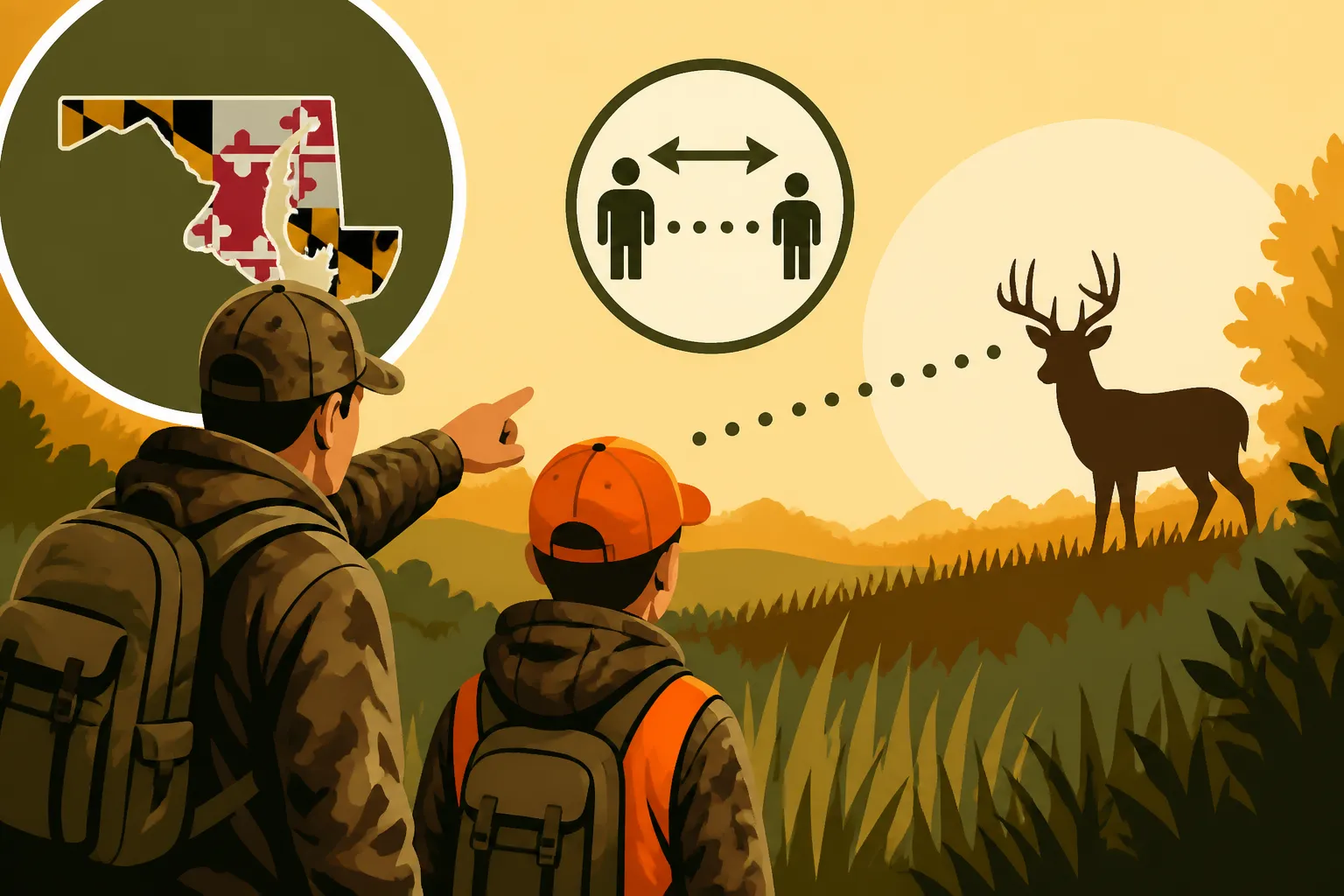
When it comes to handling a firearm or bow in the field, Maryland law states that the mentor must remain "within arm's length" of the apprentice at all times. Let that sink in for a moment. "Arm's length" doesn't mean within sight, or within shouting distance. It means exactly what it sounds like: close enough that you could physically reach out and touch the apprentice or the weapon they are holding.
This rule is unwavering, whether you're stalking deer through the hardwoods or sitting in a blind waiting for ducks. If your apprentice is carrying a loaded shotgun, a rifle, or a nocked arrow on their bow, you must be right there beside them. This might mean walking shoulder-to-shoulder, or sharing a two-person treestand, or sitting cozily in a ground blind. It's a level of proximity that ensures immediate intervention if something goes wrong, or immediate correction if a new hunter makes a mistake. It effectively eliminates any scenario where an apprentice is, for example, sitting in a separate stand 20 yards away, or walking ahead of the mentor on a trail with a loaded weapon. This strict rule is a cornerstone of new hunter safety in Maryland.
Why the "Arm's Length" Rule? Safety First
The "arm's length" rule might feel restrictive at times, but its purpose is crystal clear: safety. When someone is new to hunting, especially with a powerful tool like a firearm or bow, mistakes can happen quickly and have serious consequences. A moment of excitement, a lapse in concentration, or simply a lack of familiarity with proper handling can lead to an accident.
Imagine a scenario: you're Still-Hunting Western Maryland Mountain Timber with an apprentice. A deer suddenly steps out. The apprentice, caught in the rush of the moment, might swing their rifle too quickly, momentarily losing track of the muzzle direction. If you are literally at arm's length, you can instinctively reach out, steady the barrel, or even physically intervene to prevent an unsafe shot or an accidental discharge. This immediate response capability is impossible from a distance.
Beyond preventing accidents, this rule also fosters crucial learning moments. You can whisper instructions about shot placement, confirm target identification, or guide them through the process of safely taking aim. It's about instilling proper muzzle control, trigger discipline, and target identification from the very first outing. While it might mean sacrificing a bit of personal space, it builds a foundation of good habits that will serve the apprentice for a lifetime of safe hunting. It's an investment in their future as a responsible hunter, far more valuable than any perceived inconvenience in the field.
Practical Implications for Mentored Hunts
Understanding the "arm's length" rule is one thing; putting it into practice in the dynamic environment of a hunt is another. This regulation significantly shapes how you plan and execute a mentored hunt in Maryland.
Choosing the Right Hunting Method and Location
The "arm's length" requirement means you can’t just drop an apprentice off at a stand and go to another yourself, even if you’re just a stone’s throw away. Every aspect of your hunt, from where you set up to how you move, must accommodate this close proximity.
For deer hunting, this often means opting for a two-person ladder stand, a large hang-on stand, or, more commonly, a ground blind spacious enough for both of you to comfortably sit side-by-side with weapons. If you're Hunting a Funnel Between Two Grain Fields from a treestand, make sure that stand is rated for two people and provides enough room to safely maneuver. This approach ensures you can maintain arm's length while still having a clear view and shooting lane. For still-hunting or stalking, the apprentice must be directly next to you, matching your pace and movements, which can be challenging but offers an incredible opportunity for real-time instruction on reading sign, identifying trails, and moving stealthily.
When it comes to waterfowl, imagine sitting in a pit blind or a pop-up blind in a cut cornfield. This setup naturally keeps you close, allowing you to guide the apprentice on calling, identifying birds, and safely swinging on targets. Similarly, if you're Hunting a Chesapeake Bay Blind at First Light, sharing a permanent blind will inherently keep you within arm's length. Upland bird hunting, such as for pheasants or rabbits, typically involves walking, so the mentor would simply walk directly beside the apprentice, able to guide them and their firearm as the dogs work or birds flush. This constant proximity allows for immediate feedback and safety adjustments in fast-paced situations.
Gear Considerations for Mentor and Apprentice
Preparing for a mentored hunt with the "arm's length" rule in mind requires some specific gear considerations to maximize safety and comfort. First and foremost, if you're hunting from an elevated position, a two-person treestand is almost a necessity. Ensure it's sturdy, properly secured, and that both harnesses are correctly worn and attached. For ground hunting, a spacious pop-up blind offers concealment and a comfortable, safe space for two.
Consider dual binoculars; while you'll be close, having separate optics allows both of you to scan independently and then discuss what you're seeing. Clear, low-volume communication is vital, whether it's whispered instructions or subtle hand signals. For colder weather, ample warm clothing is key, as you'll be sharing body heat (or lack thereof) in close quarters. Tools like a mapping app, such as GoHunt, can be incredibly useful for pre-scouting locations that lend themselves to two-person setups. You can identify wide trails for still-hunting, or open areas for ground blinds, ensuring you're not caught off guard by terrain that makes maintaining proximity difficult. Remember, the goal isn't just to follow the rule, but to make the entire experience smooth and enjoyable, fostering a love for hunting.
Beyond the Law: Responsible Mentorship Practices
While the "arm's length" rule is a legal minimum, responsible mentorship goes far beyond just physical proximity. A truly effective mentor views the hunt as a comprehensive educational experience, not just an opportunity to get a tag.
This means starting long before opening day. It involves teaching about conservation, ethical shot placement, Maryland's Deer Bag Limits and Antler Rule, animal anatomy, and the role hunters play in wildlife management. Take the time to scout together, showing them how to identify deer trails, rubs, and scrapes, or how to Reading Sign in Maryland Mountain Timber. Talk about wind direction, thermals, and how different species react to pressure.
During the hunt itself, patience is paramount. New hunters will make mistakes, get excited, or miss opportunities. Your role is to calmly guide, instruct, and reassure, focusing on the learning process over the harvest. Teach them about game recovery, Field Dressing a Deer in Warm September Weather, and proper meat care. After the hunt, debrief the experience, highlighting successes and areas for improvement. Encourage them to pursue their own hunter education certification once they've had a taste of the field, so they can eventually hunt independently. Ultimately, you're not just teaching someone how to shoot; you're cultivating a lifelong passion for the outdoors and instilling a deep respect for wildlife and the traditions of hunting.
Navigating Different Scenarios and Species
The "arm's length" rule impacts different hunting scenarios and species in unique ways, demanding flexibility and thoughtful planning from the mentor.
Deer Hunting with an Apprentice
Deer hunting is perhaps where the "arm's length" rule is most frequently applied and where its implications are most felt. As mentioned, a two-person stand or a spacious ground blind is often the best option. When setting up, you need to consider the shooting lanes for both you and your apprentice, ensuring they have a clear, safe shot if an animal appears. During moments like Hunting the Rut in Early to Mid November, when deer activity can be frenetic, maintaining focus and control is even more critical.
If a shot is taken, the mentor's role is to guide the tracking. You might be the one initially reading the blood trail, teaching the apprentice what to look for, but you'll do it side-by-side. The shared experience, from the anticipation of the hunt to the challenge of recovery, becomes a powerful teaching moment that adheres to both the letter and spirit of the law. This type of close mentorship helps solidify good habits and promotes responsible hunting practices that are essential for long-term success and safety.
Waterfowl and Upland Bird Mentoring
For waterfowl, the "arm's length" rule often integrates seamlessly with common hunting practices. Whether you're in a fixed blind on the edge of the Chesapeake or a temporary layout blind in a field, hunters are typically in close proximity anyway. This allows the mentor to provide real-time instruction on identifying species, understanding decoy spreads, and practicing safe gun handling in a busy environment. Days like Hunting Maryland's Youth Waterfowl Days are tailor-made for this kind of direct supervision.
Upland bird hunting, however, can present more dynamic challenges. If you're walking cover for pheasants or quail, the mentor must walk directly alongside the apprentice. This means communicating constantly, being aware of each other's movements, and always knowing where the muzzle is pointing. Jump-shooting ducks, like Jump-Shooting Ducks on an Eastern Shore Gut, can be particularly difficult to do safely under a strict "arm's length" rule if the terrain is uneven or brushy, as it implies moving quickly and sometimes independently. In such scenarios, it might be more prudent to stick to static blind hunts until the apprentice gains more experience and confidence. The key is to select methods that naturally allow for close supervision.
Addressing Common Misconceptions
There are a few common misconceptions about the "arm's length" rule that are worth clarifying. One of the biggest is the idea that "close enough to see them" or "close enough to hear them" is sufficient. As we've established, Maryland is much stricter, requiring actual physical proximity. No, you cannot sit in one treestand and have your apprentice 30 yards away in another, even if you can see them clearly.
Another point of confusion sometimes arises when an apprentice has completed some training but not full hunter education. Until they possess that certification, the apprentice rules (including arm's length supervision) apply. The Apprentice Hunter Program is specifically designed for those who have not yet completed the required Maryland Hunter Education Requirements. Once they have their full hunter education certificate and a regular hunting license, they can hunt independently (though continued mentorship is always encouraged for new hunters, regardless of age). The point of the apprentice license is to bridge that gap with rigorous, in-person supervision before they're certified to hunt solo.
| Activity | Maryland Legal Proximity Requirement | Practical Implication for Mentors |
|---|---|---|
| Carrying a loaded firearm/bow | Within arm's length | Mentor must walk immediately beside or slightly behind, ready to intervene, steady, or take control. |
| Taking a shot | Within arm's length | Mentor must be directly beside the apprentice, able to guide, steady the shot, confirm target, or prevent unsafe shot. |
| Scouting and glassing | Visual and verbal contact | While not strictly "arm's length" for weapon handling, close proximity is essential for teaching and safety, often side-by-side. |
| Moving through dense cover | Within arm's length | Mentor must be able to prevent snagging, falling, or accidental discharge due to terrain or vegetation. |
| Field dressing and recovery | Close supervision | Mentor guides the process, teaching proper techniques and safety. Strict "arm's length" less critical for weapon handling here. |
| Waiting in a stationary blind | Within arm's length | Mentor and apprentice must be seated or positioned immediately next to each other, allowing for direct supervision and intervention. |
Disclaimer
Please note: Hunting regulations can change. Always consult the official Maryland Department of Natural Resources (DNR) website or the current Hunting & Trapping Guide for the most up-to-date and complete information before heading afield. This guide provides general information and should not be considered legal advice.