Why Resident Geese Never Migrate
It's a sight many of us in Maryland have come to expect: Canada geese seemingly everywhere, all year long. You see them waddling across golf courses, grazing in suburban parks, and honking from local ponds, even when the migratory flocks have long since headed north or south. This often sparks a fair bit of head-scratching – if geese are supposed to fly south for the winter, why are these particular birds so stubbornly sticking around? This guide dives deep into the fascinating world of Maryland's resident Canada geese, exploring why these distinct populations have decided that our beautiful state is, in fact, their permanent home.
The Tale of Two Goose Populations: Migratory vs. Resident
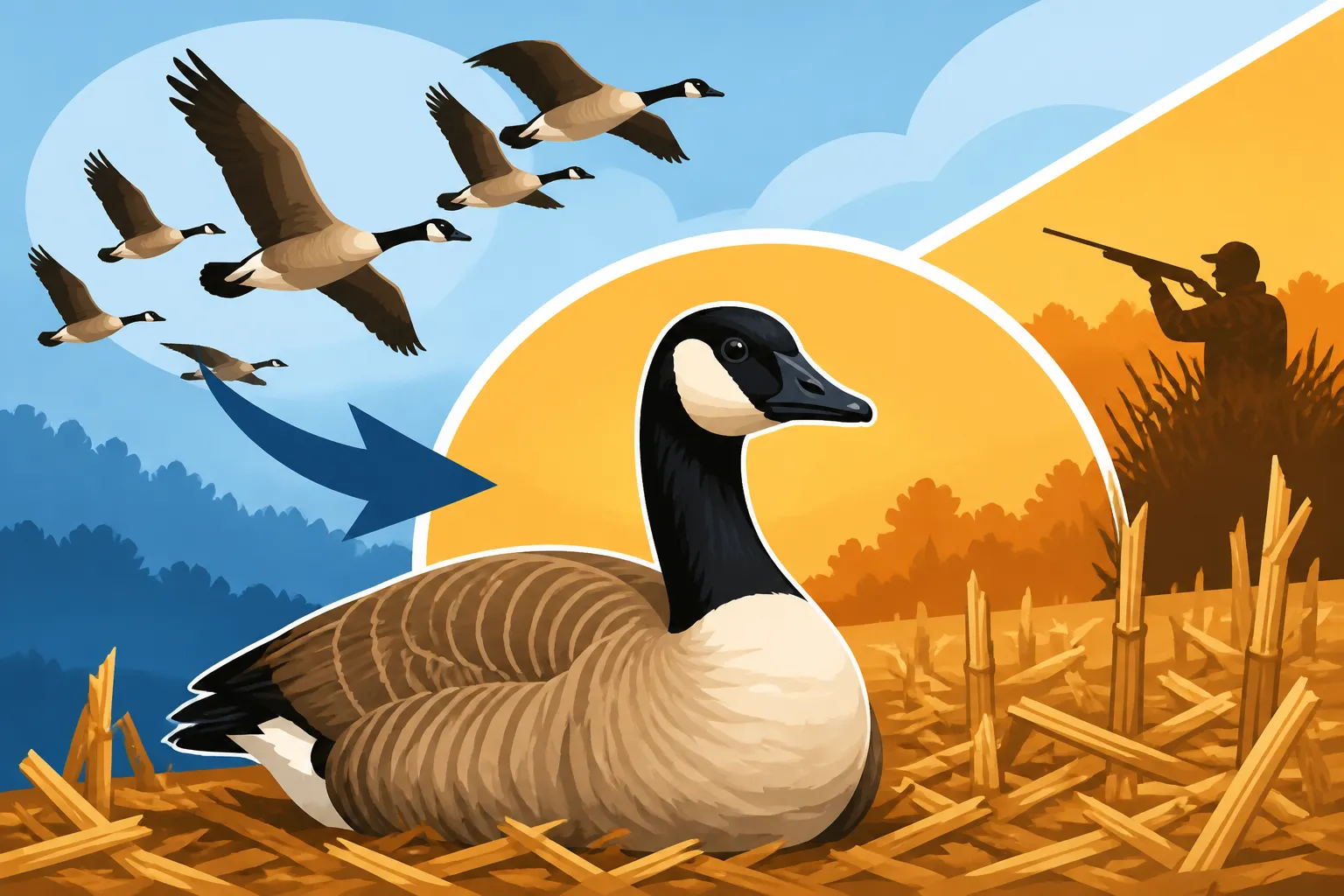
When most people picture Canada geese, they imagine those iconic V-formations soaring across a crisp autumn sky, a clear sign of nature's annual migration. And for a large segment of the Canada goose population, that image holds true. These are the migratory geese, birds that follow ancient, instinctual routes between northern breeding grounds and southern wintering areas, often passing through or pausing in Maryland. But then there are the others – the ones you see every single day, regardless of the season, seemingly oblivious to the grand journey their cousins undertake. These are Maryland's resident Canada geese, and their story is quite different.
Distinguishing Between the Travelers and the Locals
At first glance, a goose is a goose, right? They all have that familiar black neck and head with the white "chinstrap," a brown body, and the characteristic honk. But if you spend enough time observing them in Maryland, you'll start to notice some subtle differences, particularly in their behavior and where you find them. The migratory geese are often larger-bodied, having undergone selective pressures over millennia to withstand the rigors of long-distance travel. They tend to arrive in large, boisterous flocks, often showing up in agricultural fields or large open water bodies like the Chesapeake Bay and its major tributaries, rather than the neighborhood pond. Their flight patterns are typically more purposeful, and they are generally warier of human presence, a trait honed by thousands of miles of wilderness survival and hunting pressure.
Resident geese, on the other hand, often appear slightly smaller, though there's considerable overlap. You'll find them almost anywhere there's a patch of grass and some water, from the meticulously manicured lawns of corporate parks to small retention ponds behind housing developments. They are famously, and sometimes frustratingly, less afraid of people. This isn't just a quaint personality quirk; it's a fundamental difference born from their upbringing. They didn't learn the same survival instincts that would make them shy away from human activity, because for generations, human environments have been their safest and most reliable homes. Understanding this distinction is key to grasping why they simply don't have the same drive to pack up and leave when the mercury drops. Many hunters specifically target these populations, and learning to tell them apart, especially in flight, can inform your strategy when hunting either the Atlantic Population Canada Geese or the local birds.
Why Migration is Hard-Wired for Some, Not Others
For migratory Canada geese, the urge to migrate isn't just a suggestion; it's an ingrained, almost genetic imperative. This instinct evolved over countless generations as a survival mechanism, ensuring access to abundant food resources and optimal breeding conditions across vast geographical distances. They fly north to nest in areas with fewer predators and rich summer forage, then south to avoid the deep snows and frozen waters that would cut off their food supply and expose them to harsh conditions. This cycle is critical to their species' success, and specific cues, like changes in day length and temperature, trigger these incredible journeys.
Resident geese, however, have largely lost, or perhaps never fully developed, this strong migratory impulse. The history of resident geese in Maryland and other mid-Atlantic states is somewhat complex, stemming from several sources. Some trace their lineage back to captive-reared birds used for decoys in bygone eras, which were then released or escaped into the wild and bred locally. Others may have originated from migratory birds that, for various reasons (injury, genetic anomaly, or simply finding a perfect local setup), broke from their migratory flocks and established permanent residence. Once a population establishes itself in an area like Maryland, where conditions are favorable year-round, the genetic and behavioral programming for long-distance migration weakens. Subsequent generations are born and raised in these "soft" environments, never learning the migratory routes or experiencing the harsh northern breeding grounds or southern wintering pressures that would typically drive their migratory relatives. They grow up seeing familiar landmarks, abundant food, and safe roosting sites, effectively establishing their own permanent home range. This has led to distinct populations, with Resident Canada Geese in Maryland becoming a significant game species in their own right, subject to different management strategies than their migratory counterparts.
Maryland's Allure: Why Resident Geese Find Home Here
Maryland, with its diverse landscapes ranging from the expansive Chesapeake Bay to rolling farmlands and dense suburban developments, offers an irresistible combination of resources that makes it a perfect year-round home for resident Canada geese. Unlike their migratory cousins who need to travel thousands of miles to find seasonal sustenance and safety, our local geese have discovered that everything they need is right here, often just a short flight or waddle away.
Abundant Year-Round Food Sources
One of the primary drivers for any animal deciding where to live is access to food, and Maryland truly rolls out the green carpet for its resident geese. Think about it: our state is a patchwork of what, to a goose, must look like an endless buffet. Manicured lawns, whether at a private residence, a public park, or a corporate campus, provide short, tender, highly nutritious grass throughout much of the year. Geese are grazers, and these green carpets are essentially perfectly cultivated feeding grounds, often fertilized and watered, ensuring a constant supply of their preferred forage. The sheer accessibility of these areas means they expend very little energy searching for food.
Beyond the lawns, agricultural fields play a massive role, particularly after harvest. Setting a Goose Spread in Cut Corn or other grain fields becomes an irresistible draw. Leftover grains like corn, wheat, and soybeans provide a high-energy diet that sustains them through cooler months. Golf courses, with their expansive greens and fairways, are another prime example, offering not just grass but often shallow water features for drinking and roosting. These aren't just convenient spots; they represent a stable, easily accessible food supply that doesn't disappear with the seasons, effectively removing one of the major reasons for migration. Hunters often take advantage of these patterns, setting up Layout Hunting Canada Geese on the Upper Shore in these very fields.
Safe Havens and Lack of Predation Pressure
Another critical factor in resident geese opting out of migration is the relative safety and lack of significant predation pressure in their chosen Maryland habitats. Migratory geese face a gauntlet of natural predators throughout their vast journeys and on their remote breeding grounds. They also encounter more intense hunting pressure in wilderness areas. Our resident geese, by contrast, have found sanctuary in the very places we live, work, and recreate. Urban and suburban environments, with their bustling human activity, tend to deter many natural predators that might otherwise target geese and their nests. Foxes, coyotes, and eagles are less prevalent or effective hunters in these developed areas compared to wilder landscapes.
Furthermore, many of the ponds, lakes, and reservoirs across Maryland, especially those within or bordering populated areas, offer ideal roosting and nesting sites. These water bodies often have islands or inaccessible shorelines that provide excellent protection from ground predators during nesting season. The proximity to human structures also means these birds are generally less exposed to the elements than their wilder counterparts. This sense of security, coupled with the ample food, creates an almost utopian existence for a goose, negating the evolutionary drive to seek safer grounds elsewhere. It's a stark contrast to the challenges faced by truly wild migratory flocks, and it speaks volumes about how adaptable these birds are to human-altered landscapes.
Mild Winters and Open Water
While Maryland certainly experiences its share of cold weather, our winters are generally considered mild compared to the extreme northern regions where many migratory Canada geese breed. This moderate climate is another crucial component in why resident geese find no compelling reason to leave. Deep snow cover, which can bury critical food sources, is often intermittent or less severe in Maryland. More importantly, large bodies of water tend to remain open and unfrozen for longer periods, if not entirely. This means that resident geese consistently have access to open water for roosting, drinking, and sometimes even foraging.
From the Susquehanna Flats to the smaller ponds scattered across the state, open water provides a critical refuge. Geese can spend the nights on the water, protected from many nocturnal predators, and move to feeding grounds during the day. When smaller ponds do freeze over, it's often a temporary situation, or they simply shift to larger rivers, lakes, or the Bay itself which almost always offers open stretches. This reliable access to unfrozen water, combined with readily available food, eliminates the single biggest environmental pressure that typically forces geese to migrate south. The need to avoid frozen landscapes and dwindling food supplies simply isn't as pressing for a goose living in a Maryland suburb as it is for one facing a harsh Canadian winter. Knowing where Maryland's Canada Goose Season Dates fall can help hunters understand when these birds are most abundant and accessible.
Behavioral Adaptations of Maryland's Permanent Residents
The choice (or lack thereof) to migrate isn't just about food and safety; it's deeply intertwined with the behavior these geese develop over their lifetime, influenced by their environment and their interactions within it. Maryland's resident goose populations exhibit distinct behavioral patterns that further cement their non-migratory lifestyle.
Short-Distance Movements, Not Long-Haul Flights
While migratory geese undertake monumental journeys spanning thousands of miles, Maryland's resident geese are creatures of local habit. They might move, certainly, but their movements are typically short, localized shifts between prime feeding and roosting sites. You'll observe them flying from a golf course where they've spent the day grazing to a nearby retention pond for the night, or from a freshly cut cornfield to a wide bend in a local river at dusk. These movements are often daily routines, sometimes extending a few miles, but they never accumulate into the long-distance migrations of their wilder counterparts.
Consider a flock that lives near a large suburban park. In the morning, they might fly a mile or two to a specific lawn that's recently been mowed, feasting on the fresh grass. As midday approaches, they might move to a shadier, more secluded spot within the park, or a small pond for a rest. By late afternoon, they might venture back out to feed before settling down on the largest, most open body of water they can find as night falls. This is their "migration" – a series of short, predictable, and highly efficient movements within a very limited home range. It's a stark contrast to the incredible feats of endurance shown by the migratory populations that follow ancient flyways like the Atlantic Flyway, illustrating how different their lives truly are. When considering management, it's important to understand How Many Canada Geese Winter in Maryland, as this includes both resident and migratory birds.
Breeding and Nesting in Familiar Territory
A significant factor reinforcing the non-migratory behavior of resident geese is their tendency to breed and nest right here in Maryland. Unlike their migratory kin who journey to remote northern breeding grounds, often in Canada or Alaska, resident geese establish their nests in the familiar landscapes of our state. This means you'll find goose nests in unexpected places: on small islands in suburban ponds, along the edges of golf course water hazards, in hidden corners of parks, or even in planters outside office buildings. They choose these spots for their proximity to food, water, and perceived safety, often returning to the exact same sites year after year.
When goslings hatch in these local environments, their first experiences of life are within the Maryland landscape. They learn their survival skills, their feeding grounds, and their roosting sites from their parents, all within the confines of a relatively small geographic area. They never learn or inherit the knowledge of a migratory route because their parents never undertake one. This creates a self-perpetuating cycle: geese born here stay here, breed here, and teach their offspring to stay here. It's a powerful feedback loop that entrenches their resident status, making the concept of a long journey to another climate completely alien to them. For hunters, this means there are always birds around, and regulations reflect this local abundance, with specific rules for the resident Canada goose zone boundary.
The Learned Behavior of Staying Put
The concept of "learned behavior" is incredibly important when understanding why resident geese forgo migration. While there might be some genetic predisposition involved in their non-migratory nature, the day-to-day choices and patterns of behavior are heavily influenced by what they observe and experience. Goslings, like all young animals, are highly impressionable. They imprint on their parents and learn their habits, including where to find food, where to roost, and crucially, where not to go. If their parents never undertake a long-distance migration, the young birds have no model for it. They simply learn that Maryland provides everything they need year-round.
Human interaction also plays an undeniable role. In many urban and suburban settings, geese are regularly fed by people, whether intentionally or accidentally. This easy access to food, combined with a general lack of harassment, reinforces their comfort and familiarity with human-dominated landscapes. They associate people with safety and sustenance, further reducing any instinct to seek out wilder, more remote territories. This generational learning, coupled with consistent human-provided resources, creates a population that is perfectly adapted to staying put. It's a testament to the adaptability of the species, but also highlights the profound impact human development and behavior have had on wildlife. When trying to differentiate, it's helpful to know what cues to look for, such as those described in Telling a Migrant Goose From a Resident Bird.
Understanding the Ecological Impact of Resident Geese
While it's fascinating to observe these adaptable birds thrive in Maryland, their permanent presence and booming populations come with a unique set of ecological and practical challenges. Unlike migratory flocks that pass through, spreading their impact over vast areas, resident geese concentrate their activities in specific locales, leading to more pronounced and persistent effects.
Overpopulation and Environmental Challenges
One of the most significant concerns surrounding resident Canada geese is the issue of localized overpopulation. When large numbers of geese congregate in relatively small areas, the environmental impact can be substantial. Their droppings, for instance, become a major problem. A single goose can produce a surprising amount of waste, and when hundreds or even thousands gather on a park lawn, a golf course, or around a pond, the accumulation is immense. This not only makes recreational areas unpleasant for humans, but it also has serious implications for water quality. The high levels of nutrients from goose feces, particularly nitrogen and phosphorus, can lead to excessive algae growth in ponds and lakes, impacting aquatic ecosystems and even making water unsafe for swimming.
Beyond water quality, their constant grazing can cause significant damage to turfgrass on golf courses, athletic fields, and private lawns. They can denude areas, leading to soil erosion and an unsightly appearance. In agricultural areas, large flocks can cause crop damage, particularly to young shoots or sprouting grains, creating economic hardship for farmers. The sheer volume of birds can also contribute to noise pollution and, in rare instances, pose a hazard to aviation near airports. This isn't about blaming the geese; it's about recognizing the consequences when a wild species thrives perhaps too well in an environment that wasn't designed for such concentrated wildlife populations.
Management Strategies and Human-Wildlife Coexistence
Given the challenges posed by large resident goose populations, various management strategies have been developed to promote a more harmonious coexistence between humans and these birds. It's a complex issue, often requiring a multi-faceted approach that balances wildlife conservation with human interests. One common strategy is hazing, which involves using deterrents like noisemakers, trained dogs, or even remote-controlled boats to scare geese away from sensitive areas without harming them. The goal is to make a location less attractive and uncomfortable for them, encouraging them to move elsewhere.
Egg addling or oiling is another technique, where eggs are treated to prevent hatching, thereby reducing population growth over time. This is a non-lethal method that helps control numbers by breaking the reproductive cycle. Habitat modification, such as letting grass grow taller around water bodies, can also make areas less appealing for geese, as they prefer short grass for grazing and open sightlines for predator detection. For areas where populations remain high and cause significant damage, regulated hunting seasons play a vital role in population control. By providing opportunities for hunters, particularly for Pass-Shooting Geese Over Cut Corn or Decoying Canada Geese on the Upper Eastern Shore, this can help manage numbers and reduce agricultural impacts. These strategies are often implemented by wildlife agencies, landowners, or homeowner associations, all striving to find sustainable ways to manage these year-round residents.
| Feature | Migratory Canada Geese | Resident Canada Geese |
|---|---|---|
| Primary Range | North America, with distinct breeding & wintering grounds | Localized to specific regions year-round (e.g., Maryland) |
| Movement | Long-distance seasonal migrations | Short, local flights between feeding/roosting sites |
| Breeding | Northern wilderness areas | Local parks, golf courses, suburban ponds |
| Diet | Wild grains, grasses, aquatic vegetation, agricultural crops | Manicured lawns, agricultural crops, human handouts |
| Predation Risk | Higher in natural wilderness, during migration | Lower in human-populated areas |
| Wintering | Southern states or coastal areas | Stays in Maryland, utilizing open water & food |
| Fear of Humans | Generally warier | Less wary, often accustomed to human presence |
Disclaimer
This article is for general informational purposes only and does not constitute professional advice. Laws, prices and regulations vary by location and change over time. Consult a qualified professional for guidance on your specific situation.