Mallards and Black Ducks on the Same Marsh
There's a special kind of magic that unfolds in Maryland's vast tidal marshes when you're hunting ducks, and one of the most rewarding sights is seeing a mixed flock of mallards and black ducks working your spread. It's also one of the most common scenarios, yet it brings a unique set of challenges and questions for hunters trying to optimize their setup. This guide is all about understanding why these two incredible puddle ducks so frequently share the same watery real estate and how you can successfully target both in the intricate ecosystems of a Maryland marsh.
Why Mallards and Black Ducks Often Share the Same Address
It’s no accident that you’ll often find mallards and American black ducks feeding and resting side-by-side in a vast marsh. While they have their subtle preferences, the rich, diverse habitat of Maryland’s coastal and tidal marshes provides exactly what both species need, creating a perfect overlap in their daily lives. This shared environment is why hunters so often encounter them together.
Habitat Overlap: The Perfect Marsh Mixer
Maryland's marshes are, simply put, prime real estate for puddle ducks, and both mallards and black ducks find them irresistible. Think about a typical tidal marsh: you have a mosaic of shallow, brackish water, mudflats exposed at low tide, dense stands of spartina grass, and winding guts and creeks. This isn't just a pretty picture; it's a buffet and a fortress. Both species are "dabbling" ducks, meaning they feed by tipping up in shallow water to graze on submerged aquatic vegetation, seeds, and small invertebrates found in the mud. They don't dive deep like canvasbacks or scaup; they prefer the edges, the shallow ponds, and the flooded vegetation.
A healthy marsh provides a smorgasbord of their favorite foods. You might find wild celery, wigeon grass, and various smartweeds – all high-energy fuel for these ducks, especially during the colder months. The dense marsh grass offers crucial cover, too. It’s a perfect place to hide from predators, a sheltered spot to roost during harsh weather, and a secure location for loafing during the day. When you’re looking at a section of marsh, you’re often seeing a dynamic, ever-changing landscape where the tide brings in new food, creates new pockets of shallow water, and refreshes the environment daily. This constant renewal ensures a steady supply of resources, making it attractive for both species to settle down, even if one might lean a bit more towards slightly fresher water pockets and the other tolerates a bit more salinity.
Wintering Habits: Drawn to the Chesapeake
Maryland, particularly the Chesapeake Bay region and its Eastern Shore, acts like a magnet for wintering waterfowl, including vast numbers of mallards and black ducks. These birds aren’t just passing through; they're setting up shop for the colder months, drawn by the relatively milder climate and the sheer abundance of food resources that can sustain them through winter. For mallards, many of which breed across the northern U.S. and Canada, the journey south brings them to these warmer, ice-free waters where they can continue to feed and maintain their energy reserves. They’ll often mix with resident mallard populations that breed right here in Maryland.
Black ducks, on the other hand, are often considered a more coastal species, with many breeding in the boreal forests of eastern Canada and the northeastern U.S. They are particularly adapted to the estuarine environments of places like the Chesapeake Bay, readily tolerating the brackish and even saltwater conditions that define many of Maryland's prime marsh hunting areas. Their preference for these saltier environments means they'll often be found in the more exposed areas of the marsh, mingling with mallards who are just as comfortable there. Both species are incredibly hardy, capable of weathering cold snaps and even brief freezes, as long as there's open water and food available. The rich marine and plant life of the Chesapeake system provides that resilience, ensuring that large numbers of both Puddle Ducks of the Maryland Marshes can thrive here from fall through late winter.
Telling Them Apart: Subtle But Significant Differences
While mallards and black ducks love hanging out together, especially in places like Hunting Maryland's Lower Eastern Shore Marshes, knowing how to distinguish them is key for hunters. Not just for species identification, but because their subtle differences in behavior can influence your hunting strategy. It might seem obvious to a seasoned waterfowler, but in the low light of dawn or at a distance, it can be trickier than you'd think.
Visual Cues on the Water and in Flight
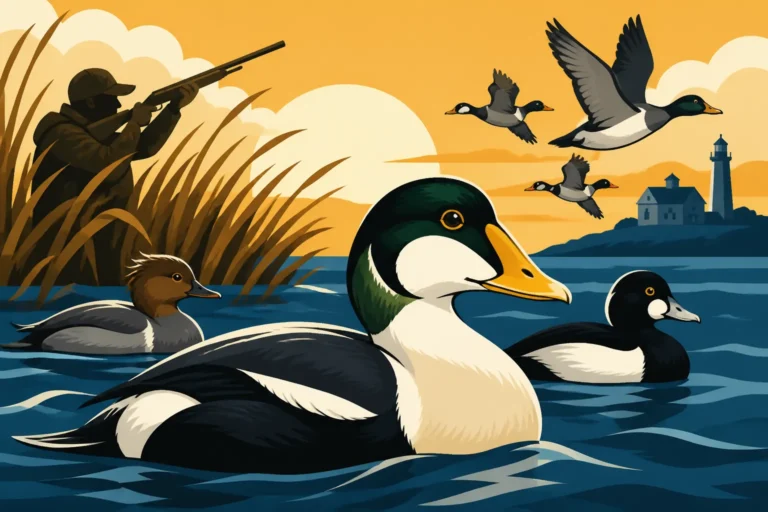
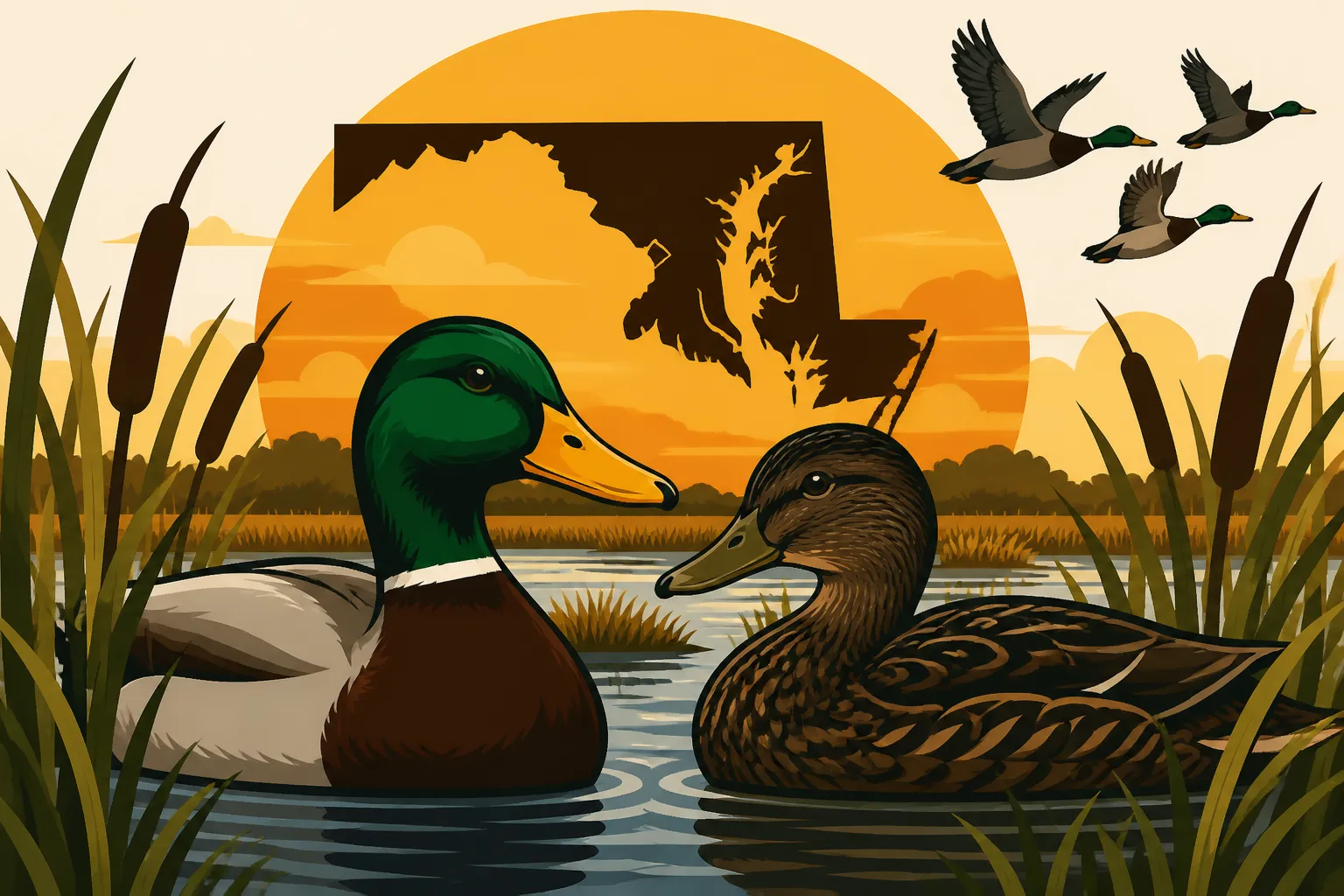
Identifying these two ducks really comes down to a few key visual and auditory characteristics. On the water, a drake mallard is unmistakable with his iridescent green head, white neck ring, chestnut breast, and those iconic curled tail feathers. The hen mallard is mottled brown all over, but she still has a bright orange bill often with some black splotches and a prominent blue speculum (wing patch) bordered by white on her secondary flight feathers, which is visible even when she’s swimming.
Black ducks, both drakes and hens, are much more uniformly dark. Their bodies are a dark sooty brown, almost black, with a lighter tan head and neck. Look closely, and you'll see a purplish-blue speculum, but critically, it lacks the distinct white borders that you find on a mallard. This absence of white on the speculum is one of the most reliable field marks when they're in flight. Their bills are also different: the drakes usually have a yellowish-green bill, while the hens have a duller, olive-green bill. In flight, black ducks often appear as dark silhouettes against the sky, sometimes described as "flying soot." They tend to fly in tighter, more cohesive flocks than mallards, often lower to the water, especially when being wary. Their wingbeats might appear a touch faster, too. Why Black Ducks Matter to the Chesapeake is a question rooted in both their ecological role and their unique challenge to hunters. As for vocalizations, the mallard hen's classic "quack-quack-quack" is well-known, and while black ducks do quack, their call is generally described as a deeper, raspier, and less emphatic quack, often sounding more like a grunt or a drawn-out "rraab." Knowing these sounds can be a huge advantage when visibility is poor, which is often the case when you're Hunting a Marsh Ditch Bank at Sunrise.
Behavioral Traits That Give Them Away
Beyond looks and sounds, black ducks and mallards often display different behavioral patterns that can inform a hunter's approach. Black ducks are notoriously warier than mallards. They tend to circle higher and longer, often making several wide passes before committing to a spread, if they commit at all. They're quick to flare at anything that seems out of place – a subtle movement in the blind, an artificial-looking decoy spread, or an overly aggressive call. This wariness is partly why they're so highly prized by waterfowlers; they represent a true challenge.
Mallards, while not foolish, are generally more gregarious and often less cautious, especially if they’ve been feeding actively or haven't been heavily pressured. They're more likely to dive right into a spread if they like what they see and hear. When feeding, mallards will often be seen tipping up with their tails in the air, actively dabbling in shallow water. Black ducks will do this too, but they also have a habit of pulling up marsh grasses and stems to eat, sometimes even leaving visible "pluck" marks in shallower areas. Understanding these nuances can help you fine-tune your approach. For example, if a flock is circling high, showing signs of extreme caution, it's more likely to be black ducks. If they drop in quickly with minimal circling, it’s probably a group of mallards ready to get down to business. Being patient and observing is key.
Hunting Strategies for This Dynamic Duo
Successfully hunting both mallards and black ducks on the same marsh requires a nuanced approach. You can't just throw out a spread and hope for the best; you need to think about how to appeal to both species' instincts, while being mindful of their distinct levels of wariness. This is where the art and science of waterfowling truly come together.
Decoy Spreads: Appealing to Both Species
When you're dealing with mallards and black ducks, a "one size fits all" decoy spread often doesn't cut it. Your goal is to create a realistic, inviting scene that encourages both the more trusting mallards and the highly cautious black ducks to commit. A great strategy is to mix your decoys. Don't just set out all mallards. A common and effective tactic is to deploy a spread that is at least 30-50% black duck decoys, even if you expect more mallards. The dark profile of the black duck decoys can give the impression of a larger, more natural flock, and their inherent wariness means that seeing other black ducks on the water might put them at ease.
Think about placement. Mallards are often drawn to open pockets of water where they feel safe to land and feed. Black ducks, however, sometimes prefer the edges of cover, closer to the marsh grass, making them feel more secure. So, consider creating distinct "pockets" in your spread: a more open area for mallards, and a slightly tighter cluster of black duck decoys closer to a natural point or a bank of phragmites. Motion decoys, like spinning-wing models, can be very effective for attracting distant mallards, but use them judiciously. Some hunters find that an excessive amount of flashy motion can actually spook wary black ducks, especially later in the season. Sometimes, a few subtle jerk strings or a feeding motion decoy is all you need. You're trying to create a picture of calm, contented ducks, not a rave party. Using a tool like GoHunt to scout marsh features and potential feeding areas can give you insights into where to best place your spreads, identifying subtle changes in elevation or water depth that ducks might prefer.
Calling Techniques: Speaking Both Languages
Just like with decoys, your calling strategy needs to be versatile. You can’t just blow a loud mallard hail call at every passing flock and expect black ducks to respond. Mallards respond well to a variety of calls: the eager hail call to grab attention, the feeding chuckle to imply a safe food source, and the pleading comeback call if they're swinging wide. A good mallard hen call can be incredibly effective at drawing in both single drakes and full flocks.
Black ducks, on the other hand, require a far more subtle touch. Their calls are deeper and raspier, as mentioned, and they are easily put off by aggressive or unnatural calling. Many seasoned hunters will tell you that less is often more when it comes to black ducks. A soft, drawn-out "rraab," or a series of quiet feeding chuckles, can be far more effective than loud hail calls. Sometimes, no calling at all is the best approach if they’re already showing interest and committed to circling. If you're encountering mixed flocks, start with some soft black duck calls, then incorporate some mellow mallard hen calls. Listen to how they respond. If they flare at a loud mallard call, switch to softer, more infrequent black duck sounds. Remember, these birds have heard it all. Subtle realism often trumps enthusiastic volume. Learning to Grunt Calls in Maryland Hardwoods for deer shows a similar principle of understanding animal vocalizations, but with ducks, it's about subtle persuasion rather than aggressive challenge.
Blind and Concealment: The Element of Surprise
No matter how perfect your decoys or how sweet your calling, poor concealment will ruin your hunt faster than anything else, especially with sharp-eyed black ducks. These birds are legendary for their ability to spot anything out of place. In a Maryland marsh, natural cover is your best friend. Build a blind that blends seamlessly with the surrounding marsh grass, using native vegetation whenever possible. A Hunting a Chesapeake Bay Blind at First Light hunt demands meticulous attention to detail.
If you’re using a portable blind or a layout blind, make sure it’s absolutely covered. Think about the duck’s perspective: look up at your blind from a low angle, just as a duck would see it. Are there any unnatural straight lines? Is there too much open sky above your head? Are your faces and hands completely covered? Camouflage face paint, gloves, and head nets are non-negotiable. Pay attention to shadows and the angle of the sun, especially if you're hunting open water. The glare off an exposed face or a shiny gun barrel can be enough to send a flock of black ducks packing. Early morning, when the light is still low and soft, offers some natural concealment, but as the sun climbs, you need to be even more vigilant. Remember, the goal is to disappear into the landscape, becoming just another part of the marsh ecosystem, allowing those mixed flocks to sail confidently into your zone.
Navigating the Seasons and Regulations for Mallards and Black Ducks
Hunting these fantastic birds means understanding the rules of the game. Maryland has specific waterfowl zones and season dates, and importantly, distinct bag limits for different species, including black ducks. It’s crucial to know these cold, hard facts before you ever step foot in the marsh.
Maryland's Waterfowl Zones and Specific Bag Limits
Maryland’s Maryland Waterfowl Zones and Season Dates are designed to manage waterfowl populations effectively, taking into account migratory patterns and local breeding birds. While mallards are typically abundant throughout the state, black ducks, given their more coastal preference and population dynamics, often have more conservative bag limits. For example, while you might be able to harvest several mallards per day as part of your overall Duck Daily Bag Limit by Species, the limit for black ducks is usually much lower, sometimes just one or two birds. It's vital to check the current regulations every single season. These limits can and do change based on annual population surveys and management objectives.
The state is generally divided into different waterfowl zones, each with its own opening and closing dates. Familiarize yourself with the specific zone you plan to hunt in – whether it's the Atlantic Population, Resident Goose, or Sea Duck Zone, though mallards and black ducks typically fall under general duck regulations within broader zones. Knowing your zone is not just about legality; it can also influence when you choose to hunt, timing your trips to coincide with peak migration for these species. Hunting early in the season might find you with more local birds, while later in the season brings in the colder-weather migrants. GoHunt can be a valuable resource for cross-referencing these zones and even noting specific regulations tied to certain public lands you might be scouting.
Ethical Hunting and Conservation Considerations
Beyond the numbers and dates, being an ethical hunter and conservationist is paramount, especially when targeting species like the black duck, which has faced conservation concerns over the years. This means knowing your target. You must be able to confidently identify a black duck from a mallard before you pull the trigger. Mistaking a hen mallard for a black duck in poor light, or vice-versa, can lead to unintended over-harvest of a regulated species. If you're unsure, don't shoot. It's always better to pass on a questionable bird than to violate a bag limit or harm a protected species.
Practicing your bird identification skills is crucial. Spend time studying photos, watching ducks at a distance through binoculars, and getting familiar with their flight patterns and vocalizations. This isn't just about avoiding fines; it's about respecting the resource and ensuring healthy populations for future generations of hunters. Participating in conservation efforts, supporting organizations that work to restore Maryland's Chesapeake Bay habitat, and adhering strictly to all regulations contributes to the long-term health of both mallard and black duck populations. It's the responsibility we all share as stewards of the outdoors.
Conclusion
Hunting mallards and black ducks on the same Maryland marsh is a quintessential Eastern Shore experience, blending the familiar excitement of working greenheads with the challenging satisfaction of outsmarting the wary black duck. It's a testament to the incredible diversity and richness of Maryland's waterfowl habitat, and it truly keeps you on your toes. By understanding their shared preferences, subtle differences, and adapting your strategies accordingly—from mixing up your decoys and finessing your calls to becoming a master of concealment—you can significantly increase your success and enjoyment. Remember, every trip to the marsh is a learning experience, a chance to deepen your connection with these amazing birds and the unique environment they call home. Embrace the challenge, hone your skills, and cherish every moment spent pursuing this dynamic duo in the wild heart of Maryland.
Disclaimer
This article is for general informational purposes only and does not constitute professional advice. Laws, prices and regulations vary by location and change over time. Consult a qualified professional for guidance on your specific situation.