What Maryland Coyotes Actually Eat
It's a frustrating situation when you hear tales of coyotes impacting local wildlife or even causing concerns for domestic animals. There's a lot of talk out there, and sometimes it's hard to separate fact from fiction when it comes to what these adaptable canids actually eat here in Maryland. This guide aims to pull back the curtain on the real diet of Maryland coyotes, offering you a realistic look at their feeding habits and how they fit into our diverse ecosystems.
The Opportunistic Nature of Maryland Coyotes
Coyotes are incredibly intelligent and resilient animals, and their diet is a testament to their ability to adapt. They didn't always call Maryland home, but since How Coyotes Took Hold in Maryland, they've spread across the state, showcasing a remarkable capacity to make a living wherever they land. Understanding this opportunistic nature is key to truly grasping what fuels them.
Masters of Adaptation Across Maryland's Diverse Habitats
From the rugged ridges and hollows of Western Maryland's mountains to the sprawling farm fields of the Eastern Shore and even the dense suburban corridors, coyotes have proven they can thrive. They're not particular about their address, which means they're not particular about their dinner plate either, as long as it provides sustenance. This adaptability means their menu can look vastly different depending on whether they're setting up shop near a dense forest, an agricultural area, or closer to human development. A coyote living deep in a state forest might lean heavily on wild prey, while one lurking near a rural subdivision might have a more diverse, and sometimes more problematic, diet. They're constantly evaluating what's available and what requires the least energy to acquire, making them incredibly efficient survivors.
The Seasonal Buffet: How Availability Shapes Their Menu
Just like us, coyotes don't eat the same thing every single day of the year. Their diet shifts dramatically with the seasons, directly tied to what's abundant and accessible. In spring, when fawns are born and ground-nesting birds are vulnerable, their focus might be different than in late summer when berries ripen and agricultural fields are bursting with crops. Winter often means a heavier reliance on carrion or anything they can find when live prey is scarce or harder to catch under snow or ice. This dynamic diet is part of what makes them such successful generalists. If one food source becomes hard to find, they simply pivot to the next easiest option. For hunters or landowners trying to manage coyote populations, recognizing these seasonal shifts in their diet can be incredibly insightful for timing efforts or protecting vulnerable resources. Tools like a GoHunt mapping system can help identify seasonal food sources across different properties, giving you an edge in understanding where coyotes might be concentrating.
The Core of the Maryland Coyote Diet
While coyotes are incredibly adaptable, there are certain food categories that consistently form the backbone of their diet, regardless of where they are in Maryland. These are the items they seek out first because they offer the most caloric bang for their buck or are simply the most common prey animals.
Small Game and Rodents: The Ever-Present Staple
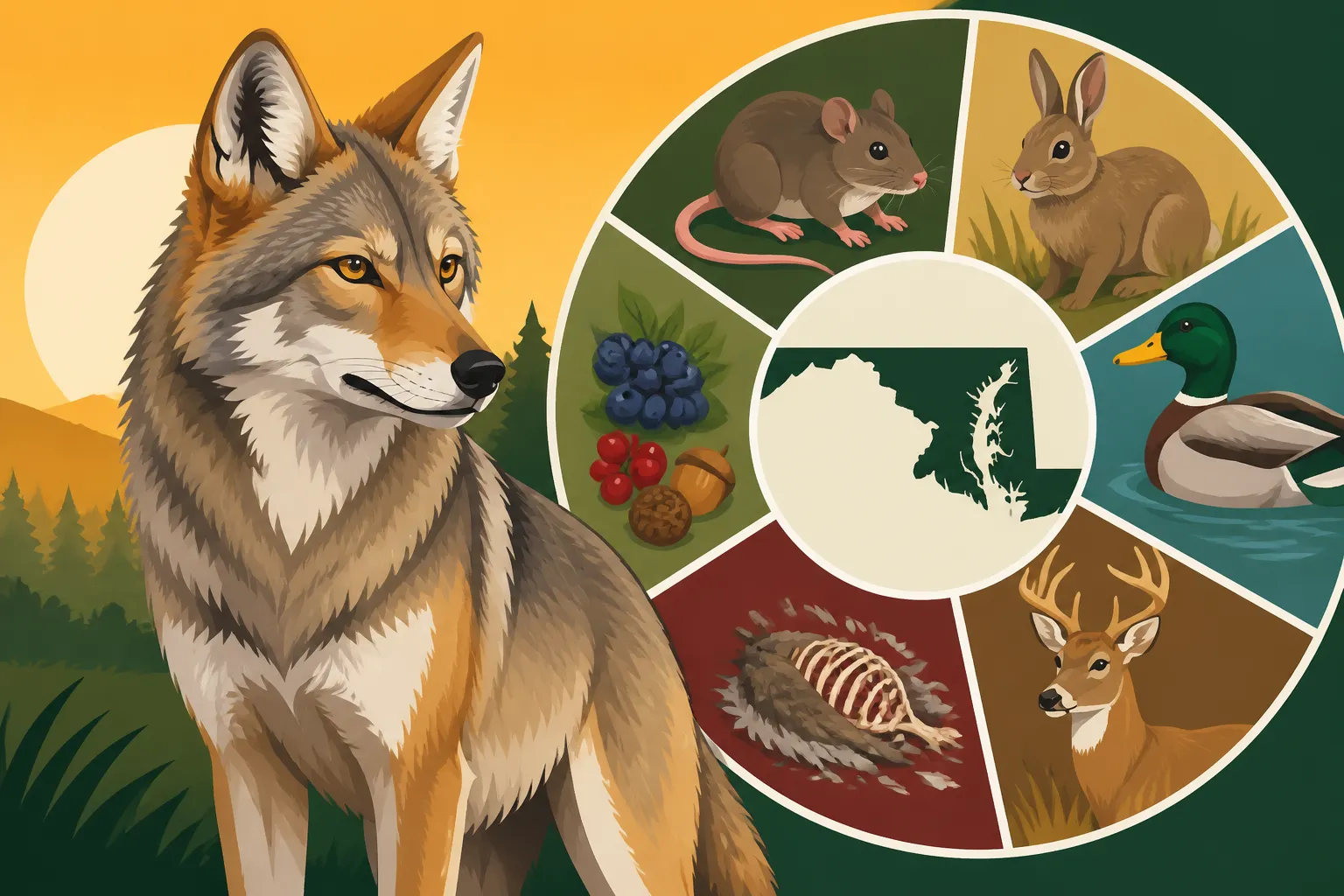
Let's be clear: the bread and butter of a Maryland coyote's diet, year-round, is overwhelmingly small mammals and rodents. Think mice, voles, rabbits, groundhogs, and even squirrels. These creatures are abundant in nearly every habitat across the state, from dense woods to open fields and suburban fringes. They're relatively easy to catch compared to larger, more formidable prey, and they provide consistent calories. Coyotes are incredibly efficient hunters of these smaller animals, using their keen sense of hearing and smell to pinpoint prey in thick cover, under snow, or even underground.
For example, a coyote prowling a farm field's edge is going to encounter countless voles and mice, not to mention rabbits tucked into brush piles. They'll spend a significant portion of their hunting efforts on these readily available snacks. If you've ever seen a coyote "mousing" – pouncing high into the air on unseen prey – you're witnessing them targeting this critical food source. Their impact on local populations of these smaller animals can be substantial, often helping to keep rodent numbers in check. For those interested in pursuing Rabbit Hunting Maryland Farm Hedgerows, understanding coyote presence is part of the game.
Deer Interactions: Scavengers First, Predators Second
This is where a lot of the myths and anxieties surrounding coyotes tend to concentrate. Many people immediately jump to the conclusion that coyotes are decimating Maryland's deer herd, taking down healthy adult whitetails left and right. The reality, however, is much more nuanced. While coyotes absolutely do kill deer, especially fawns, their primary interaction with adult deer is often as scavengers.
When a deer dies from natural causes, vehicle collision, disease like Epizootic Hemorrhagic Disease in Maryland Deer, or is lost after a hunter's shot, coyotes are often the first on the scene. They are nature's clean-up crew, efficiently removing carcasses from the landscape. During the late archery and firearms seasons, and certainly in the post-season, carrion becomes a significant dietary component. Hunters who have spent time in the woods after the main deer seasons know that Late Season Food Sources for Maryland Deer for coyotes often includes deer that didn't make it through the winter or were fatally wounded. As for live deer, a healthy adult whitetail buck or doe is a formidable animal. A single coyote, or even a small pack, would have a very difficult time consistently taking down a healthy adult deer. The exceptions are often fawns, especially during their first few weeks when they are vulnerable and left alone by their mothers, or deer that are already compromised by illness, injury, or extreme winter conditions. While fawn predation is a natural part of the ecosystem, it's not the sole driver of deer population dynamics, and Maryland's Statewide Deer Harvest Numbers continue to show robust populations in most areas despite coyote presence.
Other Wild Prey: Birds, Reptiles, and Amphibians
Beyond mammals, coyotes don't shy away from other forms of wild protein. Birds, especially ground-nesting species and their eggs, can become part of their diet during nesting season. This includes everything from songbirds to waterfowl and even turkeys. During spring turkey season, a coyote can be a real threat to poults or even unattended nests. If you're out Roost Hunting Gobblers on Maryland Farmland, you might even hear them yipping in the distance as they hunt. Their impact on Maryland's Turkey Harvest by Region is typically less significant than factors like habitat or weather, but they are certainly a presence.
Reptiles and amphibians also make an appearance on the coyote menu, particularly in warmer months when these creatures are more active and accessible. Frogs, salamanders, turtles (especially hatchlings), and snakes can provide easy meals for a coyote foraging near wetlands, ponds, or stream bottoms. While these aren't primary food sources, they contribute to the coyote's incredibly diverse and opportunistic diet.
| Food Category | Primary Importance | Seasonal Availability | Examples |
|---|---|---|---|
| Small Mammals | High | Year-round | Mice, Voles, Rabbits, Groundhogs, Squirrels |
| Deer | Medium (Scavenge) | High in late Fall/Winter | Fawns, Carrion from adults |
| Birds & Eggs | Low to Medium | Spring/Summer | Ground-nesting birds, Turkeys (poults), eggs |
| Reptiles/Amphibians | Low | Warm Months | Frogs, Salamanders, Snakes, Turtle hatchlings |
| Fruits & Veggies | Medium | Summer/Fall | Apples, Berries, Corn, Watermelon |
| Insects | Low | Warm Months | Grasshoppers, Crickets, Beetles |
| Human Waste/Pets | Variable | Year-round | Trash, Pet food, Small pets (unsecured) |
| Livestock | Low (Opportunistic) | Year-round | Poultry, Small sheep/goats (unsecured) |
Supplemental Foods and Human-Related Influences
The natural diet of a coyote is truly fascinating, but it's incomplete without considering how human presence profoundly impacts what they eat. Coyotes are incredibly smart, and they quickly learn to exploit new, easy food sources, which sometimes brings them into conflict with us.
Foraging for Fruits, Vegetables, and Insects
Many people are surprised to learn that coyotes are not strict carnivores. While meat is their preference, they are omnivores and will readily consume a variety of plant matter, especially when it offers an easy source of calories. This becomes particularly evident in late summer and fall when fruits, berries, and agricultural crops are ripe and abundant.
Think about a rural setting in Maryland. An apple orchard, a field of ripening corn, or even a patch of wild persimmons can become a temporary feasting ground for coyotes. They'll readily eat apples, pears, watermelons, pumpkins, and a variety of wild berries. Farmers sometimes report coyotes raiding sweet corn patches or melon fields. This plant-based foraging often flies under the radar because it's less dramatic than a coyote preying on an animal, but it's a significant part of their seasonal diet. If you're trying your hand at Coyote Calling Maryland Farm Fields at First Light, knowing these agricultural food sources can clue you into where they might be hanging out before daylight. Beyond plants, coyotes will also snap up insects like grasshoppers, crickets, and beetles, especially when they're plentiful. It's an easy source of protein and roughage that complements their primary diet.
The Unintended Meal: Pet Food, Garbage, and Livestock
This is where "opportunistic" really comes into play, and it's also where human-coyote conflict often begins. Coyotes are incredibly intelligent and will take the path of least resistance to a meal. If there's an easy source of food left out, they'll exploit it. This includes pet food left on porches, unsecured garbage cans, compost piles, and even fallen fruit in residential yards. These are high-calorie, low-effort meals that are simply too tempting to pass up for a hungry coyote.
Unfortunately, this comfort around human food sources can also lead to more serious issues, such as predation on domestic animals. While larger dogs are generally safe, small outdoor pets like cats or small dogs, especially if left unsupervised or at night, can be viewed as an easy meal by a coyote. Similarly, small livestock like chickens, ducks, or even young sheep and goats that are not adequately protected can become targets. It's rarely a targeted hunt for livestock; rather, it's an opportunistic strike when vulnerability presents itself. Using a powerful scouting tool like GoHunt to map out your property and identify potential areas where pets or livestock could be vulnerable near wooded edges or dense cover can be invaluable.
Understanding Human-Coyote Coexistence
Knowing what coyotes eat is the first step toward living harmoniously with them, especially as their populations continue to expand across Maryland. Their adaptability means they will find food, whether it's wild game or your neighbor's overflowing trash can. Our actions, therefore, directly influence their behavior and diet, and by extension, the likelihood of conflict. Being aware of these supplemental food sources is crucial for responsible wildlife management and minimizing potential problems in our communities. This often involves simple steps like securing food waste and protecting pets, which we'll delve into shortly.
Debunking Myths and Managing Expectations
When a new top predator moves into an ecosystem, it's natural for there to be concerns, especially from hunters and landowners. Coyotes are still relatively new to Maryland compared to our native species, and with their presence comes a fair amount of misinformation and understandable worry. Let's tackle some of these head-on.
Coyote Impact on Maryland's Deer Population: A Balanced View
One of the most persistent concerns about coyotes revolves around their impact on white-tailed deer numbers. It’s easy to assume that because coyotes eat deer, they must be the sole reason for any perceived dip in local populations. However, the reality is far more complex. As we've discussed, coyotes primarily target fawns and scavenge adult carcasses. While fawn predation is a natural and often significant part of their diet, it’s one factor among many that influence deer populations.
Habitat quality, availability of food (especially during harsh winters), severe weather events, disease outbreaks like Epizootic Hemorrhagic Disease in Maryland Deer, and human hunting pressure all play substantial roles in determining deer numbers. In most of Maryland, deer populations remain robust. Ecosystems are resilient, and deer have evolved strategies, such as hiding fawns and quickly dispersing, to cope with natural predators. While coyotes exert selective pressure, often removing weaker or less vigilant individuals, they typically don't "wipe out" a healthy deer population. Understanding this balanced perspective helps to manage expectations and allows for more effective deer management strategies, which might include specific antlerless harvest targets, rather than solely focusing on coyote control.
Their Role in the Ecosystem: Nature's Clean-Up Crew
Despite the concerns they sometimes generate, coyotes play a vital ecological role. They are nature's generalists, filling a niche that was long vacant in Maryland after the extirpation of wolves. Their scavenging habits are incredibly important for keeping the landscape clean, removing carcasses that could otherwise harbor disease or attract other problematic scavengers closer to human dwellings.
Furthermore, their predation on small mammals and rodents helps to keep those populations in check. Without natural predators, rodent numbers can explode, leading to crop damage and potential disease transmission. In this sense, coyotes act as a natural pest control, contributing to the overall health and balance of the ecosystem. Their presence, while relatively new to Maryland, is now a permanent fixture, and understanding their ecological function allows us to appreciate their place in the intricate web of life. For hunters interested in Small Game Species in Maryland, coyote presence could even indicate a healthy small mammal population, drawing in both predators and prey.
Proactive Steps for Minimizing Conflict
Knowing what Maryland coyotes eat empowers us to minimize potential conflicts. The vast majority of coyote-human interactions are harmless, but problems arise when coyotes become habituated to human presence and human-provided food. The solution often lies in changing our own habits.
Here are some actionable steps:
- Secure Food Sources: Never leave pet food outside, especially overnight. Store garbage in tightly sealed, animal-proof containers. If you compost, ensure it's in a closed system. Pick up fallen fruit from trees in your yard.
- Protect Pets: Keep small pets indoors, especially at night. If larger dogs are outside, ensure they are in a secure, fenced yard. Never let pets roam unsupervised, particularly at dawn and dusk when coyotes are most active.
- Hazing: If a coyote approaches you or your property, make noise, wave your arms, or throw small objects (not at the coyote, but near it) to scare it away. This helps them maintain a healthy fear of humans.
- Clear Brush: Remove dense brush and tall weeds from around your home and outbuildings. This eliminates hiding spots for coyotes and their prey.
- Education: Spread accurate information about coyotes to your neighbors. Understanding their behavior is the best defense.
By understanding their diet and taking these proactive steps, we can foster a more peaceful coexistence with Maryland's coyotes. Hunters can also leverage this knowledge; understanding what draws coyotes to certain areas can be highly effective for Coyote Calling in Maryland Farm Country or on other lands where their presence might need to be managed. If you're using a tool like GoHunt, you can mark areas of known coyote activity or potential food sources to inform your scouting and hunting plans.
Disclaimer
This article is for general informational purposes only and does not constitute professional advice. Laws, prices and regulations vary by location and change over time. Consult a qualified professional for guidance on your specific situation.