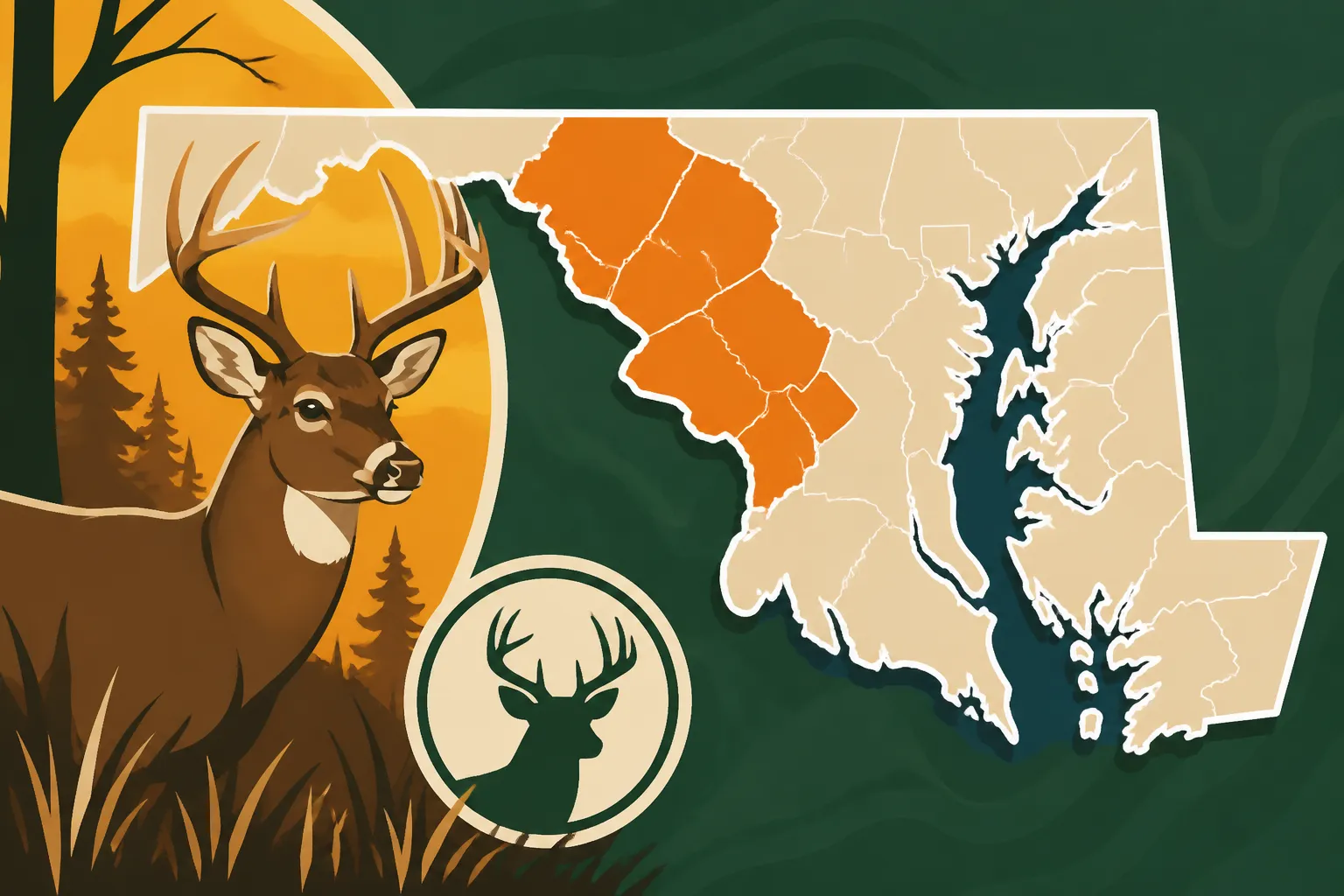
Maryland’s CWD Management Area Counties
Chronic Wasting Disease (CWD) is one of those topics that can really throw a wrench into your carefully planned hunting season. You spend all year scouting, getting your gear ready, and then you hear about CWD being detected closer to your hunting grounds, and suddenly, you're faced with a whole new set of rules and concerns. It's frustrating to adapt to new regulations, especially when they impact how you handle your hard-earned harvest. This comprehensive guide is here to break down exactly what Maryland's CWD Management Area counties are, what they mean for you as a hunter, and how you can navigate these challenges while still enjoying the outdoors safely and responsibly.
Understanding Chronic Wasting Disease in Maryland
CWD isn't just another deer disease; it's a serious neurological condition that can impact deer herds significantly. For hunters who care deeply about wildlife and the tradition of hunting, understanding CWD is the first step in becoming part of the solution rather than inadvertently contributing to the problem.
What Exactly is CWD?
Chronic Wasting Disease is a fatal, transmissible neurological disease that affects cervids, which include white-tailed deer, mule deer, elk, and moose. It's caused by abnormal proteins called prions, not a bacteria or virus. These prions slowly accumulate in the brain and other tissues of infected animals, eventually causing severe brain damage. Think of it as a slow, degenerative process that ultimately leads to the animal wasting away, showing symptoms like extreme weight loss, stumbling, listlessness, and behavioral changes. Unfortunately, once an animal contracts CWD, there is no cure, and it will eventually die. The disease has been found in numerous states and Canadian provinces since it was first identified in the 1960s, making it a critical concern for wildlife managers and hunters alike. The long incubation period, sometimes years, means an infected animal can appear healthy while actively shedding prions into the environment.
How CWD Spreads Among Deer
The insidious nature of CWD lies in how effectively it can spread and persist in the environment. Infected deer shed prions through saliva, urine, and feces. When a healthy deer comes into contact with these contaminated bodily fluids or the environment where they've been deposited, the prions can be ingested. This means that shared food sources, water holes, and even bedding areas can become hotspots for transmission. The prions are incredibly resilient; they can remain infectious in the soil for years, possibly even decades, resisting extreme temperatures and disinfectants. This environmental persistence makes CWD incredibly difficult to eradicate once it establishes itself in a wild deer population. Direct deer-to-deer contact, especially during periods of high deer density like the rut or around winter feeding sites, also facilitates spread. It’s a slow-burning fire that can spread through a herd almost invisibly for a long time.
Why CWD is a Concern for Hunters
For those of us who spend countless hours in the woods, the threat of CWD is deeply unsettling. First and foremost, it poses a direct threat to the health and sustainability of deer populations. As the disease spreads, it can lead to reduced deer numbers and a decline in herd health, impacting hunting opportunities and the overall vitality of the ecosystem. Secondly, while there's no conclusive scientific evidence of CWD transmission to humans, public health agencies strongly recommend against consuming meat from CWD-positive animals. This creates a significant ethical dilemma for hunters and introduces a layer of uncertainty about the venison we bring home to our families. Imagine spending days Hunting the Rut in Early to Mid November or putting in the effort to take a deer during Maryland's Split Firearms Deer Season, only to have to dispose of your harvest due to CWD concerns. Finally, CWD directly affects hunting regulations. When a county becomes a CWD Management Area, hunters face new rules regarding carcass transportation, mandatory testing, and restrictions on baiting or feeding, all of which can alter traditional hunting practices and add complexity to an already regulated sport.
Identifying Maryland's CWD Management Area Counties
Maryland has been actively monitoring CWD for years, and unfortunately, the disease has established a foothold in certain parts of the state. Knowing these areas is crucial for any hunter planning to pursue deer.
The Current List of CWD-Positive Counties
As of the most recent updates, Maryland has designated several counties as CWD Management Areas (CWDMA) due to detections of the disease within their deer populations. These counties are primarily in western Maryland, stretching into parts of central Maryland. Currently, the CWD Management Area includes all of Allegany County, Frederick County, Garrett County, Washington County, Carroll County, and Montgomery County. Additionally, parts of Howard County and Anne Arundel County are included. This means that if you're planning to hunt deer in any of these counties, or if you harvest a deer there, you need to be acutely aware of and adhere to the specific CWD regulations. The Maryland Department of Natural Resources (DNR) constantly monitors the situation and these boundaries can expand or change based on new detections. What defines a "management area" is typically the presence of CWD-positive deer within its borders, prompting a set of proactive measures designed to slow the spread and gather more data. You can always check the official DNR website for the most current map and list of affected areas.
Expanding Management Zones and Monitoring Efforts
The expansion of CWD management zones isn't something Maryland DNR takes lightly; it's a direct response to the detection of new CWD cases. When CWD is detected in a new county or area, DNR conducts intensive surveillance, often increasing mandatory testing efforts in that region. This meticulous monitoring is how new CWDMA boundaries are established. They look at where the infected animal was harvested, track deer movement patterns, and assess the risk to neighboring populations. It's a dynamic situation, and what might be a non-CWD county this year could become part of a management area next year. This is why staying informed is paramount. Tools like GoHunt can be invaluable here, as they often update their mapping layers to reflect current CWD management zones, helping you visualize these boundaries clearly on your hunting maps. Understanding how these zones expand helps you anticipate potential future changes and plan your hunts accordingly, whether you're Still-Hunting Western Maryland Mountain Timber or exploring new ground.
Specific Hunting Regulations within CWD Management Areas
Hunting in a CWD Management Area comes with a distinct set of rules designed to minimize the spread of the disease. These aren't just suggestions; they are mandatory regulations that every hunter must follow to protect Maryland's deer herd.
Carcass Movement Restrictions
One of the most critical regulations in CWD Management Areas involves the transportation of deer carcasses. To prevent the physical movement of prions to unaffected areas, hunters are generally prohibited from moving whole deer carcasses or certain high-risk parts (like the brain, spinal cord, eyes, and lymph nodes) out of a CWDMA. This means if you harvest a deer in Allegany County, for instance, you cannot simply drive the whole animal back to your home in an unaffected county like Talbot or Queen Anne's.
Here's what you typically can transport out of a CWDMA:
- Deboned meat: All meat that has been completely removed from the bone.
- Clean skull plate: The skull cap with antlers attached, after all brain tissue and soft tissues have been removed.
- Hides: After all tissues have been removed.
- Finished taxidermy products: Once fully processed.
There is a significant exception known as the "The 24-Hour Carcass Pass-Through Exception". This rule allows hunters to transport a whole or partial deer carcass through a CWDMA or from a CWDMA for processing or taxidermy outside the zone, provided the carcass is delivered to a licensed processor or taxidermist within 24 hours of the harvest. This allows for practical logistics but still emphasizes prompt processing to minimize prion spread. Failure to adhere to these rules can result in penalties, and more importantly, could unknowingly contribute to the spread of CWD.
Mandatory Testing and Surveillance
DNR relies heavily on hunter participation for CWD surveillance. In CWD Management Areas, there are often periods of mandatory CWD testing for deer harvested within specific counties or during certain dates. This usually involves hunters bringing their harvested deer (or specific parts like the head) to designated CWD check stations or collection barrels. These stations are set up at convenient locations like public land access points, DNR offices, or even some private businesses. The process is straightforward: hunters fill out a brief form, and DNR staff (or trained volunteers) collect a lymph node sample from the deer. There are typically no fees associated with this mandatory testing.
Even outside mandatory periods, hunters are strongly encouraged to voluntarily submit samples if they harvest a deer in or near a CWDMA, or if they observe a deer exhibiting CWD-like symptoms. You can find information on Where to Get a Deer Tested for CWD on the Maryland DNR website. The more samples collected, the clearer the picture DNR gets of CWD's prevalence and geographic spread, which directly informs future management decisions and regulations. This proactive approach by DNR, combined with diligent hunter cooperation, is critical to understanding and mitigating the disease.
Prohibited Activities and Best Practices
Within CWD Management Areas, several common hunting practices are either prohibited or strongly discouraged to reduce the risk of CWD transmission. A key prohibition is the feeding and baiting of deer. This includes placing corn, minerals, apples, or any other attractant that concentrates deer in one area. The rationale is simple: when deer congregate, the likelihood of direct contact and indirect transmission via contaminated soil or feed increases dramatically. Likewise, the use of natural urine-based attractants is often prohibited because of the theoretical risk of prion contamination, though synthetic alternatives are generally allowed.
| Activity | CWD Management Area (CWDMA) Rules | Rationale |
|---|---|---|
| Baiting/Feeding | Prohibited (e.g., corn, apples, mineral blocks) | Concentrates deer, increasing nose-to-nose contact and environmental contamination. |
| Urine Lures | Prohibited (natural urine); Synthetic lures generally allowed. | Theoretical risk of prion contamination from infected deer urine. |
| Carcass Movement | Restricted (only deboned meat, clean skull plates, hides allowed out, or 24-hr pass-through). | Prevents physical transport of prions to unaffected areas. |
| Carcass Disposal | Preferably on the property where harvested, or designated landfills/DNR sites. | Minimizes environmental spread of prions. |
| Field Dressing | Minimize contamination; leave high-risk parts at the harvest site. | Reduces the spread of prions from organs like the brain and spinal cord. |
| Testing | Mandatory during specified periods; Voluntary encouraged. | Provides critical surveillance data for disease monitoring and management. |
Beyond regulations, there are best practices every hunter should adopt when operating in a CWDMA:
- Field Dress Carefully: If possible, field dress your deer at the harvest site. Remove and properly dispose of high-risk organs (brain, spinal cord, spleen, lymph nodes). Bury them deeply or double-bag and place them in a landfill.
- Clean Your Tools: Thoroughly clean knives, saws, and processing surfaces with a 1:10 bleach solution after handling any deer from a CWDMA.
- Report Sick Deer: If you see a deer exhibiting CWD symptoms (emaciation, neurological issues, abnormal behavior), contact Maryland DNR immediately.
- Stay Informed: Regularly check the Maryland DNR website for the latest CWD updates and regulations, as they can change.
By following these guidelines, you're not just complying with the law; you're actively contributing to the health of Maryland's deer herd and the future of hunting in the state.
Navigating CWD Areas with Tools like GoHunt
In today's interconnected world, technology can be a huge asset for hunters, especially when dealing with complex issues like CWD management areas. Digital mapping and information platforms can help you stay on the right side of the law and make informed decisions.
Using Mapping Tools to Identify Boundaries
Gone are the days when you had to rely solely on paper maps or vague verbal descriptions to understand CWD zone boundaries. Modern hunting apps, such as GoHunt, have revolutionized how hunters visualize and interact with geographical data. These platforms often incorporate public land boundaries, private property lines, and crucially, regulatory overlays like CWD Management Areas. Imagine scouting a new spot in Frederick County or planning a trip to Hunting Maryland's Western Mountain Forests. With an app like GoHunt, you can literally see the CWDMA boundary highlighted on your screen, often down to specific roads or waterways. This precision is invaluable. You can overlay the CWD zone with property lines to ensure you're not inadvertently trespassing, and you can confirm if a particular parcel falls within a mandatory testing area. This takes the guesswork out of navigating what can sometimes be confusing geographical restrictions, making your hunt safer and more compliant. These apps allow you to plan your access points, potential recovery routes, and even where you might perform initial field dressing to comply with carcass movement rules, all before you even set foot in the woods.
Accessing Up-to-Date Regulations
Beyond just showing boundaries, comprehensive hunting apps like GoHunt are also becoming central hubs for regulatory information. While the Maryland DNR website is the definitive source for official rules, many apps strive to provide summaries or direct links to the most current regulations, including those specific to CWD. This means you might be able to quickly check carcass movement rules, mandatory testing dates, or prohibited activities for a specific county directly from your phone while in the field. This immediate access to information is incredibly helpful. For example, if you've just harvested a deer in Washington County, a quick glance at your GoHunt app might remind you about the Maryland's Statewide Antlered Deer Bag Limit and prompt you to locate the nearest CWD check station, or remind you about the rules regarding Bringing a Deer Carcass Into Maryland if you're an out-of-state hunter. Having this information readily available empowers you to make real-time decisions that comply with regulations, reducing stress and ensuring you're doing your part to manage CWD effectively.
Your Role in Managing CWD as a Maryland Hunter
As hunters, we are often the first line of defense and observation when it comes to wildlife health. Our active participation is not just about compliance; it's about stewardship and ensuring the future of hunting in Maryland.
Practical Steps to Minimize CWD Spread
Minimizing the spread of CWD is a collective effort, and every hunter plays a vital role. Beyond simply following the rules, adopting specific habits can make a real difference. First, proper carcass disposal is paramount. If you harvest a deer in a CWDMA, dispose of high-risk parts (brain, spinal cord, spleen, lymph nodes) carefully. The best practice is to leave them at the kill site, buried deeply, or double-bagged and taken to an approved landfill. Never discard them in ditches, streams, or unprotected areas where other deer or scavengers might access them. Second, ensure all your hunting equipment is clean. This includes knives, saws, gloves, and even your boots. If you've been in a CWDMA, a thorough cleaning, especially with a bleach solution for tools that contact tissues, helps prevent the inadvertent transfer of prions.
Consider the implications of bringing deer parts from one region to another. Even if you're not moving a full carcass, tiny tissue fragments could carry prions. So, always de-bone your meat and remove all soft tissue from skull plates and antlers if you're taking them out of a CWDMA. For those who enjoy Sika Deer Hunting in Maryland's Tidal Marshes in Dorchester County, far from the western CWD zones, it's easy to think CWD doesn't affect you, but vigilance in following general best practices helps ensure it stays that way.
Supporting DNR's CWD Management Efforts
The Maryland Department of Natural Resources works tirelessly to monitor, research, and manage CWD, but they can't do it alone. Hunters are their most valuable partners. Your participation in mandatory and voluntary testing programs is perhaps the most direct way to contribute. Every sample submitted provides crucial data points that help DNR track the disease's prevalence and geographic spread, informing their management strategies. When you take a deer, make the effort to bring it to a check station if required, or volunteer to provide samples if you're in a high-risk area.
Beyond testing, reporting sick deer is equally critical. If you observe a deer exhibiting signs consistent with CWD—such as extreme emaciation, excessive drooling, lack of coordination, or unusual behavior—do not approach the animal. Instead, immediately contact your local Maryland DNR office or game warden. Your observation could be the first indication of a new CWD detection in an area. Finally, staying informed is an ongoing responsibility. Regularly check the Maryland DNR website, read their newsletters, and pay attention to news releases about CWD. Understanding updates to Maryland's Deer Bag Limits and Antler Rule or changes in Maryland Hunting Licenses and What They Cost will keep you compliant and help you make informed decisions that protect the resource we all cherish. Your commitment to these practices is an investment in the health of Maryland's deer herd and the future of our hunting heritage.
Disclaimer
This guide is intended for informational purposes only and is not a substitute for official regulations. Always consult the Maryland Department of Natural Resources (DNR) website and current hunting regulations for the most accurate and up-to-date information regarding CWD Management Areas, hunting seasons, and specific rules. Regulations can change, and it is the hunter's responsibility to be aware of and comply with all applicable laws.