Waterfowl Hunting Maryland’s Chesapeake Bay
The Chesapeake Bay is a legendary destination for waterfowl hunters, often conjuring images of majestic canvasbacks diving in choppy water or massive flocks of Canada geese swirling over vast grain fields. However, for many newcomers or even seasoned hunters from other regions, the sheer scale of the Bay, its complex tidal systems, diverse bird populations, and unique access challenges can feel incredibly daunting. This comprehensive guide aims to demystify waterfowl hunting in Maryland's iconic Chesapeake Bay, offering a realistic, in-depth look at everything you need to know to pursue ducks and geese on these storied waters.
Understanding Maryland's Waterfowl Landscape
The Chesapeake Bay isn't just a body of water; it's an intricate ecosystem that draws millions of migratory birds each year, making it a pivotal location for North American waterfowl. Understanding this landscape is the first step to becoming a successful Bay waterfowler.
The Chesapeake Bay: A Waterfowler's Paradise
Maryland's Chesapeake Bay is a sprawling estuary, stretching over 200 miles from the Susquehanna River to the Atlantic Ocean. Its diverse habitats include vast expanses of open water, intricate networks of tidal marshes, numerous rivers and creeks feeding into the main Bay, and agricultural fields that extend right to the shoreline. This incredible variety of terrain means you'll find different species of ducks and geese utilizing specific niches, often within short distances of each other. The open Bay itself can be intimidating, a vast, often turbulent expanse, but it's precisely this wildness that makes it so appealing to both birds and hunters.
The Eastern Shore, in particular, is synonymous with waterfowl hunting. Here, the land meets the water in a tapestry of agricultural fields and tidal guts. The intersection of freshwater input from rivers and the brackish Bay water creates ideal conditions for diverse aquatic vegetation and invertebrates, which are crucial food sources for migrating birds. For hunters, this means opportunities ranging from concealed marsh blinds to open-water layout boat hunts, each demanding specific tactics and gear. The ecosystem's health directly impacts the number and health of the birds you'll encounter, making conservation efforts here paramount.
Key Waterfowl Species You'll Encounter
The sheer variety of waterfowl species that call the Chesapeake Bay home during the migration season is astounding. Knowing what you’re hunting and their habits is crucial for setting up effectively.
Puddle Ducks: These are the dabblers, the ducks you'll often find in shallower waters, tidal creeks, and marshes, tipping tail-up to feed on submerged vegetation. Common species include mallards, American black ducks, green-winged teal, wood ducks, and pintails. Black ducks, in particular, are iconic to the Chesapeake, thriving in its brackish marshes. You'll often find them feeding in the mudflats at low tide, or tucked into the cover of Spartina grass. Mallards are more adaptable, using both marshes and agricultural fields. Wood ducks, with their vibrant plumage, prefer wooded swamps and flooded timber closer to freshwater tributaries, though they'll often stage in tidal creeks. Hunting these birds often involves careful concealment in marsh grasses or along creek banks, using smaller decoy spreads.
Diving Ducks: As their name suggests, these birds dive completely underwater to feed on aquatic plants, mollusks, and crustaceans. They prefer the larger, deeper, and often rougher waters of the main Bay or broad rivers. The king of the Chesapeake diving ducks is arguably the canvasback, renowned for its speed and distinctive profile. Redheads, scaup (bluebills), ring-necked ducks, buffleheads, and goldeneyes are also prevalent. Canvasbacks and redheads often raft in massive groups in open water, requiring large, visible decoy spreads and often layout boats to reach them. Buffleheads and goldeneyes are smaller, often found in more sheltered coves and tributary mouths, making them a target for smaller boat hunts or even shore-based blind hunters if conditions are right. Maryland's Chesapeake is historically one of the most important wintering grounds for canvasbacks in North America.
Canada Geese: While many hunters think of Canada geese as field birds, the Chesapeake Bay plays a huge role in their lives. Maryland hosts two primary populations: the Atlantic Population (AP) geese, which migrate from the far north, and resident geese, which breed locally and often stay year-round. While the AP birds are traditionally associated with huge flocks feeding in agricultural fields on the Eastern Shore, both populations utilize the Bay for roosting, loafing, and often feeding, especially when fields are frozen or heavily pressured. You might find them resting on open water islands, sandy points, or vast mudflats. Understanding the difference between these populations is critical, as their season dates and bag limits often differ significantly. For more details on these different populations, you can read about Maryland's Canada Geese and Their Two Populations.
Snow Geese: These beautiful, noisy birds arrive in incredible numbers, particularly on the Eastern Shore. They are primarily grazers, preferring large, open agricultural fields, especially cut corn or winter wheat. While they feed in fields, they will often roost on large, undisturbed bodies of water within or adjacent to the Bay system. Hunting snow geese is a distinct challenge, often requiring massive decoy spreads (hundreds, even thousands of decoys) and specialized calling techniques. Their sheer numbers can be astounding, creating an unforgettable spectacle as they swarm across the sky.
Other Migratory Birds: Beyond the ducks and geese, hunters might also encounter brant (a sea goose that feeds on eelgrass), ruddy ducks, and coots. It's also common to see tundra swans, magnificent birds that are strictly protected and cannot be hunted. Misidentification can lead to serious legal trouble, so positive ID before shooting is paramount.
Navigating Maryland's Waterfowl Seasons and Zones
Understanding the complex web of season dates, bag limits, and special zones is arguably one of the most challenging aspects of waterfowl hunting in Maryland. The state works closely with the U.S. Fish and Wildlife Service to set these regulations, designed to manage different species and populations sustainably.
Understanding Duck and Goose Season Splits
Maryland's waterfowl seasons are typically broken into multiple "splits." This means there might be an early season, a closure, and then a re-opening for a longer stretch. These splits are not arbitrary; they are carefully designed to coincide with migration patterns and provide opportunities across different phases of the waterfowl migration while ensuring conservation goals are met. For ducks, for instance, you might see an early season in October, targeting local birds and early migrants, followed by a longer season from November through January that covers the bulk of the northern migration. Each split will have specific dates, and these dates can vary slightly year to year, so always consult the current Maryland hunting guide.
Goose seasons are even more complex due to the distinction between Atlantic Population (AP) Canada geese and Resident Canada geese. The AP birds have more restrictive seasons and bag limits due to their lower population goals, whereas resident geese, which are very numerous, have more liberal seasons. The state is divided into specific zones, such as the Atlantic Population Goose Zone, the Resident Population Goose Zone, and the Late Western Zone, each with its own specific season dates and bag limits. A common scenario might involve hunting resident geese in September, followed by a closure, and then separate seasons for AP geese and more resident goose hunting later in the winter. It’s absolutely critical to know which zone you are in and what the current regulations are for that specific area and species. For the most up-to-date schedule, always refer to the official Maryland Waterfowl Zones and Season Dates provided by the Maryland Department of Natural Resources (DNR).
Bag limits also vary significantly by species and can change annually. Some ducks, like mallards, might have a generous daily limit, but there are often restrictions on the number of certain species within that limit (e.g., only two hen mallards, only one pintail, or only one canvasback). Duck Daily Bag Limit by Species outlines these specifics, and it's essential to study them. For Canada geese, the bag limit will vary depending on the zone and population, often being much lower for AP geese. These regulations are designed to spread the harvest across multiple hunters and to protect species that are more vulnerable.
Essential Licenses, Stamps, and Registration
Before you even step foot in a blind or launch your boat, you need to ensure you are fully licensed and compliant with all Maryland and federal regulations. This isn't just about avoiding fines; it's about contributing to the conservation efforts that make waterfowl hunting possible.
Every waterfowl hunter in Maryland needs a base hunting license. If you're a Maryland resident, your options vary, but non-residents will need to purchase a specific non-resident hunting license. Beyond the base license, several stamps are required. Federally, all migratory bird hunters aged 16 and older must possess a valid Federal Duck Stamp. This stamp is a critical piece of conservation funding, with 98 cents of every dollar going directly to acquire and protect wetlands and waterfowl habitat. It's a small investment with a huge return for the birds we love to hunt. You can purchase these at post offices, sporting goods stores, or online through the U.S. Fish and Wildlife Service.
In addition to the federal stamp, Maryland requires its own Maryland Migratory Game Bird Stamp. This state stamp, much like the federal one, generates revenue specifically for migratory bird management and habitat restoration within Maryland. It's another crucial layer of funding that ensures healthy populations and robust hunting opportunities. Furthermore, all migratory bird hunters, regardless of age, must register with the Harvest Information Program (HIP). This involves answering a few questions about your previous year's hunting success for various migratory species, and in return, you receive a HIP registration number that must be carried with your license. This data is vital for wildlife managers to monitor harvest trends and set future seasons.
The easiest way to manage all these requirements is through the Maryland DNR's COMPASS online licensing system. This portal allows you to purchase your base license, state stamps, and complete your HIP registration all in one place. It’s often the most convenient method for both residents and non-residents. For a complete breakdown of costs and requirements, always consult the official Maryland DNR website or the latest hunting guide. Reviewing Maryland Hunting Licenses and What They Cost will give you a detailed picture of the financial commitment and what each license entails. For specifics on the state stamp, refer to Maryland Migratory Bird Stamp Requirements.
Essential Gear for Chesapeake Bay Waterfowling
Waterfowl hunting on the Chesapeake Bay is a demanding endeavor, often requiring specialized gear to ensure safety, comfort, and success. The right equipment can make all the difference when battling the Bay's elements and its wary birds.
Boats: Your Lifeline on the Bay
On the vast expanse of the Chesapeake Bay, your boat isn't just transport; it's your mobile blind, your gear hauler, and, most importantly, your lifeline. The type of boat you need largely depends on the specific hunting method and water conditions you plan to encounter. For open-water diver hunting, a sturdy tender boat (often 18-24 feet) is essential for transporting hunters and gear, launching layout boats, and retrieving downed birds in potentially rough conditions. These boats need to be seaworthy, stable, and capable of handling chop.
For marsh hunting or accessing tidal creeks, a shallower-draft boat like a jon boat or a smaller duck boat is often preferred. These can navigate skinny water, push through mud, and be easily concealed. Many serious marsh hunters opt for specialized duck boats designed for stealth and camouflage. Regardless of the type, reliability is paramount. A breakdown on the Bay, especially in cold weather, can quickly turn dangerous. Regular maintenance, a fully charged battery, spare parts, and a backup motor are not luxuries, but necessities.
Beyond the boat itself, safety equipment is non-negotiable. This includes life jackets (worn at all times in a layout boat, and readily accessible in a tender), a marine radio, GPS, navigation lights (especially crucial for pre-dawn and post-dusk travel), flares, a first-aid kit, and an anchor. Always check marine forecasts before heading out and know your boat's limits. Boating in December on a choppy Bay is a serious undertaking that requires respect for the water and proper planning. For more on ensuring you're ready for cold water conditions, check out Boat Safety on the Chesapeake in December.
Decoys: Drawing Them In
Decoys are the artistry of waterfowl hunting. On the Chesapeake, where birds see countless spreads, realism and appropriate numbers are key. The type of decoys you use will depend on your target species and hunting location. For puddle ducks in marshes and creeks, a spread of 1-3 dozen mallard and black duck decoys, perhaps with a few pintails or wood ducks, can be highly effective. Movement is a huge advantage, so consider adding a jerk string or a spinning-wing decoy (where legal and appropriate) to mimic lifelike activity.
Diving duck hunting in open water demands a different approach. Large numbers are often necessary to attract birds from a distance. Spreads of 50 to 100+ diver decoys – canvasbacks, redheads, bluebills – are common. Often, these are rigged on longlines (gang rigs) for easier deployment and retrieval in deeper water. Realism, paint quality, and magnum sizes can help your spread stand out. For hunters targeting these species, understanding how to effectively set your rig is paramount. Learn more about specific tactics for these species by reading Decoying Divers on Maryland's Open Bay.
Goose hunting, especially for snow geese in fields, can require hundreds, even thousands, of full-body, shell, or silhouette decoys to create the illusion of a massive feeding flock. For Canada geese over water, a dozen or two full-body or shell decoys can be sufficient, often mixed with duck decoys to create a more natural scene. Remember, keeping your decoys clean and free of unnatural sheen is crucial. They are your silent partners in the hunt.
Clothing and Comfort in Variable Weather
Maryland's weather, especially in the fall and winter, is notoriously unpredictable. A calm, sunny morning can quickly turn into a frigid, windy, and rainy ordeal. Proper clothing isn't just about comfort; it's about survival. Layering is the golden rule. Start with a moisture-wicking base layer, add insulating layers (fleece, down), and top it off with a completely waterproof and windproof outer shell. Brands like Sitka, Lacrosse, and Drake offer excellent waterfowl-specific gear that performs under harsh conditions.
Waders are essential for almost any type of Bay waterfowl hunting, whether you're setting decoys in a marsh, wading to a blind, or launching a boat. Chest waders, preferably insulated, are a must. High-quality waterproof gloves, a warm hat, and a face mask are also critical for preventing heat loss, especially during those long, cold hours before sunrise. Always bring a dry change of clothes, socks, and a towel in a waterproof bag, just in case. There's nothing worse than being cold and wet with no relief in sight. Your focus should be on the birds, not on shivering uncontrollably.
Popular Waterfowl Hunting Tactics on the Chesapeake
The diverse habitats of the Chesapeake Bay offer a range of exciting and challenging waterfowl hunting tactics. From the traditional fixed blind to the adventurous layout boat, each method has its own charm and demands a specific skill set.
Blind Hunting from Shoreline or Fixed Blinds
Blind hunting from a permanent or temporary structure along the shoreline or in shallow water is a quintessential Chesapeake Bay tradition. These can range from elaborate, heated pit blinds on agricultural field edges to simple, well-camouflaged brush blinds tucked into marsh vegetation or on isolated points. The key to success with blind hunting is location, location, location. You need to scout diligently to identify prime feeding, resting, or travel areas for the species you're targeting. This often means observing bird movements from a distance, looking for consistent flight paths, and identifying areas where birds are actively feeding.
A well-constructed blind offers concealment and protection from the elements, allowing hunters to stay warm, dry, and motionless, which is crucial for wary waterfowl. Concealment should blend seamlessly with the natural surroundings. For a shoreline blind near fields, this might involve natural vegetation, cornstalks, or specialized blind materials like those from Avery or MOMarsh. For marsh blinds, using local phragmites, spartina, or other marsh grasses is ideal. The setup of your decoys in front of the blind is just as important as the blind itself, creating a landing zone that brings birds into effective shooting range. Knowing how to effectively use these traditional setups is a cornerstone of Maryland waterfowling, and preparing for an early morning hunt from one of these spots is an art. To truly master the setup, consider reviewing Hunting a Chesapeake Bay Blind at First Light and Building a Blind on a Maryland Shoreline Point.
Layout Boat Hunting for Divers and Sea Ducks
For the thrill-seeker and the open-water enthusiast, layout boat hunting is an exhilarating way to target diving ducks like canvasbacks, redheads, and scaup, as well as sea ducks in the offshore zones. A layout boat is a small, low-profile vessel designed to be practically invisible on the water, allowing hunters to lie down just above the waterline, surrounded by a large spread of decoys. These hunts are almost always conducted with a larger "tender" boat. The tender transports the layout boat, hunters, and decoys to the hunting grounds, deploys the decoy spread, and then moves away to a safe distance, often out of sight, to serve as a safety vessel and retrieve downed birds.
This method is physically demanding and requires a strong stomach for choppy water, but it puts you right in the heart of the birds' domain. Safety is paramount: life jackets are worn at all times in the layout boat, and constant communication with the tender boat is essential. Decoy spreads for layout hunting are typically large, often 50 to 150+ decoys, set in specific patterns (like a "J" or "fishhook") to funnel birds into the shooting zone. These birds are fast and often fly low, so quick reflexes are a must. Many guides and experienced hunters employ mapping tools like GoHunt, or other robust marine navigation systems, to identify productive open water areas, chart depths, and note submerged hazards before deploying a layout spread. These apps help ensure you're setting up in optimal areas and avoiding costly mistakes in unfamiliar waters. If you're considering this unique experience, make sure to read up on Running a Layout Boat for Sea Ducks for specific insights.
Marsh Hunting for Puddle Ducks and Sika
Maryland's vast tidal marshes, particularly on the Eastern Shore, offer fantastic opportunities for puddle ducks and, uniquely, the elusive Sika deer. Marsh hunting for ducks often involves wading, using canoes or kayaks, or smaller, shallow-draft boats to access guts, ponds, and sloughs within the marsh system. This can be a very intimate and challenging form of hunting, requiring a deep understanding of tides and bird behavior. Hunters might set small spreads of black duck and mallard decoys, or engage in "jump-shooting," quietly navigating marsh guts and surprising ducks that flush from around bends.
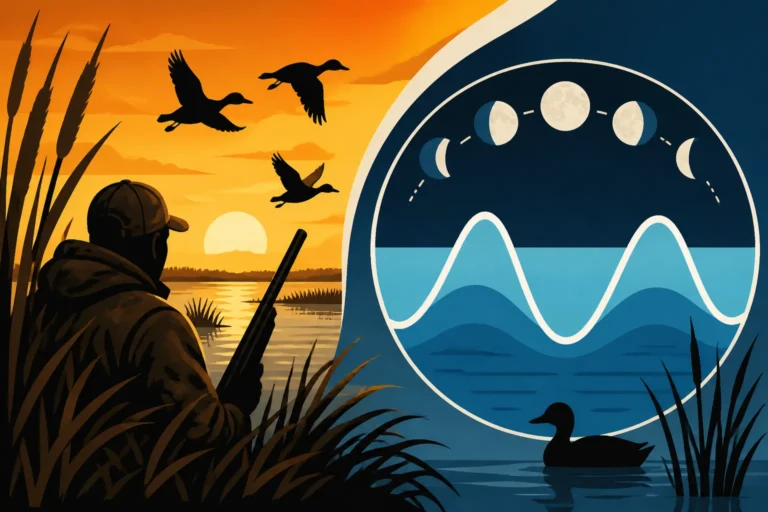
Reading the tides is critical in the marsh. A falling tide might expose mudflats where ducks feed, while a rising tide might push ducks into higher marsh areas. Understanding the rhythms of the Bay's tides is not just helpful; it's essential for safe and successful marsh hunting. Many hunters rely on tide charts and real-time data to plan their entry and exit points. For those looking to understand the importance of water movement, check out Reading Tide Charts Before a Marsh Hunt. This skill is directly applicable to the unique experience of Jump-Shooting a Marsh Gut on a Falling Tide.
What makes Maryland's marshes truly unique is the presence of Sika deer, an imported species often referred to as "marsh elk." These small, hardy deer thrive in the same dense phragmites and Spartina grasses that ducks frequent. It's not uncommon for a duck hunter to encounter a Sika while setting decoys or walking into a blind, adding an exciting, albeit unexpected, dimension to the hunt. Some hunters even combine their waterfowl pursuit with a Sika hunt, often in the late archery season. If you're interested in the crossover potential, exploring Hunting Sika Deer in Maryland's Tidal Marshes can provide a good overview. However, remember that if you're targeting both, you need the appropriate licenses and stamps for both species, and your weapon choices for waterfowl are different than for deer.
Public vs. Private Access and Ethical Considerations
Access to hunting grounds on the Chesapeake Bay can be a puzzle for many hunters. Maryland offers a mix of public lands, federal refuges, and traditional private blind sites, each with its own rules and challenges. Navigating these options while maintaining ethical hunting practices is crucial.
Navigating Public Hunting Opportunities
Maryland does offer public hunting opportunities for waterfowl, primarily through its extensive network of Wildlife Management Areas (WMAs) and certain federal refuges. These areas are managed by the Maryland Department of Natural Resources (DNR) to provide public access and manage wildlife populations. Many WMAs, especially on the Eastern Shore, feature tidal marshes, rivers, and shoreline access suitable for waterfowl. The challenge with public land is often pressure. These areas can see significant hunting activity, especially on weekends and opening days, meaning birds can become very wary very quickly. Successful public land hunting often involves extensive scouting, being willing to walk or boat further than others, and finding less accessible spots. A good starting point for exploring these options is Public Hunting Land in Maryland and Maryland's Wildlife Management Areas.
Federal refuges, such as Blackwater National Wildlife Refuge or Eastern Neck National Wildlife Refuge, sometimes offer special permit hunts for waterfowl. These hunts are highly regulated, often by lottery, and provide unique opportunities to hunt in pristine habitats. However, application periods are strict, and success rates can vary. Always check the specific refuge regulations, as they can be more restrictive than statewide rules. Utilizing mapping software, such as the one offered by GoHunt, can be incredibly beneficial for public land hunters. These platforms allow you to overlay property boundaries, identify potential access points, and scout terrain features like marsh guts, points, and open water areas from the comfort of your home, helping you find those less-pressured spots before you ever hit the field.
Securing Private Access and Blind Site Licensing
For many, the quintessential Chesapeake Bay waterfowl experience involves hunting from a private blind site. Maryland has a long-standing and somewhat unique system of "riparian rights" that governs the licensing of permanent blind sites along its tidal waters. Landowners who own property adjacent to navigable water often have the first right to license a blind site directly in front of their property. These sites are renewed annually, and if not renewed, they become available to others. This system ensures that traditional hunting locations remain accessible, but it also means that prime private ground can be difficult to acquire.
Securing private access can involve leasing land, either directly from a landowner or through a hunting club. Leases often grant exclusive rights to hunt specific land and associated water areas. Knocking on doors and building relationships with landowners is still a time-honored way to gain access, especially for field hunting opportunities for geese. If you're interested in the specifics of the blind site system, a detailed look at Maryland Waterfowl Blind Site Licensing will provide all the necessary information. Understand that these arrangements often require significant investment, whether in time or money, but they can offer unparalleled hunting opportunities away from public land pressure.
Responsible Hunting and Conservation
As hunters, we are the frontline of conservation, and upholding ethical standards is paramount, especially in a place as ecologically sensitive as the Chesapeake Bay. This includes adhering strictly to all bag limits and shooting hours, making clean, ethical shots, and ensuring diligent game retrieval. Losing a downed bird, especially in the vastness of the Bay or its dense marshes, is a disheartening experience and a waste of a valuable resource. A well-trained retrieving dog is an invaluable asset for waterfowl hunting, not just for convenience but for minimizing lost birds.
Beyond immediate hunting practices, contributing to conservation efforts is a fundamental responsibility. The purchase of hunting licenses and stamps directly funds wildlife management and habitat protection. Organizations like Ducks Unlimited, Delta Waterfowl, and the Chesapeake Bay Foundation work tirelessly to conserve and restore wetland habitats that are critical for waterfowl. Supporting these groups, whether through membership or volunteering, directly impacts the future of waterfowl hunting on the Bay. The long-term health of the Chesapeake Bay ecosystem is intertwined with the health of its waterfowl populations, and hunters play a vital role in both.
Overcoming Chesapeake Bay Challenges
The Chesapeake Bay, with all its glory, presents a unique set of challenges that can test the mettle of even the most experienced waterfowler. From unpredictable weather to complex navigation, being prepared for these hurdles is key to a successful and safe hunt.
Weather and Water Conditions
The Bay is a dynamic environment, and its weather can change on a dime. A calm, crisp morning can quickly give way to strong winds, white-capped waves, and freezing rain, especially in late fall and winter. Fog is another significant hazard, often rolling in suddenly and reducing visibility to mere feet, making navigation treacherous. Ice is a major factor in colder winters, dictating where and even if you can hunt, sometimes locking up entire areas. Checking detailed marine forecasts, not just general weather forecasts, is essential. These provide information on wind speed and direction, wave height, and water temperature, all critical factors for safe boating and hunting.
Understanding the Bay's tides and currents is equally important. Strong tidal currents can make deploying and retrieving decoys challenging, and they can affect bird movement and feeding patterns. Knowing when high and low tide will occur can dictate whether you can even access certain marsh areas or when ducks will be feeding on exposed mudflats. Ultimately, respect for the water and its conditions is paramount. No duck or goose is worth risking your life. Knowing when to stay home, or when to cut a hunt short, is a sign of a wise and experienced Bay waterfowler. This emphasis on safety in varying conditions is why reading up on Boat Safety on the Chesapeake in December is so critical for anyone planning a late-season hunt.
Navigation and Local Knowledge
The Chesapeake Bay is vast and intricate, with a myriad of channels, shoals, oyster beds, and unmarked hazards. Navigating these waters, especially in low light or fog, requires precision and a healthy dose of caution. Relying solely on visual landmarks can be misleading in dense fog or when landmarks are obscured. Modern GPS units with detailed marine charts are invaluable tools. They allow you to mark safe channels, identify shallow areas, and pinpoint your exact location relative to potential hazards. However, technology should always be backed by a fundamental understanding of navigation and, ideally, local knowledge.
This is where local expertise truly shines. A seasoned guide or a hunter with years of experience on a particular section of the Bay can offer insights that no chart can fully capture – nuances of currents, shifting sandbars, productive feeding areas, and reliable passage routes. For newcomers, a guided hunt can be an excellent way to learn these local intricacies safely. Additionally, tools like GoHunt, which offer robust mapping features, can be critical for understanding property lines, water depths, and hidden features, whether you're on public or private land. These mapping applications allow hunters to pre-scout digitally, identifying potential hunting spots, safe travel routes, and even areas of high bird activity based on historical data or aerial imagery. This level of detail extends to land-based hunting as well, as highlighted in Using onX Layers for Maryland Land Status, and adapting these principles for water navigation is key for Bay hunters.
Pressure, Decoys, and Calling Effectiveness
The popularity of the Chesapeake Bay means that birds, especially by mid-season, can be incredibly wary and educated. They've seen countless decoy spreads and heard myriad calls. Overcoming this pressure requires finesse and often a willingness to adapt your tactics. This means focusing on realism in your decoy spread – clean, natural-looking decoys, appropriate numbers for the species, and subtle movement. Oversized, unrealistic, or poorly maintained decoys will often flare birds.
Calling, too, must be nuanced. While aggressive calling can work on unpressured birds, often on the Bay, less is more. Subtle greetings, feeding chuckles, and soft clucks can be far more effective than loud, insistent hailing calls. Learning to "read" the birds' reactions to your calling and adjust accordingly is a skill developed over time. Good concealment is paramount. Even a slight movement or flash of an uncovered face can send a flock veering away. Patience, discipline, and a willingness to try different approaches are essential when hunting pressured waterfowl. Sometimes, the most effective strategy is simply to be where the birds want to be, with a natural-looking spread, and let them come in without excessive calling.
Maryland's Waterfowl Heritage and Future
Maryland's connection to waterfowl hunting runs deep, woven into the very fabric of its coastal communities. Understanding this rich history and the challenges that lie ahead helps us appreciate the importance of conservation for future generations.
A Rich Tradition of Waterfowling
The Chesapeake Bay has been a crucial region for waterfowl and waterfowl hunting for centuries. From the indigenous peoples who relied on ducks and geese for sustenance to the market hunters of the 19th and early 20th centuries who supplied eastern cities, the Bay has always been central to this pursuit. This heritage is particularly strong on the Eastern Shore, where generations have passed down traditions of boat building, decoy carving, and hunting wisdom. Decoy carving, in particular, became an art form, with Maryland master carvers producing exquisite, lifelike blocks that are now prized collectibles. This deep-rooted cultural significance creates a unique atmosphere for hunting here; it’s not just a sport, but a way of life for many.
The stories, the camaraderie, and the connection to the natural world forged in the marsh blinds and layout boats of the Chesapeake are as much a part of the hunt as the birds themselves. This rich history reminds us that we are participants in a long-standing tradition, with a responsibility to carry it forward ethically and sustainably.
Conservation Efforts and Challenges Ahead
Despite its storied past, the Chesapeake Bay ecosystem and its waterfowl populations face significant challenges in the modern era. Habitat loss due to development, declining water quality from nutrient and sediment pollution, and the impacts of climate change (such as sea-level rise and increased storm intensity) all threaten the very resources that make the Bay so special for waterfowl. Rising water temperatures can affect the growth of submerged aquatic vegetation, a vital food source for many species.
However, a robust network of conservation efforts is actively working to combat these threats. The Maryland Department of Natural Resources (DNR), alongside federal agencies like the U.S. Fish and Wildlife Service, and numerous non-profit organizations such as Ducks Unlimited, Delta Waterfowl, and the Chesapeake Bay Foundation, are engaged in habitat restoration projects, water quality improvement initiatives, and scientific research. Hunters, through their license and stamp purchases, are directly funding a large portion of these efforts. Every federal duck stamp sold and every state hunting license purchased contributes significantly to the conservation of wetlands and waterfowl habitats, not just in Maryland but across the continent. This funding mechanism, born from hunters' desire to conserve the resources they cherish, is one of the most successful conservation models in the world. The future of waterfowl hunting on the Chesapeake Bay depends on the continued dedication of these organizations and the ongoing support of the hunting community.
Maryland Waterfowl Species and Preferred Habitats
| Species Group | Common Species | Preferred Bay Habitat | Typical Hunting Method |
|---|---|---|---|
| Puddle Ducks | Mallard, American Black Duck, Green-Winged Teal, Wood Duck, Pintail | Shallow tidal marshes, creeks, flooded timber, agricultural impoundments, gut areas | Marsh blinds, shore blinds, jump shooting, small decoy spreads |
| Diving Ducks | Canvasback, Redhead, Scaup (Bluebill), Ring-necked Duck, Bufflehead, Goldeneye | Open water of the main Bay, broad rivers, deeper coves, large bays | Layout boats, offshore stake blinds, large decoy spreads (longlines) |
| Canada Geese | Atlantic Population, Resident Population | Agricultural fields (cut corn, winter wheat), open water roosts, islands, shorelines | Field blinds (pit, panel, layout), shoreline blinds, large decoy spreads |
| Snow Geese | Greater Snow Goose | Large open agricultural fields, often roosting on vast open water | Massive field decoy spreads (hundreds/thousands), specialized calling |
Disclaimer
The information provided in this guide is for general informational purposes only and is not intended as legal advice. Hunting regulations in Maryland are complex and can change frequently. It is the hunter's sole responsibility to consult the most current Maryland Department of Natural Resources hunting guide and federal regulations before engaging in any hunting activities. Always prioritize safety and ethical hunting practices.