Hunting a Farm Along the Potomac
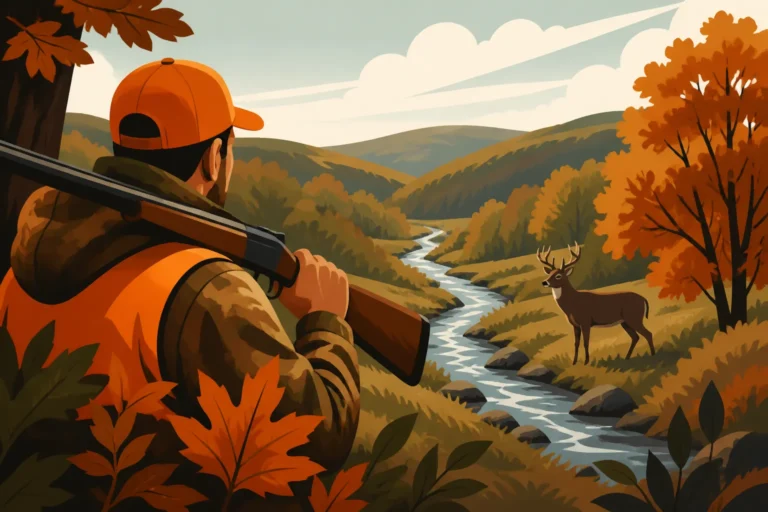
The dream of finding a hunting haven along the Potomac River, particularly on a working farm, is one many Maryland hunters share. Yet, actually securing access and then knowing how to effectively hunt such a diverse and often pressured landscape can feel overwhelming. This guide is designed to break down those barriers, offering practical advice and strategies for successfully hunting a farm along the beautiful and challenging Potomac corridor.
Unpacking the Unique Appeal of Potomac River Farms for Hunters
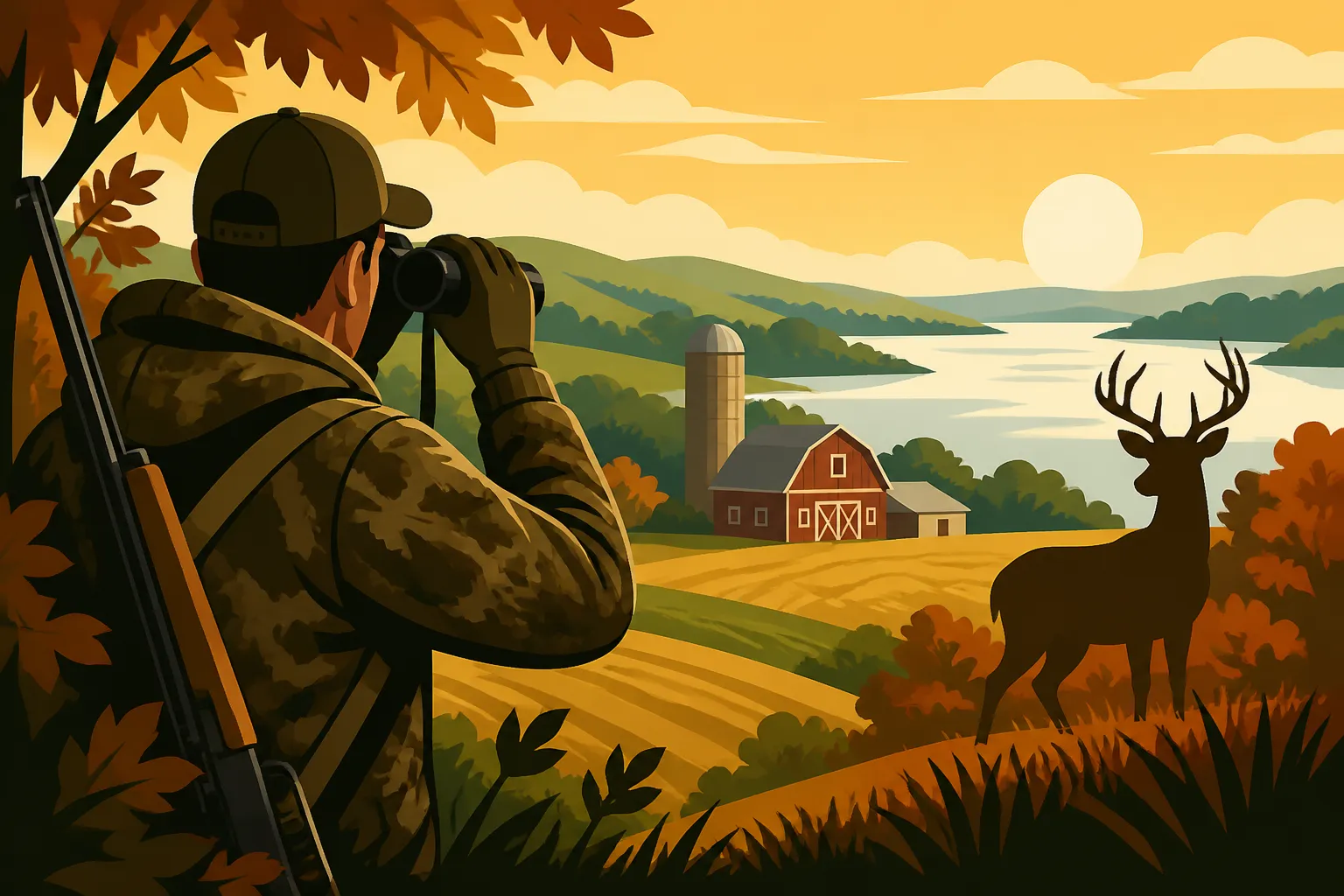
Hunting farms along the Potomac River isn't just about the scenery; it's about the incredible blend of habitat that draws and holds game. This unique corridor, stretching from the rugged foothills of Western Maryland through the rolling Piedmont and into the gentler slopes closer to the metropolitan areas, offers a tapestry of agricultural fields, mature timber, and the constant influence of the river itself.
The Blend of Agriculture, Timber, and River Features
Imagine a patchwork quilt where each square is a different habitat, all stitched together by the ribbon of the Potomac River and its myriad tributaries. These farms are rarely just open fields. Instead, you'll find expansive crop fields – think corn, soybeans, and alfalfa – that serve as irresistible buffets for deer, turkeys, and small game. Flanking these agricultural havens are often mature hardwood forests, some stretching for miles, providing crucial mast crops like acorns and hickories, as well as dense security cover. Then there's the river itself, a powerful natural feature that creates distinct micro-habitats. Riparian buffers, those strips of natural vegetation along the riverbanks and smaller creeks, act as superhighways and safe havens for wildlife.
This blend isn't accidental; it’s what concentrates game. Deer might spend their nights gorging on soybeans in a field, then slip into a thick woodlot or dense river-edge cover to bed down during the day. The steep banks and floodplains of the Potomac often mean irregular terrain, which can include small benches, hidden draws, and low-lying thickets that provide excellent bedding and travel corridors. These varied features mean that a single farm can offer opportunities for multiple species and different hunting styles, depending on the specific pocket of land you're focusing on. The river itself serves as a natural barrier and a significant travel route for animals moving up and down the watershed, making river-adjacent properties particularly strategic.
Understanding Game Behavior in a Riverine Farm Setting
The game on a Potomac farm behaves differently than, say, deer in a vast mountain forest or ducks on an open bay. For white-tailed deer, the river acts as a crucial element in their daily and seasonal movements. Bucks, especially during the rut, will often cruise river edges and creek bottoms, scent-checking for does. These natural corridors allow them to travel with less exposure. You might find well-worn trails running parallel to the river, indicating consistent use. When the fields are cut, deer often retreat to the denser timber and river bottoms, making those areas prime spots for mid-day action. Understanding how deer utilize the river not just for water but for cover and travel is key. You can read more about Hunting the Rut in Early to Mid November to get a sense of how buck movements intensify during this critical period.
Beyond deer, these farms are often teeming with other species. Farm ponds or slower sections of the river can attract migratory waterfowl, especially ducks and geese, providing unique opportunities. The hedgerows, old fence lines, and small woodlots that border crop fields are prime habitat for small game like cottontail rabbits and gray squirrels. A good farm will have plenty of brushy cover for rabbits and mature oaks for squirrels. If you're interested in Rabbit Hunting Maryland Farm Hedgerows or Squirrel Hunting Maryland Hardwood Ridges, these farms provide textbook examples of ideal habitat. And where there's abundant prey, there are often predators. Coyotes are increasingly prevalent throughout Maryland, and they will absolutely key into these same game trails and food sources, offering an additional challenge for the savvy hunter interested in Coyote Calling in Maryland Farm Country.
Navigating the Hurdles of Private Land Access
Let's be real: getting permission to hunt a prime farm along the Potomac is often the biggest hurdle. These properties are highly sought after, and landowners can be understandably hesitant to grant access, especially with the region's growing population. It takes more than just a polite knock on the door; it requires building trust and demonstrating respect. Your approach needs to be sincere, patient, and professional. Start by offering to help in ways that benefit the landowner, such as assisting with crop damage control (which often deer are the culprits of) or simply helping with small chores around the farm. Sometimes, just being a reliable, responsible presence can open doors that are otherwise closed.
It's also essential to recognize that many of these areas are closer to suburban development than hunters might be used to, meaning a higher likelihood of existing pressure from other hunters, hikers, or even local residents enjoying the river. This proximity requires even greater diligence in hunter safety and knowing your surroundings. The competition for access means you might need to try multiple properties and be prepared for more "no" answers than "yes." But don't get discouraged! A thoughtful, respectful approach, perhaps even offering to help out during planting or harvest, can go a long way. This is particularly true if you're willing to hunt antlerless deer to help with population control, which is often a major concern for farmers. For more strategies on how to approach landowners, check out Knocking on Doors in Maryland Farm Country.
Strategic Scouting and Planning for Potomac Farm Success
Once you've secured permission, the real work—and fun—begins. Successfully hunting a Potomac farm involves a blend of modern technology and traditional woodsmanship.
Digital Reconnaissance: Mapping the Opportunities
Before you even step foot on the property, modern mapping tools are your best friend. Services like onX Hunt and GoHunt offer invaluable layers that can reveal a farm's secrets from the comfort of your home. You'll want to meticulously study aerial photos to pinpoint every field edge, woodlot, creek bottom, and potential pinch point or funnel. Look for areas where a narrow strip of timber connects two larger blocks, or where a thick hedgerow provides a natural travel lane. Pay close attention to contour lines on the topographical maps; subtle elevation changes, even just a few feet, can create benches or saddles that deer regularly use, especially when moving between feeding and bedding areas.
Beyond just current satellite imagery, many of these platforms offer historical views, which can be fantastic for seeing how a property has changed over the years. Maybe an old field used to have a different crop, or a woodlot was thinner. You can also identify potential bedding areas by looking for dense, dark-green cover, often near water or on south-facing slopes that offer warmth. These digital scouting efforts help you form a hypothesis about how deer and other game might be moving and living on the farm. It's like putting together a puzzle, piece by piece, before you even have all the physical clues. Using these tools effectively for initial analysis is crucial, similar to how one might go about Scouting Maryland Public Land With Aerial Photos.
Boots-on-the-Ground Scouting: Confirming the Digital Clues
While digital maps are great for identifying potential hotspots, there's absolutely no substitute for getting your boots on the ground. Once you have permission, walk the farm. If it's after harvest, this is an ideal time as visibility is often better. You'll want to confirm your digital observations and look for tangible evidence of game activity. Search for fresh deer sign: rubs on small trees, indicating buck activity; well-used scrape lines along a field edge, signaling rutting behavior; and abundant droppings that tell you deer are frequenting an area. Scrape Lines Along a Maryland Field Edge are particularly telling signs of deer communication and travel.
Identifying bedding cover is critical. This could be a dense stand of cedars, a thicket of multiflora rose, or a tangled mess of brush along a creek bottom. Think about security – deer want to feel safe when they rest. Simultaneously, pinpoint primary food sources. Is it the remaining corn stubble, a lush green winter wheat field, or scattered acorns in a hardwood stand? This will shift throughout the season, so understanding Late Season Food Sources for Maryland Deer is just as important as knowing what they're eating in early fall. Finally, don't overlook water sources. While the Potomac itself is nearby, smaller seepages, trickles, or hidden ponds can draw animals, especially during dry spells.
Devising Your Attack Plan: Stand Locations and Entry/Exit
With your digital and on-the-ground scouting complete, it's time to create your hunting strategy. This involves not just where to place your stand but how you'll get in and out without alerting game. Wind direction is paramount; always consider it for every potential stand location. You need to be downwind of where you expect the animals to come from and where they will likely travel. Identify natural funnels created by the terrain or vegetation that force deer into predictable travel lanes. These could be narrow strips of woods connecting larger blocks, a pinch point between a steep bank and a field, or a draw that leads from bedding to feeding. Hunting a Funnel Between Two Grain Fields exemplifies this concept perfectly.
Plan multiple stand locations (for both morning and evening hunts) to accommodate varying wind conditions. This flexibility is key to consistent success. Perhaps you have a morning stand for a west wind overlooking a bedding area, and an evening stand for an east wind on a field edge. Just as important as stand placement are your entry and exit routes. You want to move quietly and unseen, minimizing disturbance. Often, this means using a ditch line, a deep creek bed, or the cover of darkness. For instance, if you're Entry Routes Through Cut Corn Before Daylight, you'd want to be mindful of sound and silhouette. Setting up your stand on a farm edge, as described in Hanging a Stand on a Maryland Farm Edge, also requires careful consideration of these factors.
Executing Your Hunt on a Potomac Farm
So you've done your homework, secured your spot, and planned your strategy. Now comes the moment of truth – the hunt itself. Success hinges on adaptation, smart choices, and always, always, respect.
Adapting to Changing Conditions: Weather and Pressure
Maryland weather can be notoriously unpredictable, and a smart hunter knows how to adapt. Cold fronts, especially those following a period of warm weather, can really get deer moving, often increasing their daytime activity as they seek to feed more actively. This is where Hunting After a Maryland Cold Front can yield big dividends. Conversely, sudden warm spells or heavy rain can put deer down, making for slower hunting. You need to be prepared for everything from crisp fall mornings to bitter cold, wet days.
Even on private land, understanding hunting pressure is vital. While you might be the only one with permission on your specific parcel, neighboring properties might also be hunted, which can push deer onto or off your farm. Human activity along the Potomac, whether from hikers, boaters, or other recreational users, can also influence game movement. Learn to read these subtle cues and adjust your tactics. Sometimes, hunting mid-day when others have left the woods can be productive, or focusing on thick, uninviting cover where deer feel safest from disturbance.
Choosing Your Weapon and Tactics Wisely
The diverse habitat of a Potomac farm often lends itself to a variety of weapon choices. For the dense woodlots and sensitive areas, archery can be incredibly effective, allowing for quiet movement and close-range shots. Maryland's Bowhunting Maryland's Long Archery Season offers extended opportunities to be in the woods. When using firearms, always be keenly aware of the specific county regulations regarding legal weapons. Some areas along the Potomac are shotgun or muzzleloader-only, while others may permit rifles. You must know Maryland's Legal Weapons by County for your specific location to avoid any legal issues.
Tactically, depending on the size and layout of the timber blocks, still-hunting might be a viable option, slowly slipping through the woods, looking for sign and listening for movement. While often associated with larger tracts like those in Still-Hunting Western Maryland Mountain Timber, the principle of deliberate, quiet movement applies to any timbered area. During the rut, don't be afraid to incorporate calling strategies. Grunt calls can pique a buck's curiosity, especially if he thinks there's another deer in the area. And if the cover is right, rattling antlers can sometimes draw in an aggressive buck. Tactics like Grunt Calls in Maryland Hardwoods and Rattling Antlers on an Eastern Shore Farm are universal principles that work across diverse landscapes.
Respecting the Land, the Landowner, and the Game
This cannot be stressed enough: your relationship with the landowner is paramount. Always leave gates as you found them, whether open or closed. Pack out all your trash, including spent shell casings, food wrappers, and anything else you brought in. Leave no trace. Communicate regularly with the landowner, letting them know when you plan to hunt and reporting any observations, good or bad (like damaged fences or unusual activity). This level of respect helps ensure you maintain access for years to come.
Beyond the landowner, always respect the game you pursue and the laws that govern hunting in Maryland. Understand Maryland's Deer Bag Limits and Antler Rule and adhere to them strictly. Ensure you are wearing the required Maryland Blaze Orange Requirements during applicable seasons. When you make a shot, do everything in your power to recover the animal efficiently and ethically. Proper Field Dressing a Deer in Warm September Weather is crucial to preserving the meat, especially in warmer early season conditions. A well-placed shot and a diligent recovery effort honor the animal and the privilege of the hunt.
| Sign Type | What to Look For | What it Indicates | Best Time to Find It |
|---|---|---|---|
| Deer Trails | Worn paths through grass/leaves, often connecting cover. | Consistent travel routes between bedding, feeding, and water. | Year-round |
| Rubs | Bark scraped off small trees by antlers (vertical marks). | Buck activity, territorial marking, can indicate travel corridors. | Late summer to late fall |
| Scrapes | Bare patch of ground, often with an overhanging branch. | Buck communication hub, often near field edges or travel routes. | Pre-rut and rut |
| Droppings (Poop) | Piles of pellets, fresh ones are dark and moist. | Recent presence of deer, can indicate feeding or bedding areas. | Year-round |
| Bedding Areas | Depressions in thick cover, often sheltered from wind. | Where deer rest during the day; indicates security and proximity to food/water. | Year-round, especially in dense cover |
| Browsing | Clipped twigs, bitten off leaves/buds. | What deer are currently eating; can change seasonally. | Year-round |
Disclaimer
This article is for general informational purposes only and does not constitute professional advice. Laws, prices and regulations vary by location and change over time. Consult a qualified professional for guidance on your specific situation.