What a Maryland Sika Stag Weighs
It's easy to look at a sika stag, with its robust body and those sharp, dark antlers, and imagine it tipping the scales like a smaller whitetail buck. But anyone who's spent time chasing these unique deer in Maryland's marshes knows that they are a different breed entirely. This guide will help you understand what a typical Maryland sika stag truly weighs, manage your expectations, and prepare for the unique challenges of hunting these incredible animals.
Understanding Sika Deer Size and Characteristics
Maryland's sika deer herd is truly a marvel, offering a distinctive hunting experience unlike anywhere else. But a common misconception among newcomers is just how much these "miniature elk" actually weigh. While they share some visual similarities with their larger cervid cousins, sika stags are surprisingly compact.
Why Sika Are Often Called "Miniature Elk"
The nickname "Japanese Elk" or "miniature elk" is frequently tossed around when describing sika deer, and it's easy to see why. Their posture, their stocky build, and particularly the structure of a stag's antlers—often dark, rugged, and terminating in sharp points—can give the impression of a scaled-down version of an elk. They often carry themselves with a certain regal air, especially when spotted moving through the tall phragmites or crossing a marsh ditch. This visual association, however, can sometimes lead to an overestimation of their actual body mass. A sika stag, even a mature one, is significantly smaller and lighter than even a modest whitetail buck, let alone an elk calf.
Their coat, especially during the warmer months, can also feature distinctive white spots on a rich brown or reddish-brown background, further adding to their unique aesthetic. In winter, their coat often darkens, becoming shaggier and less spotted. While visually captivating and certainly a formidable animal in its own right, understanding that the "miniature elk" moniker refers more to their stout, proud bearing and antler style rather than their overall bulk is crucial for hunters new to the species.
Key Differences Between Sika and Whitetail Deer in Maryland
When you're out in the field, particularly in areas like Dorchester County where both species coexist, telling the difference between a sika and a whitetail can sometimes be a quick glance, but their fundamental biological differences are pronounced, especially in terms of size and vocalization. Whitetail deer, even smaller does, are generally taller at the shoulder and have a longer, more slender body profile compared to the sika. A mature Maryland whitetail buck can easily weigh well over 150 pounds live, and often much more in prime areas with abundant food.
Sika deer, by contrast, possess a much more compact, barrel-chested build. They stand shorter, with noticeably shorter legs and necks. This compact structure means that even a physically mature sika stag, which might look quite robust, will carry considerably less overall body mass than a whitetail of similar perceived "impressiveness." Another defining characteristic is their vocalizations. While whitetails grunt, snort-wheeze, and bleat, sika have a distinct range of sounds. Stags, especially during the rut, famously emit a piercing "whistle" that echoes across the marsh. Understanding Why Sika Deer Whistle Instead of Grunting is key to calling them in, and a significant differentiator from whitetails. These differences in stature and sound are vital not only for identification but also for managing expectations regarding their weight and the effort required for recovery.
Average Weight Ranges for Maryland Sika Stags
Let's get down to the numbers, because this is where many hunters are surprised. Sika stags are not big deer by whitetail standards, but they are incredibly tough for their size.
Live Weight Versus Field-Dressed Weight
For any hunter, understanding the difference between live weight and field-dressed weight is absolutely critical, and it's especially important with sika deer where misjudging size can happen. Live weight refers to the animal's total body weight before any processing. Field-dressed weight, on the other hand, is what you're left with after the internal organs have been removed in the field. This is typically the weight you'll be dragging out or carrying, and what you'll register. For most deer species, the field-dressed weight is roughly 20-30% less than the live weight, and sika are no exception.
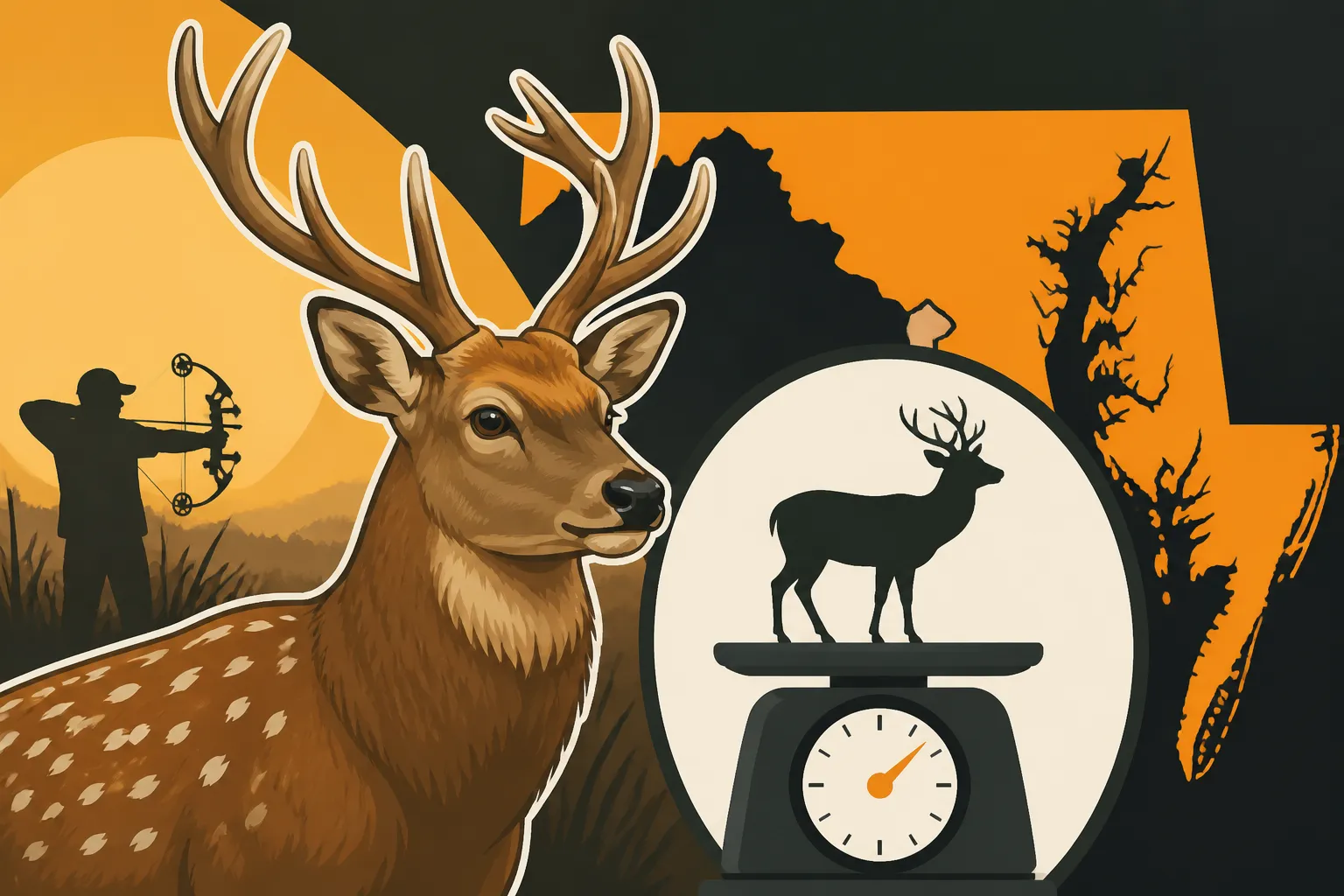
A mature Maryland sika stag, generally 3.5 years old or older, will typically have a live weight ranging from 80 to 120 pounds. Now, some exceptional stags, particularly those in areas with rich agricultural forage, might push slightly past that, perhaps even to 130 or 140 pounds, but these are truly exceptional animals and not the norm. Based on these figures, a field-dressed sika stag will generally weigh anywhere from 60 to 95 pounds. This is a manageable weight for one or two hunters to drag out of the marsh, but it's still a significant amount of weight, especially when you factor in the challenging terrain. It's a far cry from the 150-200+ pound live weights common for mature whitetail bucks in Maryland. This means the actual "muscle" and "meat" you're taking home will be considerably less than what you might be accustomed to with whitetails.
Factors Influencing a Sika Stag's Weight
Just like any wild animal, the weight of a sika stag isn't a fixed number. Several factors play a significant role in how heavy a particular animal might be when you encounter it.
Firstly, age is a primary determinant. A young, spike stag, typically 1.5 years old, will be on the lower end of the weight spectrum, perhaps only 60-70 pounds live. As they mature, their skeletal structure develops, and their muscle mass increases, leading to heavier animals. A 4.5 or 5.5-year-old stag will almost certainly be heavier and more robust than a 2.5-year-old. While age can be tricky to judge in the field, observing the overall body mass, neck thickness, and antler development can offer clues.
Secondly, habitat and nutrition are crucial. Sika deer on Maryland's Eastern Shore thrive in a unique blend of tidal marshlands, pine thickets, and agricultural fields. Areas adjacent to corn, soybean, or winter wheat fields often produce healthier, heavier deer. The marshes themselves offer a wealth of forage, from marsh grasses to woody browse. Deer in areas with consistently high-quality food sources tend to grow larger and carry more weight. Understanding What Sika Deer Eat in a Tidal Marsh gives insight into the rich diet supporting these animals. Contrast this with sikas living in more marginal habitats, and you'll often see a noticeable difference in their size and overall condition.
Finally, the time of year also plays a role. Leading up to the rut in late September and October, stags are typically at their heaviest. They've been feeding heavily all summer, building up fat reserves to sustain them through the intense breeding period. Once the rut kicks in, however, stags become incredibly active, chasing hinds (does), fighting other stags, and often eating very little. By the late fall and into the winter, a stag can lose a significant amount of body weight, sometimes 15-20% of their peak weight, due to the physical exertion and reduced feeding. A stag taken in late October might be noticeably heavier than one taken in mid-December.
Practical Implications for Hunters
Knowing the typical weight of a sika stag isn't just about curiosity; it has real, practical implications for every aspect of your hunt, from how you approach estimating a trophy to how you plan your extraction.
Estimating Weight in the Field and Trophy Expectations
One of the biggest lessons sika hunters learn is that while these deer are captivating, you need to recalibrate your internal "deer scale." When you see a sika stag standing majestically in the marsh, especially against the backdrop of tall reeds, it's easy for your brain to inflate its size, thinking it's equivalent to a 150-pound whitetail. The reality is often quite different. A truly big Maryland sika stag might be 100-110 pounds field-dressed, which is still a fantastic trophy but considerably smaller than a big whitetail buck.
It's important to adjust your trophy expectations. For sika, antler mass and point count are often the primary indicators of a mature animal, much more so than overall body size, as their body weights don't fluctuate as dramatically between mature and immature animals compared to whitetails. Sika antlers, while smaller than whitetail antlers, are typically dark, gnarly, and very dense. A solid 8-point stag (four points per side) is considered a magnificent trophy, and you might see "spikes" that are actually quite mature animals in terms of age. How a Sika Stag's Antlers Differ From a Buck's is a great read to understand these nuances. Instead of focusing solely on the visual bulk, pay attention to the stag's neck thickness, chest depth, and the length and tines of its antlers to better estimate maturity and trophy quality.
Logistics of Recovery and Transport
This is where the rubber meets the road. Even though sika stags are smaller than whitetails, don't let their relatively lighter weight fool you into thinking recovery will be a breeze. Hunting Sika Deer Hunting in Maryland's Tidal Marshes often means navigating extremely challenging terrain. The marshes are a labyrinth of deep ditches, soft mud, thick phragmites, and standing water. A 70-pound field-dressed sika can feel like 150 pounds when you're dragging it through waist-deep mud and tangled reeds for half a mile.
Here's where preparation really pays off:
- Game Carts: A sturdy game cart, especially one with large, all-terrain wheels, can be an absolute lifesaver. However, be realistic about the terrain. Some areas of the marsh are simply too soft or too ditch-ridden for a cart to be effective.
- Quartering: For longer drags or particularly nasty spots, quartering the animal is often the most practical solution. Breaking the animal down into manageable pieces (loins, shoulders, hams) significantly reduces the weight you're moving at one time. This requires a good quality knife, a bone saw, and game bags.
- Teamwork: Hunting with a partner or a group makes recovery infinitely easier. Many hands make light work, especially when you're battling the marsh. Knowing Getting a Stag Out of the Marsh With a Guide often highlights the tools and techniques guides use, which can be invaluable for DIY hunters.
- Field Dressing: Field dress the animal as quickly as possible. This removes a significant amount of weight and, more importantly, helps cool the meat. In Maryland's often warm early season, especially during Hunting Maryland's September Archery Opener, quick field dressing is critical for meat preservation. Learn the best practices for Field Dressing a Deer in Warm September Weather to ensure your hard-earned venison doesn't spoil.
- Scouting Tools: Using modern mapping tools like GoHunt can be incredibly helpful for planning your extraction route before you even go in. Identifying potential hard-bottomed areas, old dike roads, or waterways where a boat might be used for recovery can save hours of grueling work. These tools allow you to visualize the topography and potential obstacles, helping you strategize the easiest way out with your game.
The Maryland Sika Deer Population and Management
The story of sika deer in Maryland is one of successful adaptation and careful management. Understanding their population dynamics and where they thrive can offer insights into why they are such sought-after game animals.
Where Maryland's Sika Herd Thrives and Spreads
Maryland's sika deer population originated from a release on James Island in Dorchester County way back in 1916. From that initial introduction, they have steadily expanded their range, establishing a robust, self-sustaining population that offers unique hunting opportunities. Today, the heart of Maryland's sika country remains firmly rooted in the intricate tidal marshes and adjacent woodlands of Dorchester, Somerset, and Wicomico counties on the Lower Eastern Shore. These unique habitats, characterized by dense phragmites, scattered pine islands, and an abundance of aquatic and marsh vegetation, provide ideal cover and forage for these adaptable deer.
Over the decades, as the population grew, so did their geographic footprint. They have slowly but surely spread from their initial stronghold, extending their presence into parts of Talbot, Caroline, and even into certain areas of Worcester County. You can explore How Far Sika Deer Have Spread From Dorchester to see maps and details of their current range expansion. This continuous, albeit slow, expansion is a testament to their hardiness and ability to thrive in Maryland's diverse ecosystems. While they remain most concentrated in the marshy regions, scattered populations and individual sightings can occur in surprising places, though the primary hunting focus remains on the lower shore. They've certainly come a long way since When Sika Deer First Arrived on Delmarva.
Record Book Sika Stags in Maryland
For many hunters, pursuing a record-book animal is the ultimate challenge, and Maryland's sika deer offer a compelling target. While a sika stag's body weight might not compete with a whitetail, their unique antlers are highly prized. When discussing "record book" sika, we're primarily talking about antler scoring systems like those used by the Pope and Young Club or Boone and Crockett, which measure factors such as main beam length, circumference, and tine length. Body weight is rarely a primary factor in these formal record systems, but it often correlates with a stag's age and overall health, which in turn can influence antler growth.
Maryland has a proud history of producing some truly impressive sika stags that have made their way into the record books. These are typically older, mature animals that have had several years to develop exceptional antler growth. While precise weights of these record-breaking animals aren't always publicized alongside their antler scores, it's safe to assume they would fall on the higher end of the typical weight range we've discussed, likely pushing towards the 110-140 pound live weight range. For any hunter interested in the truly exceptional, researching The Biggest Sika Stag Ever Taken in Maryland can provide both inspiration and a realistic benchmark for what Maryland's marshes are capable of producing. Remember, a record-book sika is a rare and hard-earned trophy, representing a combination of great genetics, prime habitat, and a seasoned hunter's skill.
Here's a quick comparison of average mature weights between Maryland whitetail bucks and sika stags:
| Feature | Maryland Whitetail Buck (Mature) | Maryland Sika Stag (Mature) |
|---|---|---|
| Average Live Weight | 150-220 lbs | 80-120 lbs |
| Average Field-Dressed Weight | 120-170 lbs | 60-95 lbs |
| Body Build | Taller, more slender | Shorter, stocky, compact |
| Antler Style | Branching, often wider spread | Dark, rugged, shorter, dense |
| Typical Vocalization | Grunts, snort-wheezes | Distinctive "whistle" |
| Habitat Preference | Forests, agricultural edges | Tidal marshes, pine thickets, ag fields |
| Common Misconception | Often underestimated | Often overestimated |
This table helps illustrate the significant difference in physical stature between the two species, reinforcing the idea that a sika stag, while a fantastic game animal, carries considerably less weight than its whitetail counterpart. When you're scouting or even just learning to identify game, consider how helpful using an app like GoHunt can be to distinguish between habitat types where whitetails or sika are more likely to thrive, giving you a better understanding of what you might expect to encounter. Whether you're Hunting Sika Deer in Maryland's Loblolly Pine Edges or just Reading a Marsh Trail for Sika Sign, knowing these details gives you an advantage. The smaller body size also contributes to Why Sika Deer Run Smaller Than Whitetails in general.
Disclaimer
This article is for general informational purposes only and does not constitute professional advice. Laws, prices and regulations vary by location and change over time. Consult a qualified professional for guidance on your specific situation.